27 VOLUME 8 |ISSUE 2 |2017
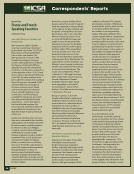
Radicalization and Deradicalization
(France, Belgium, and Quebec)
The presence of cults has increased
significantly in Canada over the
past 30 years, and a series of three
documentaries, Secte: mode d’emploi
[Cults: Instructions for Use], released in
March 2017, reflect this trend. There
are presently 1636 religious groups
in Quebec alone, including Raeliens
and the Church of Scientology,
which all benefit from government
subsidies. According to the French
government agency MIVILUDES, which
monitors groups that pose a perceived
threat to public order, the Canadian
government’s tolerance toward such
groups has encouraged some of them
to migrate from Europe, where they are
no longer welcome.
Despite the high number of cults in
Canada, the government now focuses
mainly on radical jihadi groups.
The Center for the Prevention of
Radicalization Leading to Violence
received close to 2.5 million dollars
from the government and the city of
Montreal over 2 years. Following the
conference organized by UNESCO,
“Internet and the Radicalization of
Youth: Preventing, Acting and Living
Together,” held October 30 through
November 1, 2016 in Quebec City,
a new research chair with a global
budget of 10 million dollars will
be established in the fall of 2017.
Government investment in cult-related
preventive and recovery efforts is
even more the case for Belgium and
France, where massive terrorist attacks
since early 2015 have compelled these
countries’ governments to invest
heavily, to the detriment of programs
geared toward other potentially
destructive cults. In France, more than
100 million Euros have been invested
over 3 years.
Grants pouring into this still largely
experimental field have drawn people
with varying credentials and abilities.
In France, approximately 80 enterprises
and associations currently work in this
new business venture, with results
that critics qualify as deriving from
the fact that the leaders are basically
amateurs. In 2016, a high-profile
center run by Dounia Bouzar closed
down on account of its spectacular
failures (Thomson, 2016), while Bouzar
played her own role in a film about the
radicalization of female adolescents, Le
Ciel attendra [Heaven Will Wait]. Sonia
Imloul, director of another pioneering
association, went on trial on March 13,
2017, for misappropriation of public
funds. In Belgium, the grassroots
association SAVE Belgium was founded
by Saliha Ben Ali, whose claim to
expertise is that her son migrated to
Syria, where he was killed.
Although community-based initiatives
are crucial, many associations seem
unable to collaborate, which may be
symptomatic of the fact that there
is disagreement over the causes of
radicalization. Two major French
thinkers, Olivier Roy and Gilles Kepel,
exemplify conflicting views on radical
jihadism. Roy, who recently published
a new book, Le Djihad et la mort [Jihad
and Death], attributes what he calls the
islamization of radicality (Ayad, 2016)
to a generational fascination with
violence and nihilism, whereas Kepel
sees jihadi violence as a radicalization
of Islam and takes seriously the jihadis’
supremacist program. In Belgium, it
is common to attribute terrorism to
social injustices, the Palestinian issue,
or islamophobia. Some associations
without much experience use as
a model measures dealing with
delinquency, but of course radical
jihadism is not similar to ordinary
delinquency. Others perceive these
new phenomena as cults—that is,
as known entities with recognizable
structures. There is some agreement
nonetheless that mental control and
Correspondents
,
Reports
Radicalization and Deradicalization
(France, Belgium, and Quebec)
The presence of cults has increased
significantly in Canada over the
past 30 years, and a series of three
documentaries, Secte: mode d’emploi
[Cults: Instructions for Use], released in
March 2017, reflect this trend. There
are presently 1636 religious groups
in Quebec alone, including Raeliens
and the Church of Scientology,
which all benefit from government
subsidies. According to the French
government agency MIVILUDES, which
monitors groups that pose a perceived
threat to public order, the Canadian
government’s tolerance toward such
groups has encouraged some of them
to migrate from Europe, where they are
no longer welcome.
Despite the high number of cults in
Canada, the government now focuses
mainly on radical jihadi groups.
The Center for the Prevention of
Radicalization Leading to Violence
received close to 2.5 million dollars
from the government and the city of
Montreal over 2 years. Following the
conference organized by UNESCO,
“Internet and the Radicalization of
Youth: Preventing, Acting and Living
Together,” held October 30 through
November 1, 2016 in Quebec City,
a new research chair with a global
budget of 10 million dollars will
be established in the fall of 2017.
Government investment in cult-related
preventive and recovery efforts is
even more the case for Belgium and
France, where massive terrorist attacks
since early 2015 have compelled these
countries’ governments to invest
heavily, to the detriment of programs
geared toward other potentially
destructive cults. In France, more than
100 million Euros have been invested
over 3 years.
Grants pouring into this still largely
experimental field have drawn people
with varying credentials and abilities.
In France, approximately 80 enterprises
and associations currently work in this
new business venture, with results
that critics qualify as deriving from
the fact that the leaders are basically
amateurs. In 2016, a high-profile
center run by Dounia Bouzar closed
down on account of its spectacular
failures (Thomson, 2016), while Bouzar
played her own role in a film about the
radicalization of female adolescents, Le
Ciel attendra [Heaven Will Wait]. Sonia
Imloul, director of another pioneering
association, went on trial on March 13,
2017, for misappropriation of public
funds. In Belgium, the grassroots
association SAVE Belgium was founded
by Saliha Ben Ali, whose claim to
expertise is that her son migrated to
Syria, where he was killed.
Although community-based initiatives
are crucial, many associations seem
unable to collaborate, which may be
symptomatic of the fact that there
is disagreement over the causes of
radicalization. Two major French
thinkers, Olivier Roy and Gilles Kepel,
exemplify conflicting views on radical
jihadism. Roy, who recently published
a new book, Le Djihad et la mort [Jihad
and Death], attributes what he calls the
islamization of radicality (Ayad, 2016)
to a generational fascination with
violence and nihilism, whereas Kepel
sees jihadi violence as a radicalization
of Islam and takes seriously the jihadis’
supremacist program. In Belgium, it
is common to attribute terrorism to
social injustices, the Palestinian issue,
or islamophobia. Some associations
without much experience use as
a model measures dealing with
delinquency, but of course radical
jihadism is not similar to ordinary
delinquency. Others perceive these
new phenomena as cults—that is,
as known entities with recognizable
structures. There is some agreement
nonetheless that mental control and
Correspondents
,
Reports