VOLUME 8 |ISSUE 2 |2017 2321
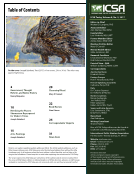
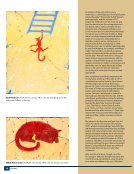
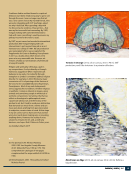
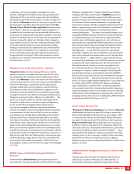
Tortoise in Orange (2013, oil on canvas, 30 in x 40 in): Self-
protection, and I like tortoises. In a private collection.
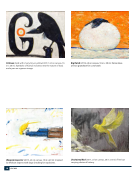
Black Swan on Edge (2013, oil on canvas, 30 in x 20 in): Before a
big decision.
I had been lied to and had shared in a spiritual
delusion, but I knew I had a long way to go to sort
through the mess. I was no longer sure that art
was a wise career choice. My married friends, who
were also struggling with CUT teachings, asked
me why I defected. After spending a day with
me discussing my evidence, they quit too—that
was my first successful exit counseling. By 1985,
I began working with cult interventionists to
help with cases, something I would pursue as my
primary income for the next 12 years.
By 1987, my art career had receded to intermittent
production after I began helping with cult
interventions. I quit my part-time job as an art
instructor at a college in 1987. My art production
was reenergized when I was accepted at the
Goggleworks Art Center in Reading, Pennsylvania
in 2011 as a studio artist, which means I rent
space at a very reasonable rate. However, art
remains a hobby as I yet maintain a full-time job
at a psych hospital.
Religion and spirituality often play a part in
my compositions, if only indirectly or through
humorous suggestion. When I represent cult
behavior in my work, it is indirectly through
metaphor or symbol. I sometimes address religion
directly. For example, in 2002 I finished a major
commission of 14 oil paintings of the Stations of
the Cross for St. Columbkill Church in Boyertown,
Pennsylvania. Most of my work today avoids
serious approaches to tradition, whether religious
or aesthetic. I retain an interest in images, using
animals and sometimes people in whimsical or
symbolic compositions. Sometimes the themes
reflect on theological or philosophical issues.
I appreciate abstract art and the history of the
spiritual in art, but I tend to avoid pure abstraction
that demands too much from a viewer and can
mean just about anything from pure decoration
to subjective, cosmic states of mind. At this stage
in my art career, I aim to have some fun and not
worry too much about making sales or revealing
anything divine. However, the reality of art as
a business remains for me and, as with any
business, one hopes that it thrives in future years.
Joe Szimhart, March 2017
Note
[1] The Spiritual in Art: Abstract Painting
1890–1985. Los Angeles County Museum
of Art: Abbeville Press, 1986 (p. 170). This
comprehensive catalogue of 435 pages
complemented the major exhibit at LACMA in
1986.
[2] Anita Stasulane, 2005. Theosophy and Culture:
Nicholas Roerich.
Tortoise in Orange (2013, oil on canvas, 30 in x 40 in): Self-
protection, and I like tortoises. In a private collection.
Black Swan on Edge (2013, oil on canvas, 30 in x 20 in): Before a
big decision.
I had been lied to and had shared in a spiritual
delusion, but I knew I had a long way to go to sort
through the mess. I was no longer sure that art
was a wise career choice. My married friends, who
were also struggling with CUT teachings, asked
me why I defected. After spending a day with
me discussing my evidence, they quit too—that
was my first successful exit counseling. By 1985,
I began working with cult interventionists to
help with cases, something I would pursue as my
primary income for the next 12 years.
By 1987, my art career had receded to intermittent
production after I began helping with cult
interventions. I quit my part-time job as an art
instructor at a college in 1987. My art production
was reenergized when I was accepted at the
Goggleworks Art Center in Reading, Pennsylvania
in 2011 as a studio artist, which means I rent
space at a very reasonable rate. However, art
remains a hobby as I yet maintain a full-time job
at a psych hospital.
Religion and spirituality often play a part in
my compositions, if only indirectly or through
humorous suggestion. When I represent cult
behavior in my work, it is indirectly through
metaphor or symbol. I sometimes address religion
directly. For example, in 2002 I finished a major
commission of 14 oil paintings of the Stations of
the Cross for St. Columbkill Church in Boyertown,
Pennsylvania. Most of my work today avoids
serious approaches to tradition, whether religious
or aesthetic. I retain an interest in images, using
animals and sometimes people in whimsical or
symbolic compositions. Sometimes the themes
reflect on theological or philosophical issues.
I appreciate abstract art and the history of the
spiritual in art, but I tend to avoid pure abstraction
that demands too much from a viewer and can
mean just about anything from pure decoration
to subjective, cosmic states of mind. At this stage
in my art career, I aim to have some fun and not
worry too much about making sales or revealing
anything divine. However, the reality of art as
a business remains for me and, as with any
business, one hopes that it thrives in future years.
Joe Szimhart, March 2017
Note
[1] The Spiritual in Art: Abstract Painting
1890–1985. Los Angeles County Museum
of Art: Abbeville Press, 1986 (p. 170). This
comprehensive catalogue of 435 pages
complemented the major exhibit at LACMA in
1986.
[2] Anita Stasulane, 2005. Theosophy and Culture:
Nicholas Roerich.