26 ICSA TODAY
Kandinsky’s Improvisations. He is my favorite artist,
and I love his Improvisations series. I bought a
LACMA membership and went to the Museum
every day to sit in front of the huge paintings
and draw them. LACMA also has a permanent
exhibit of Asian artwork, including room after
room of ancient deities. That year, the Museum
became my temple, and the guards recognized
me as a familiar site, sitting on the floor with my
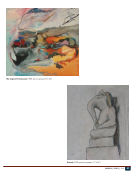
sketchpads and pencils. The drawing of Ganesh,
the elephant god, is one of the dozens of drawings
I did during that time. The ISKCON leaders had
told us we would lose our connection with god
if we ever left the temple. Despite their negative
programming, I found a deeper connection with
spirit simply by sitting quietly and sketching.
Another reason I got the Fairfax studio was
to spend more time in Los Angeles and learn
more about the children of ISKCON. A few years
after completing my graduate work, I found out
ISKCON had abused a generation of children in
their boarding schools. The children told me they
resented the PR department because we used
their photographs in our publications, but ignored
their suffering. That experience and the suicide of
Jivananda soon after forced me to acknowledge
how brutal life had been for the first cohort of
ISKCON’s children. I felt a debt to the children and
wanted to take them under my wing.
After giving up the Fairfax studio, I invited several
young adults who had grown up in ISKCON to visit
me at my house in Arizona. We did artwork every
day, and I preached to them about the importance
of having a job. I even hired them to do yard
work and other chores around my house. Each
of them went on to become successful, working
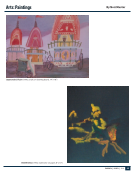
for a living. The Angel of Vrindavana was one of
the paintings I did during that time. It’s based on
the map of Vrindavana, the holy land of Krishna’s
childhood, where some of the worst ISKCON child
abuse had taken place. I sketched the map on a
large canvas, and painted an angel witnessing the
abuse. The angel’s face is red, showing her shame
and anger. The ISKCON property, the scene of the
abuse, is covered in dark clouds.
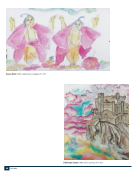
I told my art teacher Lu Bellamak about my bad
experiences in ISKCON, and that I was writing
a book about it. She encouraged me to paint
images to desensitize myself to ISKCON, and make
a new connection with India that was my own. The
Old Babaji came from a photo of the Kumba Mela,
a religious gathering at the Ganges River. Lu and I
made up a palate of pinks and browns to surround
the old Babaji with color. I loved the painting, and
it haunted me for years.
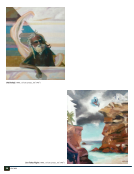
The last image in this series is Jiva Takes Flight. This
was another large oil I completed as a student of
Lu Bellamak. The mountains and sea were images
I had seen on a recent trip to Puerto Vallarta,
Mexico. The buildings on the left mountain
were from photographs of the hotel where we
stayed. The building on the right mountain
was an imagined Mayan or Aztec pyramid. The
dragon symbolizes Jivananda. Like Catholics,
Hare Krishnas believe suicide victims go to hell
or purgatory, but I envisioned Jivananda flying
through a cloud hole into heaven. I still get
emotional when I think of Jivananda’s short life,
and how his death led me to look for the truth
about the children of ISKCON.
Using art to work through my ISKCON experience
helped me find what I was looking for in the
first place: a connection with a personal higher
power. Each image crystalized on canvas, paper,
or drawing board allowed me to process bundles
of confusion and negative feelings. I’m grateful for
the time I had to devote to my healing, and for the
friends and teachers who helped me dig in and
find what needed to be said. n
About the Artist
Nori Muster, MS, is the
author of Betrayal of the
Spirit: My Life behind the
Headlines of the Hare Krishna
Movement (University of
Illinois Press, 1997), Cult
Survivors Handbook: Seven
Paths to an Authentic Life (2000), and Child of the
Cult (2010). She was an ISKCON member from
1978 to 1988, then earned her Master of Science
degree at Western Oregon University in 1991
doing art therapy with juvenile sex offenders.
She is currently a freelance writer and adjunct
professor based in Arizona. Her website for cultic-
studies information is surrealist.org/cults/ n
Using art to work
through my ISKCON
experience helped
me find what I was
looking for in the
first place…
Kandinsky’s Improvisations. He is my favorite artist,
and I love his Improvisations series. I bought a
LACMA membership and went to the Museum
every day to sit in front of the huge paintings
and draw them. LACMA also has a permanent
exhibit of Asian artwork, including room after
room of ancient deities. That year, the Museum
became my temple, and the guards recognized
me as a familiar site, sitting on the floor with my
sketchpads and pencils. The drawing of Ganesh,
the elephant god, is one of the dozens of drawings
I did during that time. The ISKCON leaders had
told us we would lose our connection with god
if we ever left the temple. Despite their negative
programming, I found a deeper connection with
spirit simply by sitting quietly and sketching.
Another reason I got the Fairfax studio was
to spend more time in Los Angeles and learn
more about the children of ISKCON. A few years
after completing my graduate work, I found out
ISKCON had abused a generation of children in
their boarding schools. The children told me they
resented the PR department because we used
their photographs in our publications, but ignored
their suffering. That experience and the suicide of
Jivananda soon after forced me to acknowledge
how brutal life had been for the first cohort of
ISKCON’s children. I felt a debt to the children and
wanted to take them under my wing.
After giving up the Fairfax studio, I invited several
young adults who had grown up in ISKCON to visit
me at my house in Arizona. We did artwork every
day, and I preached to them about the importance
of having a job. I even hired them to do yard
work and other chores around my house. Each
of them went on to become successful, working
for a living. The Angel of Vrindavana was one of
the paintings I did during that time. It’s based on
the map of Vrindavana, the holy land of Krishna’s
childhood, where some of the worst ISKCON child
abuse had taken place. I sketched the map on a
large canvas, and painted an angel witnessing the
abuse. The angel’s face is red, showing her shame
and anger. The ISKCON property, the scene of the
abuse, is covered in dark clouds.
I told my art teacher Lu Bellamak about my bad
experiences in ISKCON, and that I was writing
a book about it. She encouraged me to paint
images to desensitize myself to ISKCON, and make
a new connection with India that was my own. The
Old Babaji came from a photo of the Kumba Mela,
a religious gathering at the Ganges River. Lu and I
made up a palate of pinks and browns to surround
the old Babaji with color. I loved the painting, and
it haunted me for years.
The last image in this series is Jiva Takes Flight. This
was another large oil I completed as a student of
Lu Bellamak. The mountains and sea were images
I had seen on a recent trip to Puerto Vallarta,
Mexico. The buildings on the left mountain
were from photographs of the hotel where we
stayed. The building on the right mountain
was an imagined Mayan or Aztec pyramid. The
dragon symbolizes Jivananda. Like Catholics,
Hare Krishnas believe suicide victims go to hell
or purgatory, but I envisioned Jivananda flying
through a cloud hole into heaven. I still get
emotional when I think of Jivananda’s short life,
and how his death led me to look for the truth
about the children of ISKCON.
Using art to work through my ISKCON experience
helped me find what I was looking for in the
first place: a connection with a personal higher
power. Each image crystalized on canvas, paper,
or drawing board allowed me to process bundles
of confusion and negative feelings. I’m grateful for
the time I had to devote to my healing, and for the
friends and teachers who helped me dig in and
find what needed to be said. n
About the Artist
Nori Muster, MS, is the
author of Betrayal of the
Spirit: My Life behind the
Headlines of the Hare Krishna
Movement (University of
Illinois Press, 1997), Cult
Survivors Handbook: Seven
Paths to an Authentic Life (2000), and Child of the
Cult (2010). She was an ISKCON member from
1978 to 1988, then earned her Master of Science
degree at Western Oregon University in 1991
doing art therapy with juvenile sex offenders.
She is currently a freelance writer and adjunct
professor based in Arizona. Her website for cultic-
studies information is surrealist.org/cults/ n
Using art to work
through my ISKCON
experience helped
me find what I was
looking for in the
first place…