25 VOLUME 9 |ISSUE 1 |2018
The lies caught up with me in 1988, and I quit my
position in the PR office and left. However, I may
have witnessed too much and waited too long to
resign because I left feeling stained with ISKCON’s
criminal filth. The worst experience for me was when
people from the organization conspired to murder
Steven Bryant, a vocal critic, near the LA temple in
1986. I knew the victim personally and was shocked
that devotees of Krishna would kill him. Besides the
guilt I felt for ISKCON’s crimes, I had to face myself. I
had become an organization lackey with no ability
to think critically.
While still living in ISKCON, I gradually began to
realize what was going on. By 1988 I had decided
to write a memoir and signed up for classes such
as Autobiography Into Fiction and Writing As Healing
through UCLA Extension. Within a week of moving
away from the temple, I started taking art classes,
including Dreamscapes: Drawing From Dreams, and
The Spiritual in Art, with artist and UCLA instructor
Linda Jacobson. Linda helped me work through the
creative blocks ISKCON had given me.
Soon after that, I moved to Oregon and went back
to school for a Master’s of Science degree studying
art therapy, counseling, and juvenile justice. After
moving back to Arizona, I studied oil painting with
Lu Bellamak at her private school in Scottsdale.
From my time in the UCLA Extension Writer’s
Program, I had written a 500-page manuscript I
would later develop into my memoir, Betrayal of the
Spirit. Around the time I left ISKCON, I had a dream
that I was wearing a beautiful robe lined with images
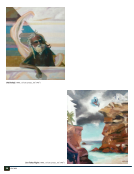
of Hindu deities. I painted The Dream Robe sometime
later and still remember from the dream that I
carefully folded the robe and put it in a box in the
trunk of my car to protect it. In waking life, I stored
my manuscript safely in a drawer for several years.
I call my art style Abstract Surrealism. Surrealism
is usually dreamlike realism, but my art is abstract.
Nearly every piece I’ve ever done fits into the
Abstract Surrealism category. The images here are
from 1990 through 1996, when I went from freshly
out of ISKCON to serious graduate student, to
dedicated writer-researcher and artist. Some of the
paintings simply reconnected me with things I still
found sacred.
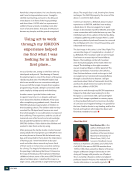
One such numinous painting for me is Jayananda’s
Vision. ISKCON started Ratha Yatra festivals in
America to mirror the cart festivals in Orissa, and
Jayananda had the engineering skills to build the
carts. While dying of cancer, he supervised the
building of the carts for the Los Angeles Ratha Yatra.
To scout out a parade route, his friends drove him
to Venice Beach and took him out on the boardwalk
in a wheelchair. When I was a member, I felt close to
Jayananda because my boss always told me to think
of him if I ran into any problems with my work to
help promote the second Los Angeles Ratha Yatra.
For the first few months living in Oregon, I attended
art classes at a local park, Bush Barn, and disciplined
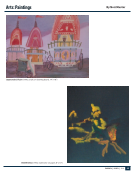
myself to paint every day. The Child Krishna
watercolor on black paper is the child Krishna riding
on a calf. Krishna was born a prince, but to hide
him from the evil King Kamsa, Krishna’s father took
him to a farm in Vrindavana, where he grew up as a
cowherd. I love the abstract quality of the painting,
and how easily it came from the paintbrush.
While in Oregon, I remained in contact with ISKCON.
Several times, I flew to Los Angeles to stay with my
friends in the ISKCON Pyramid House in Topanga
Canyon. Some years later, the couple who owned the
property went through a protracted divorce after the
woman’s son killed himself with a gun. The situation
was a nightmare, but in happier times, I sat in the
couple’s loft shrine and drew an ink and watercolor
portrait of their Gaura-Nitai deities.
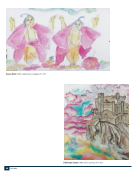
In 1994, my husband and I traveled to Edinburgh,
Scotland to find his roots. The siege of Edinburgh
Castle started in 1571, and English forces held
Edinburgh for 2 years. When the Castle fell in 1573,
the forces quartered and hung my husband’s
ancestors from the market cross. We got to see
the crosses and the John Knox House, where
his ancestors had lived before the siege. Visiting
Edinburgh and learning of the violent history of my
husband’s ancestors connected me with something
visceral and real. After I started as a student at Lu
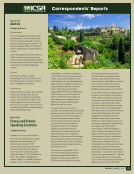
Bellamak’s school, I soon painted Edinburgh Castle
based on my photographs. The unicorn on the
mountain is a part of me that wanted to reunite with
something real about my own life.
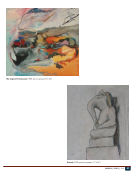
Feeling a need to be near old friends, in 1995 I
rented a studio apartment in the Fairfax District near
the Los Angeles County Museum of Art (LACMA). At
that time, LACMA had a traveling exhibit of Wassily
During my decade
in ISKCON, I lost
not only my
permission to
do artwork,
but also my soul.
The lies caught up with me in 1988, and I quit my
position in the PR office and left. However, I may
have witnessed too much and waited too long to
resign because I left feeling stained with ISKCON’s
criminal filth. The worst experience for me was when
people from the organization conspired to murder
Steven Bryant, a vocal critic, near the LA temple in
1986. I knew the victim personally and was shocked
that devotees of Krishna would kill him. Besides the
guilt I felt for ISKCON’s crimes, I had to face myself. I
had become an organization lackey with no ability
to think critically.
While still living in ISKCON, I gradually began to
realize what was going on. By 1988 I had decided
to write a memoir and signed up for classes such
as Autobiography Into Fiction and Writing As Healing
through UCLA Extension. Within a week of moving
away from the temple, I started taking art classes,
including Dreamscapes: Drawing From Dreams, and
The Spiritual in Art, with artist and UCLA instructor
Linda Jacobson. Linda helped me work through the
creative blocks ISKCON had given me.
Soon after that, I moved to Oregon and went back
to school for a Master’s of Science degree studying
art therapy, counseling, and juvenile justice. After
moving back to Arizona, I studied oil painting with
Lu Bellamak at her private school in Scottsdale.
From my time in the UCLA Extension Writer’s
Program, I had written a 500-page manuscript I
would later develop into my memoir, Betrayal of the
Spirit. Around the time I left ISKCON, I had a dream
that I was wearing a beautiful robe lined with images
of Hindu deities. I painted The Dream Robe sometime
later and still remember from the dream that I
carefully folded the robe and put it in a box in the
trunk of my car to protect it. In waking life, I stored
my manuscript safely in a drawer for several years.
I call my art style Abstract Surrealism. Surrealism
is usually dreamlike realism, but my art is abstract.
Nearly every piece I’ve ever done fits into the
Abstract Surrealism category. The images here are
from 1990 through 1996, when I went from freshly
out of ISKCON to serious graduate student, to
dedicated writer-researcher and artist. Some of the
paintings simply reconnected me with things I still
found sacred.
One such numinous painting for me is Jayananda’s
Vision. ISKCON started Ratha Yatra festivals in
America to mirror the cart festivals in Orissa, and
Jayananda had the engineering skills to build the
carts. While dying of cancer, he supervised the
building of the carts for the Los Angeles Ratha Yatra.
To scout out a parade route, his friends drove him
to Venice Beach and took him out on the boardwalk
in a wheelchair. When I was a member, I felt close to
Jayananda because my boss always told me to think
of him if I ran into any problems with my work to
help promote the second Los Angeles Ratha Yatra.
For the first few months living in Oregon, I attended
art classes at a local park, Bush Barn, and disciplined
myself to paint every day. The Child Krishna
watercolor on black paper is the child Krishna riding
on a calf. Krishna was born a prince, but to hide
him from the evil King Kamsa, Krishna’s father took
him to a farm in Vrindavana, where he grew up as a
cowherd. I love the abstract quality of the painting,
and how easily it came from the paintbrush.
While in Oregon, I remained in contact with ISKCON.
Several times, I flew to Los Angeles to stay with my
friends in the ISKCON Pyramid House in Topanga
Canyon. Some years later, the couple who owned the
property went through a protracted divorce after the
woman’s son killed himself with a gun. The situation
was a nightmare, but in happier times, I sat in the
couple’s loft shrine and drew an ink and watercolor
portrait of their Gaura-Nitai deities.
In 1994, my husband and I traveled to Edinburgh,
Scotland to find his roots. The siege of Edinburgh
Castle started in 1571, and English forces held
Edinburgh for 2 years. When the Castle fell in 1573,
the forces quartered and hung my husband’s
ancestors from the market cross. We got to see
the crosses and the John Knox House, where
his ancestors had lived before the siege. Visiting
Edinburgh and learning of the violent history of my
husband’s ancestors connected me with something
visceral and real. After I started as a student at Lu
Bellamak’s school, I soon painted Edinburgh Castle
based on my photographs. The unicorn on the
mountain is a part of me that wanted to reunite with
something real about my own life.
Feeling a need to be near old friends, in 1995 I
rented a studio apartment in the Fairfax District near
the Los Angeles County Museum of Art (LACMA). At
that time, LACMA had a traveling exhibit of Wassily
During my decade
in ISKCON, I lost
not only my
permission to
do artwork,
but also my soul.