About ICSA Today
ICSA Today (IT) serves ICSA members by
providing information that enhances
understanding of all aspects of the cult
phenomenon, including how groups
function, how they affect members,
techniques of influence, dealing with
harmful effects, educational and legal
implications, and other subjects.
ICSA Today issues may include
• practical articles for former
members, families, helping
professionals, researchers,
and others
• opinion essays
• theoretical articles
• reports on research
• summaries of news reports on
groups
• information on books, articles, links
• information on ICSA members
• biographical profiles on selected
members
• personal accounts
• art work
• poetry
• short stories and other literary
articles
• special reports from correspondents
around the world
ICSA Today is published three times a
year.
Regular ICSA members receive the
print edition of ICSA Today and have
access to its Web edition. Students
and other special members gain
access to the online edition only.
Nonmember print subscriptions are
available. Submissions to the magazine
should be sent to the Editor-in-Chief,
Michael Langone, PhD:
mail@icsamail.com
We prefer Microsoft Word or a program
compatible with Word. Articles should
be no more than 2,500 words. Please
include a jpeg photo (no less than 360
dpi) and biographical sketch (less than
150 words) with your submission.
Appropriate submissions are reviewed
by the relevant section editor and,
when appropriate, editorial review
advisors.
International Cultic Studies Association
P.O. Box 2265 • Bonita Springs, FL 34133
Phone: 239.514.3081
Email: mail@icsamail.com
Website: icsahome.com
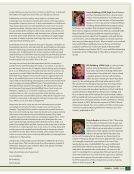
Ann Stamler, MA, MPhil, graduated from Brooklyn College summa cum laude and Phi Beta
Kappa in 1965, and earned graduate degrees in Latin from Columbia University. She was
in the Aesthetic Realism movement from birth until she left at age 41, in 1985. In 1987 she
married Joseph Stamler, whom she had first met in Aesthetic Realism. From 1985 to 2006
she was a senior executive of a nonprofit agency in New York that worked with the labor
movements in the U.S. and Israel. She has served on the boards of various civic and cultural
organizations. In 2007 she was elected to the legislative body of her town in Connecticut,
a position she held until 2013. In 2014 she received ICSA’s Margaret T. Singer Award. She is
Associate Editor of ICSA Today. n
Dear Readers,
This issue of ICSA Today is being prepared at the height of the COVID-19 pandemic.
Whatever condition our country and world are in when you read this, our lives have been
changed. A word widely being used to describe our experience is trauma—a subject ICSA
has been studying for decades. The themes of trauma and recovery run through this issue,
demonstrating how useful ICSA can be as we seek tools to cope with the psychological
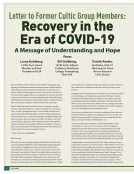
impact of the pandemic and, when it is safe, to start rebuilding our lives.
In their “Message of Understanding and Hope,” Lorna and Bill Goldberg and Patrick Rardin
talk about how the trauma of this pandemic may arouse memories of past trauma in
survivors of cultic abuse—feelings of fear, anxiety, helplessness, and vulnerability. How well
those terms describe what billions of people have felt as a virus almost unheard of 6 months
ago has ravaged entire countries. The writers urge us to be compassionate with ourselves,
and they offer suggestions for how we may lessen the impact of this traumatic event.
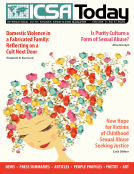
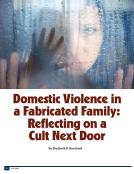
Articles by Elizabeth Burchard, Alice Greczyn, and Maria Peregolise illustrate both the
complex nature of trauma and human beings’ profound resilience and capacity for recovery.
Ms. Burchard, now a psychotherapist and lecturer on cults, uses her own painful experience
in an urban New Age group to probe the connections between cultic and domestic abuse.
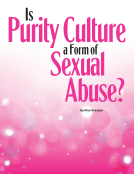
Ms. Greczyn, with great courage and candor, describes how she took back the right to her
self and her body after being manipulated in the name of spiritual purity. Ms. Peregolise,
who was raised under the strictures of an extreme religious belief system, recalls how writing
helped preserve her sanity.
In her profile of Wendy Ford Wolfberg, Mary O’Connell, herself a survivor, traces the journey
of a young woman from being engulfed by a destructive movement to finding not only hope
but also beauty in the world.
ICSA has been supporting education about cults and legal recognition of the harm they can
do for more than forty years. We report here on a conference at the University of Tennessee
College of Social Work about why communities need to understand coercive control and
cults, and on new legal resources for victims of childhood sexual abuse.
Hopefully, as you read this, optimism supported by science is gaining strength against fear,
and our lives are gaining a semblance of a new normalcy. I believe the wisdom within these
pages can help.
Sincerely,
Ann Stamler
Associate Editor
ICSA Today (IT) serves ICSA members by
providing information that enhances
understanding of all aspects of the cult
phenomenon, including how groups
function, how they affect members,
techniques of influence, dealing with
harmful effects, educational and legal
implications, and other subjects.
ICSA Today issues may include
• practical articles for former
members, families, helping
professionals, researchers,
and others
• opinion essays
• theoretical articles
• reports on research
• summaries of news reports on
groups
• information on books, articles, links
• information on ICSA members
• biographical profiles on selected
members
• personal accounts
• art work
• poetry
• short stories and other literary
articles
• special reports from correspondents
around the world
ICSA Today is published three times a
year.
Regular ICSA members receive the
print edition of ICSA Today and have
access to its Web edition. Students
and other special members gain
access to the online edition only.
Nonmember print subscriptions are
available. Submissions to the magazine
should be sent to the Editor-in-Chief,
Michael Langone, PhD:
mail@icsamail.com
We prefer Microsoft Word or a program
compatible with Word. Articles should
be no more than 2,500 words. Please
include a jpeg photo (no less than 360
dpi) and biographical sketch (less than
150 words) with your submission.
Appropriate submissions are reviewed
by the relevant section editor and,
when appropriate, editorial review
advisors.
International Cultic Studies Association
P.O. Box 2265 • Bonita Springs, FL 34133
Phone: 239.514.3081
Email: mail@icsamail.com
Website: icsahome.com
Ann Stamler, MA, MPhil, graduated from Brooklyn College summa cum laude and Phi Beta
Kappa in 1965, and earned graduate degrees in Latin from Columbia University. She was
in the Aesthetic Realism movement from birth until she left at age 41, in 1985. In 1987 she
married Joseph Stamler, whom she had first met in Aesthetic Realism. From 1985 to 2006
she was a senior executive of a nonprofit agency in New York that worked with the labor
movements in the U.S. and Israel. She has served on the boards of various civic and cultural
organizations. In 2007 she was elected to the legislative body of her town in Connecticut,
a position she held until 2013. In 2014 she received ICSA’s Margaret T. Singer Award. She is
Associate Editor of ICSA Today. n
Dear Readers,
This issue of ICSA Today is being prepared at the height of the COVID-19 pandemic.
Whatever condition our country and world are in when you read this, our lives have been
changed. A word widely being used to describe our experience is trauma—a subject ICSA
has been studying for decades. The themes of trauma and recovery run through this issue,
demonstrating how useful ICSA can be as we seek tools to cope with the psychological
impact of the pandemic and, when it is safe, to start rebuilding our lives.
In their “Message of Understanding and Hope,” Lorna and Bill Goldberg and Patrick Rardin
talk about how the trauma of this pandemic may arouse memories of past trauma in
survivors of cultic abuse—feelings of fear, anxiety, helplessness, and vulnerability. How well
those terms describe what billions of people have felt as a virus almost unheard of 6 months
ago has ravaged entire countries. The writers urge us to be compassionate with ourselves,
and they offer suggestions for how we may lessen the impact of this traumatic event.
Articles by Elizabeth Burchard, Alice Greczyn, and Maria Peregolise illustrate both the
complex nature of trauma and human beings’ profound resilience and capacity for recovery.
Ms. Burchard, now a psychotherapist and lecturer on cults, uses her own painful experience
in an urban New Age group to probe the connections between cultic and domestic abuse.
Ms. Greczyn, with great courage and candor, describes how she took back the right to her
self and her body after being manipulated in the name of spiritual purity. Ms. Peregolise,
who was raised under the strictures of an extreme religious belief system, recalls how writing
helped preserve her sanity.
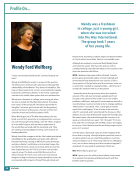
In her profile of Wendy Ford Wolfberg, Mary O’Connell, herself a survivor, traces the journey
of a young woman from being engulfed by a destructive movement to finding not only hope
but also beauty in the world.
ICSA has been supporting education about cults and legal recognition of the harm they can
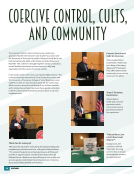
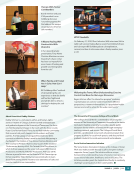
do for more than forty years. We report here on a conference at the University of Tennessee
College of Social Work about why communities need to understand coercive control and
cults, and on new legal resources for victims of childhood sexual abuse.
Hopefully, as you read this, optimism supported by science is gaining strength against fear,
and our lives are gaining a semblance of a new normalcy. I believe the wisdom within these
pages can help.
Sincerely,
Ann Stamler
Associate Editor