ISSN: 2710-4028 DOI: https://doi.org/10.54208/0003 1
Introduction
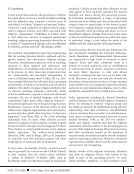
The grooming and sexual abuse of children occurs in a
wide variety of social and cultural contexts. Establishing
reliable statistical data on the rate of sexual abuse of
children is contingent upon careful analyses that
account for abuses that occur across childhood and
adolescence.4 Moreover, defining sexual abuse varies
in different data sets as does the inclusion of various
categories of perpetrator—i.e. adult or child, the latter
not always being included (see Finkelhor, Shattuck,
Turner, &Hamby, 2104). Consensus exists, however,
DOI: doi.org/10.54208/1000/0003/003
The Grooming of Children for Sexual Abuse in Religious Settings: Unique
Characteristics and Select Case Studies
Susan Raine1,2,3
Stephen A. Kent
Abstract: This article examines the sexual grooming of children and their caregivers in a wide variety
of religious settings. We argue that unique aspects of religion facilitate institutional and interpersonal
grooming in ways that often differ from forms of manipulation in secular settings. Drawing from Christianity
(Catholicism, Protestantism, and Seventh Day Adventism) and various sects (the Children of God, the
Branch Davidians, the Fundamentalist Latter-Day Saints, a Hindu ashram, and the Devadasis), we show
how some religious institutions and leadership figures in them can slowly cultivate children and their
caregivers into harmful and illegal sexual activity. A number of uniquely religious characteristics facilitate
this cultivation: theodicies of legitimation power, patriarchy, obedience, protection, and reverence toward
authority figures victims’ fears about spiritual punishments and scriptural uses to justify adult-child sex.
Keywords: child sexual abuse, religion, sects, cults
1 Please direct correspondence to the first author, Susan Raine.
2 Initially published in Aggression and Violent Behavior, 48 (2019), pp. 180–189. Reprinted with permission (includes
minor revisions for accuracy/consistency with APA style).
3 The authors express gratitude to the University of Alberta Library for access to the Stephen A. Kent Collection on
Alternative Religions. This research did not receive any specific grant from funding agencies in the public, commercial, or not-
for-profit sectors.
4 Finkelhor et al.’s recent American study found that girls especially are at an elevated risk for sexual abuse between the
ages of fifteen and seventeen (Finkelhor et al., 2014,).
5 The Lantern Project in the United Kingdom reports that almost 25% of British children are sexually abused by either an
adult or a peer (The Lantern Project, 2012). Darkness to Light (2018a) estimates that one out of every ten children in the United
States is sexually abused by age eighteen. Both organizations reveal that 90% of children are abused by someone whom they
know. In Canada, the organization, Little Warriors, states that one in three girls and one in six boys experience sexual abuse
and that 95% of victims know their abusers (Little Warriors, 2018). In Australia as many as 35% of women and 16% of men are
subject to child sexual abuse (Plummer, 2018). Moreover, a recent Royal Commission study in Australia identifies the need to
understand the dynamics of grooming in institutional contexts (see O’Leary, Koh, &Dare, 2017). UNICEF’s study, Hidden in
Plain Sight, reported that, worldwide, 120 million girls under age of twenty have experienced some form of sexual violence in
their lives. The figure for boys is difficult to determine because they are less likely to report abuse. Moreover, the organization
states that the actual figures for girls also remain unknown due to underreporting (UNICEF, 2014).
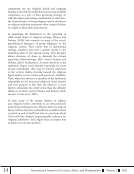
in expressing the global magnitude of the problem
(Collin-Vezina, Daigneault &Hebert, 2013 Darkness
to Light,2018a Levesque, 1999 Pereda, Guilera, Forns,
&Gomez-Benito, 1994 Stoltenborgh, van Ijzendoorn,
Euser, &Bakermans-Kranenburg, 2011).5
Perpetrators of child sexual abuse do not conform
to a single set of personality or other characteristics,
thus confounding attempts to establish a recognizable
profile. Initial research on child sexual abuse focused
almost exclusively on the perceived menace of persons
unknown to the children, or, ‘stranger danger.’
Introduction
The grooming and sexual abuse of children occurs in a
wide variety of social and cultural contexts. Establishing
reliable statistical data on the rate of sexual abuse of
children is contingent upon careful analyses that
account for abuses that occur across childhood and
adolescence.4 Moreover, defining sexual abuse varies
in different data sets as does the inclusion of various
categories of perpetrator—i.e. adult or child, the latter
not always being included (see Finkelhor, Shattuck,
Turner, &Hamby, 2104). Consensus exists, however,
DOI: doi.org/10.54208/1000/0003/003
The Grooming of Children for Sexual Abuse in Religious Settings: Unique
Characteristics and Select Case Studies
Susan Raine1,2,3
Stephen A. Kent
Abstract: This article examines the sexual grooming of children and their caregivers in a wide variety
of religious settings. We argue that unique aspects of religion facilitate institutional and interpersonal
grooming in ways that often differ from forms of manipulation in secular settings. Drawing from Christianity
(Catholicism, Protestantism, and Seventh Day Adventism) and various sects (the Children of God, the
Branch Davidians, the Fundamentalist Latter-Day Saints, a Hindu ashram, and the Devadasis), we show
how some religious institutions and leadership figures in them can slowly cultivate children and their
caregivers into harmful and illegal sexual activity. A number of uniquely religious characteristics facilitate
this cultivation: theodicies of legitimation power, patriarchy, obedience, protection, and reverence toward
authority figures victims’ fears about spiritual punishments and scriptural uses to justify adult-child sex.
Keywords: child sexual abuse, religion, sects, cults
1 Please direct correspondence to the first author, Susan Raine.
2 Initially published in Aggression and Violent Behavior, 48 (2019), pp. 180–189. Reprinted with permission (includes
minor revisions for accuracy/consistency with APA style).
3 The authors express gratitude to the University of Alberta Library for access to the Stephen A. Kent Collection on
Alternative Religions. This research did not receive any specific grant from funding agencies in the public, commercial, or not-
for-profit sectors.
4 Finkelhor et al.’s recent American study found that girls especially are at an elevated risk for sexual abuse between the
ages of fifteen and seventeen (Finkelhor et al., 2014,).
5 The Lantern Project in the United Kingdom reports that almost 25% of British children are sexually abused by either an
adult or a peer (The Lantern Project, 2012). Darkness to Light (2018a) estimates that one out of every ten children in the United
States is sexually abused by age eighteen. Both organizations reveal that 90% of children are abused by someone whom they
know. In Canada, the organization, Little Warriors, states that one in three girls and one in six boys experience sexual abuse
and that 95% of victims know their abusers (Little Warriors, 2018). In Australia as many as 35% of women and 16% of men are
subject to child sexual abuse (Plummer, 2018). Moreover, a recent Royal Commission study in Australia identifies the need to
understand the dynamics of grooming in institutional contexts (see O’Leary, Koh, &Dare, 2017). UNICEF’s study, Hidden in
Plain Sight, reported that, worldwide, 120 million girls under age of twenty have experienced some form of sexual violence in
their lives. The figure for boys is difficult to determine because they are less likely to report abuse. Moreover, the organization
states that the actual figures for girls also remain unknown due to underreporting (UNICEF, 2014).
in expressing the global magnitude of the problem
(Collin-Vezina, Daigneault &Hebert, 2013 Darkness
to Light,2018a Levesque, 1999 Pereda, Guilera, Forns,
&Gomez-Benito, 1994 Stoltenborgh, van Ijzendoorn,
Euser, &Bakermans-Kranenburg, 2011).5
Perpetrators of child sexual abuse do not conform
to a single set of personality or other characteristics,
thus confounding attempts to establish a recognizable
profile. Initial research on child sexual abuse focused
almost exclusively on the perceived menace of persons
unknown to the children, or, ‘stranger danger.’