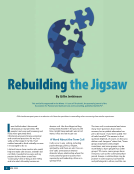
Rebuilding the Jigsaw
By Gillie Jenkinson
ICSA TODAY
was thrilled when I discovered
Christianity in my late teens. The
people I met were well meaning and
many were genuinely kind.
Christianity answered many existential
and emotional questions for me, but
sadly, at that stage in my life, I had
neither learned to think critically nor was
I encouraged to do so.
I did not have a close mentor who could
help me make safe choices indeed I did
not think I needed to be wary and my
passion led me down a road into
“community” (the in-thing in the 1970s)
and into what ultimately became an
abusive cult. Like the allegorical frog
being slowly heated in the pan, by the
time I might have realised I was in hot
water, it was too late to get out.
A Word About the Term Cult
Cults occur in any setting, including
psychotherapy, politics, religion,
spirituality and there are also “one-on-
one” cults: a two-person intense
domestic abuse relationship where the
more powerful partner asserts their
superiority and leadership, often on a
spiritual level.
The term cult is controversial and raises
many more questions than it does
answers, but a suitable alternative has
yet to be found.1 I have been asked: “Are
all cults harmful?”The answer to that
question depends, of course, on how you
define a cult. Langone2 states that, “Some
groups may harm some people
sometimes, and some groups may be
more likely to harm people than other
groups.” Of course, some groups harm
everyone, such as the community that I
joined. Groups or relationships may be
positive in some aspects, but harmful
and pathological in others, and this can
2
This article first appeared in the Winter 11 issue of Thresholds, the quarterly journal of the
Association for Pastoral and Spiritual Care and Counselling, published by BACPC©.
I
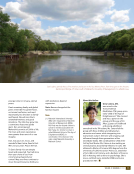
Gillie Jenkinson spent years in an abusive cult. Now she specializes in counselling others recovering from similar experiences.
By Gillie Jenkinson
ICSA TODAY
was thrilled when I discovered
Christianity in my late teens. The
people I met were well meaning and
many were genuinely kind.
Christianity answered many existential
and emotional questions for me, but
sadly, at that stage in my life, I had
neither learned to think critically nor was
I encouraged to do so.
I did not have a close mentor who could
help me make safe choices indeed I did
not think I needed to be wary and my
passion led me down a road into
“community” (the in-thing in the 1970s)
and into what ultimately became an
abusive cult. Like the allegorical frog
being slowly heated in the pan, by the
time I might have realised I was in hot
water, it was too late to get out.
A Word About the Term Cult
Cults occur in any setting, including
psychotherapy, politics, religion,
spirituality and there are also “one-on-
one” cults: a two-person intense
domestic abuse relationship where the
more powerful partner asserts their
superiority and leadership, often on a
spiritual level.
The term cult is controversial and raises
many more questions than it does
answers, but a suitable alternative has
yet to be found.1 I have been asked: “Are
all cults harmful?”The answer to that
question depends, of course, on how you
define a cult. Langone2 states that, “Some
groups may harm some people
sometimes, and some groups may be
more likely to harm people than other
groups.” Of course, some groups harm
everyone, such as the community that I
joined. Groups or relationships may be
positive in some aspects, but harmful
and pathological in others, and this can
2
This article first appeared in the Winter 11 issue of Thresholds, the quarterly journal of the
Association for Pastoral and Spiritual Care and Counselling, published by BACPC©.
I
Gillie Jenkinson spent years in an abusive cult. Now she specializes in counselling others recovering from similar experiences.