VOLUME 5 |NUMBER 2 |2014
e would like to share with you an interesting case
report concerning the cultic group known as
Shinsekai, which means God World in Japanese. Toru Saito was
the founder and leader of the Shinsekai group, an offshoot of
the Church of World Messianity. Toru Saito was on trial, along
with his lieutenants Takashi Sano, Fumitoshi Asahara, Yoshiko
Asahara, and Akie Yoshida (maiden name, Sugimoto), for
organized fraud. Akie Yoshida had been sentenced earlier to
imprisonment with labor for 3 years on April 16, 2012, her
sentence had been suspended for 5 years.
The Shinsekai case is interesting in at least two aspects:
First, although the Yokohama District Court recognized that the
Shinsekai group’s solicitations for donations and other financial
compensation were indeed of a religious nature, it ruled that
those solicitations still constituted organized fraud. The court
sentenced the leader and four group members to prison terms.
Second, although the leader had in fact had become a fugitive
who had evaded arrest before he was finally arrested, the other
defendants all argued their innocence on the ground that they
were true believers and, because theirs was a religious faith, that
they in fact held the conviction that the supernatural powers
they professed were real. But after the leader was arrested, all
the defendants, including the leader, pleaded guilty to fraud
(apparently the leader wanted an early release on bail and a
lighter sentence). After the leader was arrested, the group paid
everything the plaintiffs/victims were seeking in the civil trial,
including the lawyer’s fees and then they announced that the
Shinsekai group would be dissolving and the leader would
retire. (The group had actually filed for dissolution of the
corporations that constituted the Shinsekai group on December
31, 2011, months before the Yokohama District Court handed
down its verdict in the case in May of 2012.) None of the lawyers
who had been working on this case, who had much experience
in handling cases against cults, had ever before seen a cult
leader plead guilty to fraud make compensation voluntarily,
although with some reluctance and then dissolve the group
with a public announcement.
The Yokohama District Court found Toru Saito and his four
accomplices guilty of organized fraud on May 1, 2012, and
sentenced them as follows:
Defendant Toru Saito is hereby sentenced to imprisonment
with labor for 5 years defendants Takashi Sano and
Fumitoshi Asahara are hereby sentenced to imprisonment
with labor for 2 years and 6 months and defendant
Yoshiko Asahara is hereby sentenced to imprisonment
with labor for 2 years and 6 months. Of the total number
of days the defendants were held under presentencing
detention, 90 days shall be deducted from the said period
of imprisonment for each of the four defendants.
Suspension of 5 years from the date of the definitive
judgment is granted to defendant Takashi Sano, and
suspension of 4 years from the date of the definitive
judgment is granted to defendants Fumitoshi Asahara and
Yoshiko Asahara.1
The court ruling, as stated following, clearly describes the
religious nature and the modus operandi of the Shinsekai group,
and the roles of each defendant. However, we do not mention
the medical neglect within the group that resulted in several
deaths, because those deaths were never investigated or
prosecuted. Although we have used the word plea in this paper,
the Japanese criminal justice system lacks the concept of the
guilty plea, so even when the defendant admits guilt, the trial
must be conducted in order for the court to hand down a guilty
sentence. Thus, the court still conducted the trial on the fact-
finding phase. We have bolded various portions of the court’s
judgment for emphasis.
The case herein is of organized fraud, wherein defendant
Saito, the chief executive of Shinsekai Ltd., a company
whose objective is to swindle money from its clients under
the pretext of invocatory and other fees, has swindled the
total of 11,900,000 yen in cash from three victims in
conspiracy with Yoshida, then the executive manager of E2
Ltd., one of Shinsekai’s affiliated companies, by telling lies
suggesting that the victims’ troubles and worries would be
solved through intercessory prayers and other spiritual
interventions. In addition, defendant Saito, together with
defendant Sano, who had been in the position of overall
management of business operations of Entrance Akasaka
Ltd., and defendants Fumitoshi and Yoshiko, who had been
the representative directors of Entrance Akasaka Ltd.,
conspired and swindled the total of 1,500,000 yen in cash
from two victims in the same scheme as above. The
Shinsekai assemblage was a group of many commercial
organizations—e.g., Entrance Akasaka and E2, with
Shinsekai Ltd. in charge, having a common registered
objective of performing fortune telling and onomancy
(“divination by the letters of a name” [Webster’s]). In reality,
as explained below, the group had been carrying out
some kind of religious practices under the direction of
defendant Saito. In the Shinsekai group, members had
read and followed a book titled Shinsho (God’s Writings),
written by defendant Saito, the founder of the religion, as
their code of conduct. This book explicitly states that
divine spiritual light emitted by God has the potency to
cure diseases and illness considered in modern medicine
to be incurable or unidentified, and that God’s
miracles will manifest if one deals with God by offering
labor and money. Being under contract with Shinsekai Ltd.,
the affiliated companies such as Entrance Akasaka and E2
had been paying 30% to 50%, depending on the time
involved, of their sale of services—e.g., the invocatory
service and mediation/transfer of divine spiritual light—as
royalties. In the Shinsekai group, this mediation/transfer of
divine spiritual light was the main product for sale, and
19
W
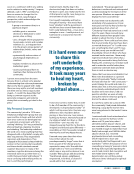
None of the lawyers
...had ever before
seen a cult
leader plead guilty
to fraud…
e would like to share with you an interesting case
report concerning the cultic group known as
Shinsekai, which means God World in Japanese. Toru Saito was
the founder and leader of the Shinsekai group, an offshoot of
the Church of World Messianity. Toru Saito was on trial, along
with his lieutenants Takashi Sano, Fumitoshi Asahara, Yoshiko
Asahara, and Akie Yoshida (maiden name, Sugimoto), for
organized fraud. Akie Yoshida had been sentenced earlier to
imprisonment with labor for 3 years on April 16, 2012, her
sentence had been suspended for 5 years.
The Shinsekai case is interesting in at least two aspects:
First, although the Yokohama District Court recognized that the
Shinsekai group’s solicitations for donations and other financial
compensation were indeed of a religious nature, it ruled that
those solicitations still constituted organized fraud. The court
sentenced the leader and four group members to prison terms.
Second, although the leader had in fact had become a fugitive
who had evaded arrest before he was finally arrested, the other
defendants all argued their innocence on the ground that they
were true believers and, because theirs was a religious faith, that
they in fact held the conviction that the supernatural powers
they professed were real. But after the leader was arrested, all
the defendants, including the leader, pleaded guilty to fraud
(apparently the leader wanted an early release on bail and a
lighter sentence). After the leader was arrested, the group paid
everything the plaintiffs/victims were seeking in the civil trial,
including the lawyer’s fees and then they announced that the
Shinsekai group would be dissolving and the leader would
retire. (The group had actually filed for dissolution of the
corporations that constituted the Shinsekai group on December
31, 2011, months before the Yokohama District Court handed
down its verdict in the case in May of 2012.) None of the lawyers
who had been working on this case, who had much experience
in handling cases against cults, had ever before seen a cult
leader plead guilty to fraud make compensation voluntarily,
although with some reluctance and then dissolve the group
with a public announcement.
The Yokohama District Court found Toru Saito and his four
accomplices guilty of organized fraud on May 1, 2012, and
sentenced them as follows:
Defendant Toru Saito is hereby sentenced to imprisonment
with labor for 5 years defendants Takashi Sano and
Fumitoshi Asahara are hereby sentenced to imprisonment
with labor for 2 years and 6 months and defendant
Yoshiko Asahara is hereby sentenced to imprisonment
with labor for 2 years and 6 months. Of the total number
of days the defendants were held under presentencing
detention, 90 days shall be deducted from the said period
of imprisonment for each of the four defendants.
Suspension of 5 years from the date of the definitive
judgment is granted to defendant Takashi Sano, and
suspension of 4 years from the date of the definitive
judgment is granted to defendants Fumitoshi Asahara and
Yoshiko Asahara.1
The court ruling, as stated following, clearly describes the
religious nature and the modus operandi of the Shinsekai group,
and the roles of each defendant. However, we do not mention
the medical neglect within the group that resulted in several
deaths, because those deaths were never investigated or
prosecuted. Although we have used the word plea in this paper,
the Japanese criminal justice system lacks the concept of the
guilty plea, so even when the defendant admits guilt, the trial
must be conducted in order for the court to hand down a guilty
sentence. Thus, the court still conducted the trial on the fact-
finding phase. We have bolded various portions of the court’s
judgment for emphasis.
The case herein is of organized fraud, wherein defendant
Saito, the chief executive of Shinsekai Ltd., a company
whose objective is to swindle money from its clients under
the pretext of invocatory and other fees, has swindled the
total of 11,900,000 yen in cash from three victims in
conspiracy with Yoshida, then the executive manager of E2
Ltd., one of Shinsekai’s affiliated companies, by telling lies
suggesting that the victims’ troubles and worries would be
solved through intercessory prayers and other spiritual
interventions. In addition, defendant Saito, together with
defendant Sano, who had been in the position of overall
management of business operations of Entrance Akasaka
Ltd., and defendants Fumitoshi and Yoshiko, who had been
the representative directors of Entrance Akasaka Ltd.,
conspired and swindled the total of 1,500,000 yen in cash
from two victims in the same scheme as above. The
Shinsekai assemblage was a group of many commercial
organizations—e.g., Entrance Akasaka and E2, with
Shinsekai Ltd. in charge, having a common registered
objective of performing fortune telling and onomancy
(“divination by the letters of a name” [Webster’s]). In reality,
as explained below, the group had been carrying out
some kind of religious practices under the direction of
defendant Saito. In the Shinsekai group, members had
read and followed a book titled Shinsho (God’s Writings),
written by defendant Saito, the founder of the religion, as
their code of conduct. This book explicitly states that
divine spiritual light emitted by God has the potency to
cure diseases and illness considered in modern medicine
to be incurable or unidentified, and that God’s
miracles will manifest if one deals with God by offering
labor and money. Being under contract with Shinsekai Ltd.,
the affiliated companies such as Entrance Akasaka and E2
had been paying 30% to 50%, depending on the time
involved, of their sale of services—e.g., the invocatory
service and mediation/transfer of divine spiritual light—as
royalties. In the Shinsekai group, this mediation/transfer of
divine spiritual light was the main product for sale, and
19
W
None of the lawyers
...had ever before
seen a cult
leader plead guilty
to fraud…