7 VOLUME 6 |ISSUE 2 |2015
In working with families, exit counselors will be able to
articulate the worldview of the cult to the family and to
explain changes the family has observed through that lens.
I am more likely to highlight other factors such as stage-of-
life issues, dependency issues, the individual’s struggle for
autonomy, and so on.
I probably take a more thorough history from the family than
exit counselors do. Indeed, the family does most of the talking
for the first hour when I’m with them. I ask the family how the
cult member has responded to losses in the past, whether he
has been able to acknowledge when he is wrong, who in the
family and outside the family he is more likely to respect and
confide in. I ask about the cult member’s relationship with
every family member as a means of assessing who may be
helpful either in trying to get the cult member to speak to an
exit counselor or during an exit counseling.
I ask about the quality of the cult member’s friendships,
drug and alcohol use, and whether he was sexually active.
Not all the symptoms displayed by a cult member spring
from membership in the cult or from cult membership
alone. The reason I take a history of precult behavior is so
that I can distinguish between cult-related symptoms and
psychopathology.
I am more likely to focus on the dynamics of the family,
how they approach problem solving, and how they can
be mobilized to help their family member reconsider the
situation that he is in. For example, who in the family does
the most talking? Do some members defer to others? What
happens when they disagree about the answer to something
I’ve asked? How does the family resolve these issues? These
factors help me to advise them about their strategy in dealing
with the situation.
I am more likely to emphasize issues that may not be foremost
in the minds of exit counselors, such as reminding parents
that they must not neglect the emotional needs of their other
children. Also, I’m better able to speak about mental-health
care and other issues after the individual has left the cult.
I see my main role as helping the family determine what
their next step is. I may focus on helping them to mobilize
themselves if they seem depressed and frightened, or I may
suggest that they more thoroughly assess the situation if
they’ve reached a conclusion about what they should do
without having explored all the options.
I tell them what their alternatives are—for example, watchful
waiting, setting a date for further evaluation, consulting an
exit counselor, speaking to the cult member himself, or asking
a trusted nonfamily member to do so. I discuss the pros
and cons of each approach based on this particular family’s
situation.
If there is a difference of opinion between parents regarding
how they should deal with the situation, I try to help them to
clarify their reasoning, and I try to suggest compromises that
take into account both parents’ positions. Medical/psychiatric
consultation is warranted if there is a history of severe
psychopathology, drug abuse, suicidal ideation, or suicidal
gestures or attempts in the past.
If the family is anxious about what the next step may be
after the individual has left the cult, I discuss alternatives.
Sometimes parents are not aware of the residential aftercare
programs that are available to former cult members. I may
suggest that therapy for the former cult member is an
alternative to consider, but that they should first focus on
getting him out of the cult, then see how he is progressing. It’s
not the parents’ responsibility to lay out the rest of his life.
I have worked with families in a conflict-resolution mode,
in which I mediated between the family and the cult
member. My goal in these meetings has been to help the
family members and the cult member to articulate their
concerns to each other and to help each hear what the
other is saying without prejudgments. I attempt in these
meetings to facilitate communication so that there is a clearer
understanding of what the participants’ concerns are and
how they see the issues. I encourage the family to articulate
the warning signs or unacceptable changes they see in
the cult member so that these concerns are brought to the
consciousness of the cult member. I ask the family to articulate
behavior that would allay their concerns (e.g., continuing
the cult member’s education). I ask the cult member to
tell the family what circumstances or revelations could
theoretically lead him to reconsider his membership in the
group. I always end with a recommendation that the family
members continue their dialogue, even if they disagree, and
I invite the participants to call me for individual, confidential
consultations if they would like to do so.
Results of these meetings for the cult members have usually
been positive. They appreciate the fact that I am not ostensibly
judging their decisions, and they see me as someone who
wants to help them to find a way for their family to accept
their present lifestyle choices. Remember that I am seeing a
population of cult members who still care what their family
thinks about them and their membership in the group
otherwise, they would not agree to meet with me.
From the point of view of the family, these meetings are rarely
successful. Despite the fact that I tell the family not to expect
that the meeting will result in the cult member’s leaving
the cult, they always hope and expect that it will do so. The
family’s anger toward the cult member (and, perhaps, toward
me) is re-ignited. I am still exploring how best to prepare the
family for this outcome.
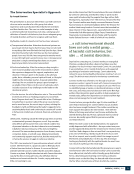
I am more likely to
emphasize… the emotional
needs of their other children.
In working with families, exit counselors will be able to
articulate the worldview of the cult to the family and to
explain changes the family has observed through that lens.
I am more likely to highlight other factors such as stage-of-
life issues, dependency issues, the individual’s struggle for
autonomy, and so on.
I probably take a more thorough history from the family than
exit counselors do. Indeed, the family does most of the talking
for the first hour when I’m with them. I ask the family how the
cult member has responded to losses in the past, whether he
has been able to acknowledge when he is wrong, who in the
family and outside the family he is more likely to respect and
confide in. I ask about the cult member’s relationship with
every family member as a means of assessing who may be
helpful either in trying to get the cult member to speak to an
exit counselor or during an exit counseling.
I ask about the quality of the cult member’s friendships,
drug and alcohol use, and whether he was sexually active.
Not all the symptoms displayed by a cult member spring
from membership in the cult or from cult membership
alone. The reason I take a history of precult behavior is so
that I can distinguish between cult-related symptoms and
psychopathology.
I am more likely to focus on the dynamics of the family,
how they approach problem solving, and how they can
be mobilized to help their family member reconsider the
situation that he is in. For example, who in the family does
the most talking? Do some members defer to others? What
happens when they disagree about the answer to something
I’ve asked? How does the family resolve these issues? These
factors help me to advise them about their strategy in dealing
with the situation.
I am more likely to emphasize issues that may not be foremost
in the minds of exit counselors, such as reminding parents
that they must not neglect the emotional needs of their other
children. Also, I’m better able to speak about mental-health
care and other issues after the individual has left the cult.
I see my main role as helping the family determine what
their next step is. I may focus on helping them to mobilize
themselves if they seem depressed and frightened, or I may
suggest that they more thoroughly assess the situation if
they’ve reached a conclusion about what they should do
without having explored all the options.
I tell them what their alternatives are—for example, watchful
waiting, setting a date for further evaluation, consulting an
exit counselor, speaking to the cult member himself, or asking
a trusted nonfamily member to do so. I discuss the pros
and cons of each approach based on this particular family’s
situation.
If there is a difference of opinion between parents regarding
how they should deal with the situation, I try to help them to
clarify their reasoning, and I try to suggest compromises that
take into account both parents’ positions. Medical/psychiatric
consultation is warranted if there is a history of severe
psychopathology, drug abuse, suicidal ideation, or suicidal
gestures or attempts in the past.
If the family is anxious about what the next step may be
after the individual has left the cult, I discuss alternatives.
Sometimes parents are not aware of the residential aftercare
programs that are available to former cult members. I may
suggest that therapy for the former cult member is an
alternative to consider, but that they should first focus on
getting him out of the cult, then see how he is progressing. It’s
not the parents’ responsibility to lay out the rest of his life.
I have worked with families in a conflict-resolution mode,
in which I mediated between the family and the cult
member. My goal in these meetings has been to help the
family members and the cult member to articulate their
concerns to each other and to help each hear what the
other is saying without prejudgments. I attempt in these
meetings to facilitate communication so that there is a clearer
understanding of what the participants’ concerns are and
how they see the issues. I encourage the family to articulate
the warning signs or unacceptable changes they see in
the cult member so that these concerns are brought to the
consciousness of the cult member. I ask the family to articulate
behavior that would allay their concerns (e.g., continuing
the cult member’s education). I ask the cult member to
tell the family what circumstances or revelations could
theoretically lead him to reconsider his membership in the
group. I always end with a recommendation that the family
members continue their dialogue, even if they disagree, and
I invite the participants to call me for individual, confidential
consultations if they would like to do so.
Results of these meetings for the cult members have usually
been positive. They appreciate the fact that I am not ostensibly
judging their decisions, and they see me as someone who
wants to help them to find a way for their family to accept
their present lifestyle choices. Remember that I am seeing a
population of cult members who still care what their family
thinks about them and their membership in the group
otherwise, they would not agree to meet with me.
From the point of view of the family, these meetings are rarely
successful. Despite the fact that I tell the family not to expect
that the meeting will result in the cult member’s leaving
the cult, they always hope and expect that it will do so. The
family’s anger toward the cult member (and, perhaps, toward
me) is re-ignited. I am still exploring how best to prepare the
family for this outcome.
I am more likely to
emphasize… the emotional
needs of their other children.