International Journal of Coercion, Abuse, and Manipulation Volume 3 2022 80
Methodology and Key Empirical Findings
The research in this study identified seven risk-
related categories linked to youths’ susceptibility to
sex trafficking. In this study, school counselors were
asked in interviews to identify youths’ generational
experiences. Eleven school counselors from five school
districts were used for this study. All but one participant
identified as both a licensed professional counselor
and a certified school counselor. Each participant had
over ten years of experience and was employed in an
elementary, middle, or high school setting.
Several qualitative methods were used to gather data for
this study, including open-ended surveys, interviews,
and control groups. Each data collection method
served as a stepping-stone for determining questions
utilized in further investigations. Grounded theory was
applied to delineate data and determine generational
shifts as categories and subcategories for the basis of a
sex trafficking prevention model.
Participants in this study identified generational
changes that, in their opinion, made Generation Z more
susceptible to sex trafficking than previous generations.
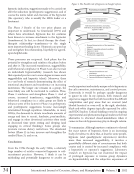
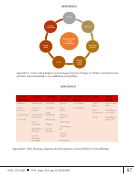
From this information, seven identifiable categories
(see Appendix A for a model) were developed:
parenting, technology, personal achievement, risk-
taking behavior, sexuality/gender identity, poverty,
and mental illness. Each category also contained
subcategories. For example, personal achievement had
career-related subcategories, such as entitlement, lack
of motivation, authority issues, truancy, and study
skills (see Appendix B for subcategory information).
This research has also prompted a model for preventing
and assisting victims of trafficking through restorative
methods and included an emphasis on career counseling
as a treatment modality (Humphreys, 2017).
Other risk factors seen among trafficked youth include
using illegal drugs identifying as lesbian, gay, bisexual,
transgender, queer, or questioning (LGBTQ+) living
in foster care or poverty having difficulty in school
having mental health issues or being involved in
bullying (Smith, 2014). While more research is needed
to determine why some youths are more susceptible to
grooming than others, one possibility is that traffickers
offer hope for instant acceptance and immediate
need fulfillment. If this is the case, practical career
counseling strategies offer an alternative method for
fulfilling those needs without risking victimization.
The following section discusses these strategies and
how they relate to targeted risk factors.
Strategies and Theoretical Premises for Preventing
Trafficking
Career counseling could prove to be a key component
when working to prevent sex trafficking. Because
poverty and personal achievement are risk factors
for being sex trafficked, they are discussed as issues
to address through career development (Humphreys,
2017). Per the research findings outlined above, each
subcategory of personal achievement is discussed,
along with the rationale for including career counseling
as a preventive strategy. Adler’s (2011) social interest,
Maslow’s (1943) hierarchy of needs, and Super’s (1942)
self-concept are also discussed so counselors can best
understand the premises of the career strategies that
are discussed later in this article.
Personal Achievement Risk Factors and Rationale
for the Use of Career Counseling
Addressing Personal Achievement
Issues related to personal achievement, such as
entitlement, lack of motivation, authority issues,
truancy, and study skills, should be addressed through
career counseling as part of sex trafficking prevention.
According to school counselors, identifiable issues
related to personal achievement are commonly seen
in adolescents today (Humphreys, 2017). School
counselors reported current adolescents to be more
entitled than previous generations. To this end, a
common theme in Humphreys’s (2017) research
was that “entitled parents are raising ultra-entitled
children.” Lack of motivation was attributed to the idea
that students felt things should come easily to them
and there should not be too many steps to achieve a
particular goal (Humphreys, 2017). Career counseling
can bridge the gap between work, goals, and the steps
that must be taken to attain advancement.
Career achievement is directly related to well-
being, social needs, future goals, and other forms
of achievement, such as academic (Humphreys,
2017). Individuals are more likely to be motivated in