VOLUME 4 |NUMBER 2 |2013 3 2 ICSA TODAY
any authors have noted that often during the cult-
recruitment process a new cult personality is created that
overlays the recruit’s precult personality (Hassan, 1988 Lifton,
1961 Singer &Lalich, 2004 West &Martin, 1998). Along with
most other cult members, married couples are induced to
suppress their own wishes and needs for the “greater good” as the
leader defines it. After couples’ departure from the group, the
gradual unfreezing of their cult personalities and the simultaneous
recovery of suppressed aspects of their precult personalities can
lead to new conflicts within their marriage. Furthermore, even
though married former cultists might share similar postcult
difficulties, each spouse will be dealing with these difficulties in a
unique way depending on, among other factors, their respective
precult personality structures, the degree of support they receive
from others, and the influence of their individual cult experiences.
As the couples’ precult personalities emerge, the
complementariness of a marriage based on cult values can erode
as both partners begin to reestablish their characteristic and
unique ways of viewing the world. Needless to say, this dynamic
places a strain on postcult marriages. Once the need to serve the
cult is no longer paramount, some partners become aware that
they have little in common with their spouses. Divorce might
occur, and this increases the amount of stress newly single
former cult members and their families experience. However, a
large number of former cult members do remain together, even
many of those who were matched by their leaders. Sometimes
there is a bond and a mutuality that exist independent of the cult
overlay. Some couples choose to enter therapy to see whether
they can work out some of their present struggles.
While they are in the cult, members usually begin to identify with
some of their leader’s personality characteristics and attitudes.
These identifications tend to supplant previous aspects of their
character and previous identifications they have made with and in
reaction to parental figures early in life. Because cult leaders
generally are paranoid individuals, they tend to indoctrinate
members into a paranoid vision of the world (Tobias &Lalich,
1994). Leaders can display their paranoia through a tendency to
ascribe the worst possible motives to the behavior of others. When
they leave the cult, some individuals who have incorporated this
attitude may continue to see their world through a paranoid lens
because their cult leader’s influence doesn’t evaporate the minute
they leave. For most, “losing” the influence of their cult leader’s
personality can take a great deal of time. Former members might
be aware that their trusting nature prior to their cult experience
increased their vulnerability to recruitment. Additionally, during
times in which they might feel concern about the influence of
others (because they are aware of their fragile sense of identity and
of uncertainty about their own point of view), a paranoid attitude
can serve to protect them from being unduly influenced by others.
However, in marital relationships, this paranoia has the
potential of becoming destructive. When individuals who have
been in a cult begin a relationship with someone with no prior
cult involvement, the former cultists might have a tendency to
interpret their partner’s behavior suspiciously or to see negative
motives behind the partner’s behavior. When two former cultists
have a relationship, this situation can intensify.
In 2003, I wrote an article for the Cultic Studies Review titled
“Reflections on Marriage After the Cult.” In this essay, I will
highlight some concepts that I originally articulated in that article.
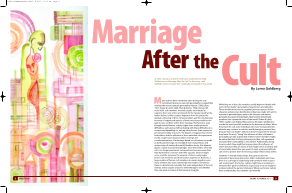
M
the
Marriage
C u lt A fter
By Lorna Goldberg
ICSA_volume4Issue2_Final 8/9/13 8:31 PM Page 4
any authors have noted that often during the cult-
recruitment process a new cult personality is created that
overlays the recruit’s precult personality (Hassan, 1988 Lifton,
1961 Singer &Lalich, 2004 West &Martin, 1998). Along with
most other cult members, married couples are induced to
suppress their own wishes and needs for the “greater good” as the
leader defines it. After couples’ departure from the group, the
gradual unfreezing of their cult personalities and the simultaneous
recovery of suppressed aspects of their precult personalities can
lead to new conflicts within their marriage. Furthermore, even
though married former cultists might share similar postcult
difficulties, each spouse will be dealing with these difficulties in a
unique way depending on, among other factors, their respective
precult personality structures, the degree of support they receive
from others, and the influence of their individual cult experiences.
As the couples’ precult personalities emerge, the
complementariness of a marriage based on cult values can erode
as both partners begin to reestablish their characteristic and
unique ways of viewing the world. Needless to say, this dynamic
places a strain on postcult marriages. Once the need to serve the
cult is no longer paramount, some partners become aware that
they have little in common with their spouses. Divorce might
occur, and this increases the amount of stress newly single
former cult members and their families experience. However, a
large number of former cult members do remain together, even
many of those who were matched by their leaders. Sometimes
there is a bond and a mutuality that exist independent of the cult
overlay. Some couples choose to enter therapy to see whether
they can work out some of their present struggles.
While they are in the cult, members usually begin to identify with
some of their leader’s personality characteristics and attitudes.
These identifications tend to supplant previous aspects of their
character and previous identifications they have made with and in
reaction to parental figures early in life. Because cult leaders
generally are paranoid individuals, they tend to indoctrinate
members into a paranoid vision of the world (Tobias &Lalich,
1994). Leaders can display their paranoia through a tendency to
ascribe the worst possible motives to the behavior of others. When
they leave the cult, some individuals who have incorporated this
attitude may continue to see their world through a paranoid lens
because their cult leader’s influence doesn’t evaporate the minute
they leave. For most, “losing” the influence of their cult leader’s
personality can take a great deal of time. Former members might
be aware that their trusting nature prior to their cult experience
increased their vulnerability to recruitment. Additionally, during
times in which they might feel concern about the influence of
others (because they are aware of their fragile sense of identity and
of uncertainty about their own point of view), a paranoid attitude
can serve to protect them from being unduly influenced by others.
However, in marital relationships, this paranoia has the
potential of becoming destructive. When individuals who have
been in a cult begin a relationship with someone with no prior
cult involvement, the former cultists might have a tendency to
interpret their partner’s behavior suspiciously or to see negative
motives behind the partner’s behavior. When two former cultists
have a relationship, this situation can intensify.
In 2003, I wrote an article for the Cultic Studies Review titled
“Reflections on Marriage After the Cult.” In this essay, I will
highlight some concepts that I originally articulated in that article.
M
the
Marriage
C u lt A fter
By Lorna Goldberg
ICSA_volume4Issue2_Final 8/9/13 8:31 PM Page 4