86 International Journal of Coercion, Abuse, and Manipulation ■ Vol. 1, No. 1, 2020
communication, August 27, 2011). Stories
such as these are common they are part of the
traumatic narratives recounted by former
members throughout the world, as women
grieve their lost years of motherhood and
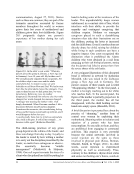
children grieve their lost childhoods. Figure
20.1 poignantly depicts one person’s
experience of her mother during her cult
years.
Figure 20.1. In the artist’s own words: “When my
parents joined the group (Lichtoase, a New Age cult
in Germany) I was 10 years old. My brother was 8.
We were physically separated from our parents. All
the children slept in one room and the adults
somewhere else. To make it worse, we were
forbidden to call them Mom and Dad. We had to treat
them like the other adults, hence like strangers. If we
came to them because we had gotten hurt, we were
turned away. Before my eyes, my mother
disappeared. She turned into someone else: Her smile
changed, her words changed, her manners changed.
A stranger was wearing my mother’s skin. I felt
deeply disoriented. When I became a mother, I felt a
disconnect between myself and my daughter.
Sometimes the memories, the overwhelming feeling
of loss and the trauma would catch up with me, and I
would disappear before her eyes.
I was physically there, but my mind was somewhere
else, stuck in the past. It took all my strength ...to
become visible again” (Katharina Meredith).
The child-rearing practices of any given
group depend on the whims of the leader, and
these can change from day to day. Loyalty to
the leader is tested by how willing a mother
is to carry out the discipline prescribed by the
leader, no matter how outrageous or abusive.
She essentially becomes “middle
management” (Markowitz &Halperin,
1984). One cult expert recounts the story of a
client who disciplined her child by putting his
hand in boiling water at the insistence of the
leader. This unpredictability keeps women
unbalanced, in a constant state of fear, which
interferes with their ability to provide the
empathy and contingent caregiving that
children require. Mothers or surrogate
caregivers placed in such a destabilizing
situation often take their frustrations out on
the children, putting the latter at increased
risk for child abuse. Even if a mother does not
directly abuse her child, raising her children
while living in such conditions can have a
negative impact. One court recognized this
distinction when it prohibited the Alamo
children who were detained in a raid from
returning to their cult biological parents, stating
that the parents had failed to protect them from
the severe abuses of the cult leader.
A very poignant illustration of this disrupted
bond is reflected in artwork by Katharina
Meredith, who was raised in the Lichtoase
group, a New Age cult in Germany. Her
picture consists of three panels and is titled
“Disappearing Mother.” In the first panel, a
mother is lovingly reaching out to her child,
who reaches back. In the second panel, the
figure of the mother is partially grayed out. In
the third panel, the mother has all but
disappeared, with the child holding out her
hands into empty space (Meredith, 2016).
A brief discussion is presented here about the
practice of “shunning,” another form of
control over women by exploiting their
motherhood. Shunning refers to isolation and
rejection of a person who has been
noncompliant. No one talks to them, and they
are prohibited from engaging in communal
activities. This practice is very powerful
because the neural networks involved in
social rejection are the same as those
involved in physical pain (Kross, Berman,
Mischel, Smith, &Wager, 2011). In other
words, social rejection is experienced
physically as well as emotionally. Thus,
contrary to the children’s rhyme about sticks
and stones not hurting one’s bones, words do
communication, August 27, 2011). Stories
such as these are common they are part of the
traumatic narratives recounted by former
members throughout the world, as women
grieve their lost years of motherhood and
children grieve their lost childhoods. Figure
20.1 poignantly depicts one person’s
experience of her mother during her cult
years.
Figure 20.1. In the artist’s own words: “When my
parents joined the group (Lichtoase, a New Age cult
in Germany) I was 10 years old. My brother was 8.
We were physically separated from our parents. All
the children slept in one room and the adults
somewhere else. To make it worse, we were
forbidden to call them Mom and Dad. We had to treat
them like the other adults, hence like strangers. If we
came to them because we had gotten hurt, we were
turned away. Before my eyes, my mother
disappeared. She turned into someone else: Her smile
changed, her words changed, her manners changed.
A stranger was wearing my mother’s skin. I felt
deeply disoriented. When I became a mother, I felt a
disconnect between myself and my daughter.
Sometimes the memories, the overwhelming feeling
of loss and the trauma would catch up with me, and I
would disappear before her eyes.
I was physically there, but my mind was somewhere
else, stuck in the past. It took all my strength ...to
become visible again” (Katharina Meredith).
The child-rearing practices of any given
group depend on the whims of the leader, and
these can change from day to day. Loyalty to
the leader is tested by how willing a mother
is to carry out the discipline prescribed by the
leader, no matter how outrageous or abusive.
She essentially becomes “middle
management” (Markowitz &Halperin,
1984). One cult expert recounts the story of a
client who disciplined her child by putting his
hand in boiling water at the insistence of the
leader. This unpredictability keeps women
unbalanced, in a constant state of fear, which
interferes with their ability to provide the
empathy and contingent caregiving that
children require. Mothers or surrogate
caregivers placed in such a destabilizing
situation often take their frustrations out on
the children, putting the latter at increased
risk for child abuse. Even if a mother does not
directly abuse her child, raising her children
while living in such conditions can have a
negative impact. One court recognized this
distinction when it prohibited the Alamo
children who were detained in a raid from
returning to their cult biological parents, stating
that the parents had failed to protect them from
the severe abuses of the cult leader.
A very poignant illustration of this disrupted
bond is reflected in artwork by Katharina
Meredith, who was raised in the Lichtoase
group, a New Age cult in Germany. Her
picture consists of three panels and is titled
“Disappearing Mother.” In the first panel, a
mother is lovingly reaching out to her child,
who reaches back. In the second panel, the
figure of the mother is partially grayed out. In
the third panel, the mother has all but
disappeared, with the child holding out her
hands into empty space (Meredith, 2016).
A brief discussion is presented here about the
practice of “shunning,” another form of
control over women by exploiting their
motherhood. Shunning refers to isolation and
rejection of a person who has been
noncompliant. No one talks to them, and they
are prohibited from engaging in communal
activities. This practice is very powerful
because the neural networks involved in
social rejection are the same as those
involved in physical pain (Kross, Berman,
Mischel, Smith, &Wager, 2011). In other
words, social rejection is experienced
physically as well as emotionally. Thus,
contrary to the children’s rhyme about sticks
and stones not hurting one’s bones, words do