88 International Journal of Coercion, Abuse, and Manipulation ■ Vol. 2, 2021
fear, pain, power, and many more.
Perhaps rule-making ought to simply be
called existing.xlii
Much of the same can be said about contracts.
If law is about rules, contracts are about
relationships. They are our way to organise
our lives and our relationships. Contracts can
be a recognition of a significant relationship.
We seek to tell both each other and the world
that surrounds us that a relationship is worthy
of being recognised in writing and in an
official form. Contracts also strengthen a
relationship, giving it an official and binding
nature. They give us certainty and alleviate
our fear. We know that a failure to uphold the
relationship would be a breach of the
contract—and carry some consequences. The
contract is simultaneously a recognition of
our fear, the fear that others will take
advantage of our trust and deceive us, and an
aid to alleviate this fear. Contracts, like laws,
allow us to live our lives peacefully. We
rarely pause to think about the mosaic of laws
and contracts that ensure that we are safe in
all aspects of our lives, yet this mosaic is
highly complex and not naturally occurring.
This mosaic allows us to dedicate ourselves
to productive aims such as contributing to our
community and finding happiness, rather
than having to worry about our survival or
about others taking advantage of our trust.
The billion-year contract is, therefore, first
about a relationship. It is about the
relationship that unites Scientologists to their
religion. As we explored in the previous
section, only seasoned Scientologists are
invited to join the Sea Organisation, and even
these Scientologists need to undergo rigorous
spiritual testing and training—some would,
as we saw, call this testing indoctrination or
even brainwashingxliii—to prove and reaffirm
their allegiance to the organisation. The
relationship that the billion-year contract
recognises is one of extreme loyalty, and it is
one of great importance to the religion. The
billion-year contract recognises the most
dedicated Scientologists, those who are most
crucial to the survival and growth of the
religion. As mentioned in the previous
paragraph, the recognition of a relationship
through a contract is inextricably tied to its
officialisation and its strengthening.
Members who sign the contract are implicitly
yet tangibly recognised as key members of
the religion. xliv This recognition, coupled
with the training and preparation that
preceded it, helps strengthen the members’
commitment to the religion. The contract is a
reciprocal commitment wherein the members
commit themselves to the organisation, while
the organisation recognises the members’
importance to its flourishment.
We, of course, cannot think of the billion-
year contract without mentioning its unique
religious nature. The contract symbolises and
strengthens a special type of commitment:
one of a religious nature. While the interplay
between law and religion has been widely
studied, there seem to be no contracts similar
to the billion-year contract—contracts that
unite a religious organisation to an unpaid
clergy member. There are other types of
contractual xlv relationships in religions.
There are, for example, employment
contracts that can unite paid employees and
their religious organisation, xlvi and private
contracts (between private parties) that
regulate their relationship.xlvii Scientology is,
therefore, different. Although members of
other religions would most likely see their
relationship to their religion as eternal (if they
believe in eternal life and salvation through
their religion), Scientology chooses to
reinforce, recognise, and officialise this
commitment by using what it calls a contract.
The billion-year contract is, needless to say,
invalid within the mainstream xlviii legal
system. No thorough legal analysis is
required to reach this conclusion. The
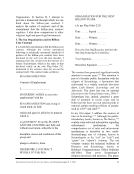
contract purports to be an employment
contractxlix with a term of one billion years,
without any remuneration being provided.
fear, pain, power, and many more.
Perhaps rule-making ought to simply be
called existing.xlii
Much of the same can be said about contracts.
If law is about rules, contracts are about
relationships. They are our way to organise
our lives and our relationships. Contracts can
be a recognition of a significant relationship.
We seek to tell both each other and the world
that surrounds us that a relationship is worthy
of being recognised in writing and in an
official form. Contracts also strengthen a
relationship, giving it an official and binding
nature. They give us certainty and alleviate
our fear. We know that a failure to uphold the
relationship would be a breach of the
contract—and carry some consequences. The
contract is simultaneously a recognition of
our fear, the fear that others will take
advantage of our trust and deceive us, and an
aid to alleviate this fear. Contracts, like laws,
allow us to live our lives peacefully. We
rarely pause to think about the mosaic of laws
and contracts that ensure that we are safe in
all aspects of our lives, yet this mosaic is
highly complex and not naturally occurring.
This mosaic allows us to dedicate ourselves
to productive aims such as contributing to our
community and finding happiness, rather
than having to worry about our survival or
about others taking advantage of our trust.
The billion-year contract is, therefore, first
about a relationship. It is about the
relationship that unites Scientologists to their
religion. As we explored in the previous
section, only seasoned Scientologists are
invited to join the Sea Organisation, and even
these Scientologists need to undergo rigorous
spiritual testing and training—some would,
as we saw, call this testing indoctrination or
even brainwashingxliii—to prove and reaffirm
their allegiance to the organisation. The
relationship that the billion-year contract
recognises is one of extreme loyalty, and it is
one of great importance to the religion. The
billion-year contract recognises the most
dedicated Scientologists, those who are most
crucial to the survival and growth of the
religion. As mentioned in the previous
paragraph, the recognition of a relationship
through a contract is inextricably tied to its
officialisation and its strengthening.
Members who sign the contract are implicitly
yet tangibly recognised as key members of
the religion. xliv This recognition, coupled
with the training and preparation that
preceded it, helps strengthen the members’
commitment to the religion. The contract is a
reciprocal commitment wherein the members
commit themselves to the organisation, while
the organisation recognises the members’
importance to its flourishment.
We, of course, cannot think of the billion-
year contract without mentioning its unique
religious nature. The contract symbolises and
strengthens a special type of commitment:
one of a religious nature. While the interplay
between law and religion has been widely
studied, there seem to be no contracts similar
to the billion-year contract—contracts that
unite a religious organisation to an unpaid
clergy member. There are other types of
contractual xlv relationships in religions.
There are, for example, employment
contracts that can unite paid employees and
their religious organisation, xlvi and private
contracts (between private parties) that
regulate their relationship.xlvii Scientology is,
therefore, different. Although members of
other religions would most likely see their
relationship to their religion as eternal (if they
believe in eternal life and salvation through
their religion), Scientology chooses to
reinforce, recognise, and officialise this
commitment by using what it calls a contract.
The billion-year contract is, needless to say,
invalid within the mainstream xlviii legal
system. No thorough legal analysis is
required to reach this conclusion. The
contract purports to be an employment
contractxlix with a term of one billion years,
without any remuneration being provided.