7 VOLUME 7 |ISSUE 2 |2015
observation can often reveal the inconsistencies and falsehoods
in a cultic group’s teachings. A common falsehood is that dire
consequences will befall anybody who leaves the group. If you
leave, or if you are considering leaving, talk to people who have
left. Odds are quite high that, although they may struggle with
recovery issues, the cult’s dark predictions did not come true. If
this prediction is false, others may be, as well.
When exercising your powers of observation, keep in mind the
concept of confirmation bias, which “refers to the tendency to
selectively search for and consider information that confirms
one's beliefs” (psychologyandsociety.com/confirmationbias.
html). Fight the confirmation-bias tendency that we all have
by deliberately looking for information that challenges your
preconceptions. If your preconception can stand up to critical
scrutiny, then you can have more confidence in its validity.
Test Your Beliefs
The first step in testing a belief is to treat it as a hypothesis, not
a fact. Any belief can become a hypothesis when you search
for evidence that will either be supportive of or contrary to the
belief. One may, for example, think that people are cold and
mean. To defend yourself against the hostile stares you may
expect from people as you walk down the street, you take on
the demeanor of a cold and mean person! That demeanor is
not likely to elicit smiles and warmth from the people you pass.
This example is what we mean by a self-fulfilling prophecy. Your
expectation comes to pass because you behave as though it
already has come to pass.
If instead you treated the proposition that most people are
mean and cold as a hypothesis, you would vary your behavior
and observe the results. As you walk down the street, try
smiling and saying, “good morning.” Then count the positive and
negative reactions that you receive. Chances are there will be
more positive responses than you may have initially expected.
There will, of course, be some negative reactions. But the
hypothesis, “people are cold and mean” (which implies always or
usually cold and mean), may prove to be false when you test it
in a systematic way. (Of course, this experiment wouldn’t work
on a superbusy street, such as one finds in Manhattan. You’d be
saying so many “good mornings” so quickly that you’d probably
be deemed crazy!! Therefore, use common sense when testing
hypotheses.)
I wish I could do scientific studies on every question that I have!
In the day-to-day world, unfortunately, we may have to make
do with informal hypothesis testing, such as in the example of
saying “good morning” to people as we walk down a street. The
main point to keep in mind is that what we believe to be true
may be false. So let’s cultivate a healthy humility and test our
beliefs as best we can.
Mainstream education, if practiced properly, teaches us how to
question and analyze ideas. A cultic group typically does not
teach its children how to do this and works hard at persuading
its converts to stifle their education. This is why it is often
important for former members, especially those born or raised
in groups, to pursue their education after they leave the group.
Conclusion
If you left a group that seemed to say, “believe me, not your lying
eyes,” you may have a residue of dubious beliefs and unworthy
sources of authority that may be worth examining at some point
in your recovery. I hope the reflections in this essay will help you
in that endeavor. And always remember, unless you have very
good reason to think otherwise, trust your eyes! n
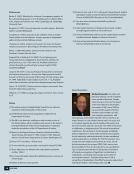
About the Author
Michael D. Langone, PhD,
received a doctorate in Counseling
Psychology from the University of
California, Santa Barbara in 1979.
Since 1981 he has been Executive
Director of International Cultic
Studies Association (ICSA). He was
the founding editor of Cultic Studies
Journal (CSJ) the editor of CSJ’s
successor, Cultic Studies Review and
editor of Recovery From Cults: Help
for Victims of Psychological and Spiritual Abuse (an alternate
of the Behavioral Science Book Service). He is coauthor of
Cults: What Parents Should Know and Satanism and Occult-
Related Violence: What You Should Know. Dr. Langone, ICSA
Today’s Editor-in-Chief, has been the chief designer and
coordinator of ICSA’s international conferences, which have
taken place in Barcelona, New York, Rome, Philadelphia,
Geneva, Denver, Brussels, Atlanta, Madrid, and Stockholm.
In 1995, he was honored as the Albert V. Danielsen visiting
Scholar at Boston University. He has authored numerous
articles in professional journals and books, and spoken
widely to dozens of lay and professional groups, various
university audiences, and numerous radio and television
stations, including the MacNeil/Lehrer News Hour and ABC
20/20. n
Notes
[1] ICSA can sometimes help you find therapists familiar
with cult issues. A cult expertise, however, isn’t necessary,
although it may be desirable. For example, therapists who
have worked with traumatized persons (e.g., from spouse
abuse) often understand the dynamics that have adversely
affected cult members.
[2] See Gillie Jenkinson’s article, “An Investigation into Cult
Pseudo-Personality,” in which she says that the cult
pseudopersonality “needs chewing over and digesting,
allowing what is nourishing to remain and eliminating the
rest.” (icsahome.com/articles/pseudopersonality)
[3] Some resources to help you spot sophistry and
pseudoscience include ICSA’s Education study guide,
particularly our Pseudoscience Fact Sheets (icsahome.
com/elibrary/studyguides/education) ICSA’s conference
video on Critical Thinking Skills by Wendy and Doug Duncan
(youtube.com/watch?v=GynqJ9uOGh8) ICSA’s Links page,
particularly the links Real-World Reasoning, Skeptic, and
The Reasoning Page (icsahome.com/elibrary/links).
observation can often reveal the inconsistencies and falsehoods
in a cultic group’s teachings. A common falsehood is that dire
consequences will befall anybody who leaves the group. If you
leave, or if you are considering leaving, talk to people who have
left. Odds are quite high that, although they may struggle with
recovery issues, the cult’s dark predictions did not come true. If
this prediction is false, others may be, as well.
When exercising your powers of observation, keep in mind the
concept of confirmation bias, which “refers to the tendency to
selectively search for and consider information that confirms
one's beliefs” (psychologyandsociety.com/confirmationbias.
html). Fight the confirmation-bias tendency that we all have
by deliberately looking for information that challenges your
preconceptions. If your preconception can stand up to critical
scrutiny, then you can have more confidence in its validity.
Test Your Beliefs
The first step in testing a belief is to treat it as a hypothesis, not
a fact. Any belief can become a hypothesis when you search
for evidence that will either be supportive of or contrary to the
belief. One may, for example, think that people are cold and
mean. To defend yourself against the hostile stares you may
expect from people as you walk down the street, you take on
the demeanor of a cold and mean person! That demeanor is
not likely to elicit smiles and warmth from the people you pass.
This example is what we mean by a self-fulfilling prophecy. Your
expectation comes to pass because you behave as though it
already has come to pass.
If instead you treated the proposition that most people are
mean and cold as a hypothesis, you would vary your behavior
and observe the results. As you walk down the street, try
smiling and saying, “good morning.” Then count the positive and
negative reactions that you receive. Chances are there will be
more positive responses than you may have initially expected.
There will, of course, be some negative reactions. But the
hypothesis, “people are cold and mean” (which implies always or
usually cold and mean), may prove to be false when you test it
in a systematic way. (Of course, this experiment wouldn’t work
on a superbusy street, such as one finds in Manhattan. You’d be
saying so many “good mornings” so quickly that you’d probably
be deemed crazy!! Therefore, use common sense when testing
hypotheses.)
I wish I could do scientific studies on every question that I have!
In the day-to-day world, unfortunately, we may have to make
do with informal hypothesis testing, such as in the example of
saying “good morning” to people as we walk down a street. The
main point to keep in mind is that what we believe to be true
may be false. So let’s cultivate a healthy humility and test our
beliefs as best we can.
Mainstream education, if practiced properly, teaches us how to
question and analyze ideas. A cultic group typically does not
teach its children how to do this and works hard at persuading
its converts to stifle their education. This is why it is often
important for former members, especially those born or raised
in groups, to pursue their education after they leave the group.
Conclusion
If you left a group that seemed to say, “believe me, not your lying
eyes,” you may have a residue of dubious beliefs and unworthy
sources of authority that may be worth examining at some point
in your recovery. I hope the reflections in this essay will help you
in that endeavor. And always remember, unless you have very
good reason to think otherwise, trust your eyes! n
About the Author
Michael D. Langone, PhD,
received a doctorate in Counseling
Psychology from the University of
California, Santa Barbara in 1979.
Since 1981 he has been Executive
Director of International Cultic
Studies Association (ICSA). He was
the founding editor of Cultic Studies
Journal (CSJ) the editor of CSJ’s
successor, Cultic Studies Review and
editor of Recovery From Cults: Help
for Victims of Psychological and Spiritual Abuse (an alternate
of the Behavioral Science Book Service). He is coauthor of
Cults: What Parents Should Know and Satanism and Occult-
Related Violence: What You Should Know. Dr. Langone, ICSA
Today’s Editor-in-Chief, has been the chief designer and
coordinator of ICSA’s international conferences, which have
taken place in Barcelona, New York, Rome, Philadelphia,
Geneva, Denver, Brussels, Atlanta, Madrid, and Stockholm.
In 1995, he was honored as the Albert V. Danielsen visiting
Scholar at Boston University. He has authored numerous
articles in professional journals and books, and spoken
widely to dozens of lay and professional groups, various
university audiences, and numerous radio and television
stations, including the MacNeil/Lehrer News Hour and ABC
20/20. n
Notes
[1] ICSA can sometimes help you find therapists familiar
with cult issues. A cult expertise, however, isn’t necessary,
although it may be desirable. For example, therapists who
have worked with traumatized persons (e.g., from spouse
abuse) often understand the dynamics that have adversely
affected cult members.
[2] See Gillie Jenkinson’s article, “An Investigation into Cult
Pseudo-Personality,” in which she says that the cult
pseudopersonality “needs chewing over and digesting,
allowing what is nourishing to remain and eliminating the
rest.” (icsahome.com/articles/pseudopersonality)
[3] Some resources to help you spot sophistry and
pseudoscience include ICSA’s Education study guide,
particularly our Pseudoscience Fact Sheets (icsahome.
com/elibrary/studyguides/education) ICSA’s conference
video on Critical Thinking Skills by Wendy and Doug Duncan
(youtube.com/watch?v=GynqJ9uOGh8) ICSA’s Links page,
particularly the links Real-World Reasoning, Skeptic, and
The Reasoning Page (icsahome.com/elibrary/links).