23 VOLUME 7 |ISSUE 2 |2015
she can from the encounter while never completely buying
the guru’s sacred jargon. She rises into the inner circle during
a time when the ashram is under attack by critics for its
armed guards, flaunting of local laws, and abusive leadership
of Durga, the woman who is second in command and came
to America with the Arhat from India. The septic systems are
not working properly, no building is up to code or is being
used for something it was not built for, and the pressure
on members to raise more and more money has worn thin.
Investigators discover that the infirmary is little more than
a drug-dealing operation—the leaders and the sannyasins
use narcotic pills, cocaine, and other drugs as enhancers for
enlightenment, or they sell drugs to make money. Bipolar
members are treated with lithium until they run out of it. In
her efforts to save the operation, S writes letters to assuage
angry parents of adult sannyasins—she has the audacity to
tell parents to come and join the Arhat’s teaching so that they
can be one with their children again. Despite the obvious
mess, Sarah believes in the essential mission of the Arhat,
to break up old patterns and to create the new, spiritually
awakened self.
Over time, in her third year of devotion, Sarah realizes the
limits of the Arhat’s closed system and decides to move
on. Membership at the ashram has declined significantly
and the second in command is gone, leaving Sarah in a
powerful position. While managing ashram funds, she
repeats her illegal partition of assets with her husband by
shifting a lot of ashram money to a private account. She
leaves more than three hundred thousand dollars for the
guru and explains why in her final letter to him. She retires
to a remote equatorial place where no one, including her
husband, can reach her personally or legally. She had secretly
taped sessions with the guru, sessions in which she discovers
his true identity (he is not Indian at all, but I will leave the
surprise to the reader) and tells him of it in a letter. She
blackmailed the fraud!
There is no profound lesson for ex-members or cult-research
specialists in this novel beyond an entertaining, erudite
ride through what some cults resemble. Former members
of similar movements should easily recognize and perhaps
laugh at memories of themselves in this story. Sarah discloses
her most intimate revelations to close family friend Midge
(who ironically becomes Sarah’s husband’s mistress), and in
these passages we find the new feminist values she believes
she gains from her ashram experience:
But one of the things the Arhat has done for me is
encourage me to let it out, let out the feelings and
thoughts both and get rid of the conditioning that
had us trained to keep quiet while all these fathers
and husbands and sons and lovers and lawyers and
doctors and Indian Chiefs talked. All this trying to
be not too smart, not too loud, not too sexy, not
too wonderful or else we’d overwhelm men that we
were subconsciously taught to do like children in
Hong Kong apartments trained to live in two cubic
feet of space—…
In the end, the reader has to choose between two
possibilities: Is Sarah truly enlightened when she writes that
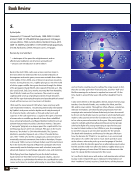
she has attained Sahasrara or “rare Sarah?” Sahasrara is the
seventh chakra above the head, a symbol of ultimate spiritual
freedom. Or is she the aging woman left alone with some
fond memories of the better times with her husband Charles
and family? Her last letter, signed S., is to Charles, and we the
readers are left to wonder. n
About the Reviewer
Joseph Szimhart began research
into cultic influence in 1980, after
ending his 2-year devotion to a New
Age sect called Church Universal
and Triumphant. He began to work
professionally as an intervention
specialist and exit counselor in 1986.
Since 1998 he has worked in the crisis department of a
psychiatric emergency hospital in Pennsylvania. He continues
to assist families with interventions and former members in
recovery, including consultations via phone and Internet.
jszimhart@windstream.net n
she can from the encounter while never completely buying
the guru’s sacred jargon. She rises into the inner circle during
a time when the ashram is under attack by critics for its
armed guards, flaunting of local laws, and abusive leadership
of Durga, the woman who is second in command and came
to America with the Arhat from India. The septic systems are
not working properly, no building is up to code or is being
used for something it was not built for, and the pressure
on members to raise more and more money has worn thin.
Investigators discover that the infirmary is little more than
a drug-dealing operation—the leaders and the sannyasins
use narcotic pills, cocaine, and other drugs as enhancers for
enlightenment, or they sell drugs to make money. Bipolar
members are treated with lithium until they run out of it. In
her efforts to save the operation, S writes letters to assuage
angry parents of adult sannyasins—she has the audacity to
tell parents to come and join the Arhat’s teaching so that they
can be one with their children again. Despite the obvious
mess, Sarah believes in the essential mission of the Arhat,
to break up old patterns and to create the new, spiritually
awakened self.
Over time, in her third year of devotion, Sarah realizes the
limits of the Arhat’s closed system and decides to move
on. Membership at the ashram has declined significantly
and the second in command is gone, leaving Sarah in a
powerful position. While managing ashram funds, she
repeats her illegal partition of assets with her husband by
shifting a lot of ashram money to a private account. She
leaves more than three hundred thousand dollars for the
guru and explains why in her final letter to him. She retires
to a remote equatorial place where no one, including her
husband, can reach her personally or legally. She had secretly
taped sessions with the guru, sessions in which she discovers
his true identity (he is not Indian at all, but I will leave the
surprise to the reader) and tells him of it in a letter. She
blackmailed the fraud!
There is no profound lesson for ex-members or cult-research
specialists in this novel beyond an entertaining, erudite
ride through what some cults resemble. Former members
of similar movements should easily recognize and perhaps
laugh at memories of themselves in this story. Sarah discloses
her most intimate revelations to close family friend Midge
(who ironically becomes Sarah’s husband’s mistress), and in
these passages we find the new feminist values she believes
she gains from her ashram experience:
But one of the things the Arhat has done for me is
encourage me to let it out, let out the feelings and
thoughts both and get rid of the conditioning that
had us trained to keep quiet while all these fathers
and husbands and sons and lovers and lawyers and
doctors and Indian Chiefs talked. All this trying to
be not too smart, not too loud, not too sexy, not
too wonderful or else we’d overwhelm men that we
were subconsciously taught to do like children in
Hong Kong apartments trained to live in two cubic
feet of space—…
In the end, the reader has to choose between two
possibilities: Is Sarah truly enlightened when she writes that
she has attained Sahasrara or “rare Sarah?” Sahasrara is the
seventh chakra above the head, a symbol of ultimate spiritual
freedom. Or is she the aging woman left alone with some
fond memories of the better times with her husband Charles
and family? Her last letter, signed S., is to Charles, and we the
readers are left to wonder. n
About the Reviewer
Joseph Szimhart began research
into cultic influence in 1980, after
ending his 2-year devotion to a New
Age sect called Church Universal
and Triumphant. He began to work
professionally as an intervention
specialist and exit counselor in 1986.
Since 1998 he has worked in the crisis department of a
psychiatric emergency hospital in Pennsylvania. He continues
to assist families with interventions and former members in
recovery, including consultations via phone and Internet.
jszimhart@windstream.net n