15 VOLUME 7 |ISSUE 2 |2016
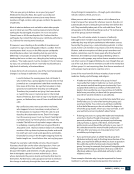
not interpret negative comments about a group to be necessarily
reflective of the group itself, or to represent a group’s policy. This
does not imply that concerns expressed by callers are not real. It
might mean that the harm one experienced is the result of being
in a group, among other factors.
It is important to note that people sometimes do contact Info-Cult
and have positive things to say about a group, and Info-Cult has
contact with a number of groups considered to be controversial.
Indeed, since 2009, Info-Cult has participated in annual meetings
with controversial groups, meetings organized on a rotating basis
in collaboration with three European organizations, INFORM,12
CIAOSN,13 and the CIC.14 Information provided by Info-Cult, other
organizations, or individuals may not be exhaustive, and therefore
we may think we know more about a group or situation than
we actually do. When we are evaluating an individual or group
in order to decide whether or not to intervene, here are some
questions that may be helpful:
• Do we accept the accusatory or positive assessments made
by certain individuals or groups, without checking for
ourselves and critically evaluating their accuracy?
• Do we readily accept allegations against certain groups
because we believe they are capable of doing what they
are accused of? Or do we readily support a group against
accusations of wrong doing because we believe they are
not capable of doing what they are accused of?
• Have we informed ourselves about what is happening
in the group: its origins, its doctrine, its leader(s), the
leader’s(s’) role, and the motivations and experiences of the
members
• What evidence is there for determining whether the
information obtained is accurate? Do we ask for documents
or other empirical facts in order to make an informed
evaluation?
• If there are negative reports associated with a group, how
prevalent are the problems?
• Has anyone attempted to establish a contact with the
individual or group?
• Where and how was information about the group obtained,
and, depending on the source (i.e., current members, former
members, families with a loved one involved, professionals
or other experts), what other factors should we be
considering?
• Do we assume that the history of a group reflects how it
operates today?
Having made an informed evaluation, we may have insufficient
information to justify an intervention, although the situation may
warrant monitoring and adopting a wait-and-see approach. If an
intervention by a government agency is deemed necessary, the
following questions can be helpful in planning a suitable course of
action:
(a) Are the motives for intervening clear and precise?
(b) What does one hope to achieve?
(c) What are the possible strategies to achieve the goal?
(d) What are the pros and cons of adopting a particular
strategy or approach (with a focus on the cons)?
(e) What are the criteria for evaluating whether or not an
intervention is successful? For example, is the approach
making things worse? And if so, how could it be
modified?
There are other considerations to keep in mind:
• Laws in different countries require that certain professionals
are legally and ethically bound to report to protective
services when there is even a suspicion of harm to a child, a
senior, or a dependent adult.
• What appears to function in one country may not in other
countries because of factors that include the country’s
history, culture, laws, relationship with religion, and past
experience with cultic or totalistic movements.
• Governments have an enormous amount of power at their
disposition, and they should be extremely cautious in
wielding that power when dealing with any group. Unless
there is a serious and legal reason, the state should show
restraint.
• Different situations may call for different criteria to
determine whether or not an intervention is appropriate
and feasible. For example, should a family intervene
when they have a loved one in a group they perceive to
be harmful? Should state authorities intervene to control
certain cultic groups?
Some people have remarked that Info-Cult’s views are moderate
on the subject of cults and new religions, and they have suggested
we should take a more forceful position. However, Info-Cult is not
a cult-fighting organization. Our goal is to assist those harmed by
cultic and other high-control groups, and to educate the public.
In conclusion, before reacting to cult-related situations, and
deciding on what actions to take, we must acknowledge that how
we understand the issues involved will have a direct influence on
how we respond to them. And so seeing things in as broad and
understanding a way as possible is imperative.
The following Talmudic quote attributed to Anaïs Nin, a well-
known author, and others in recent times expresses this approach
very well: We don't see things as they are we see things as we are. n
not interpret negative comments about a group to be necessarily
reflective of the group itself, or to represent a group’s policy. This
does not imply that concerns expressed by callers are not real. It
might mean that the harm one experienced is the result of being
in a group, among other factors.
It is important to note that people sometimes do contact Info-Cult
and have positive things to say about a group, and Info-Cult has
contact with a number of groups considered to be controversial.
Indeed, since 2009, Info-Cult has participated in annual meetings
with controversial groups, meetings organized on a rotating basis
in collaboration with three European organizations, INFORM,12
CIAOSN,13 and the CIC.14 Information provided by Info-Cult, other
organizations, or individuals may not be exhaustive, and therefore
we may think we know more about a group or situation than
we actually do. When we are evaluating an individual or group
in order to decide whether or not to intervene, here are some
questions that may be helpful:
• Do we accept the accusatory or positive assessments made
by certain individuals or groups, without checking for
ourselves and critically evaluating their accuracy?
• Do we readily accept allegations against certain groups
because we believe they are capable of doing what they
are accused of? Or do we readily support a group against
accusations of wrong doing because we believe they are
not capable of doing what they are accused of?
• Have we informed ourselves about what is happening
in the group: its origins, its doctrine, its leader(s), the
leader’s(s’) role, and the motivations and experiences of the
members
• What evidence is there for determining whether the
information obtained is accurate? Do we ask for documents
or other empirical facts in order to make an informed
evaluation?
• If there are negative reports associated with a group, how
prevalent are the problems?
• Has anyone attempted to establish a contact with the
individual or group?
• Where and how was information about the group obtained,
and, depending on the source (i.e., current members, former
members, families with a loved one involved, professionals
or other experts), what other factors should we be
considering?
• Do we assume that the history of a group reflects how it
operates today?
Having made an informed evaluation, we may have insufficient
information to justify an intervention, although the situation may
warrant monitoring and adopting a wait-and-see approach. If an
intervention by a government agency is deemed necessary, the
following questions can be helpful in planning a suitable course of
action:
(a) Are the motives for intervening clear and precise?
(b) What does one hope to achieve?
(c) What are the possible strategies to achieve the goal?
(d) What are the pros and cons of adopting a particular
strategy or approach (with a focus on the cons)?
(e) What are the criteria for evaluating whether or not an
intervention is successful? For example, is the approach
making things worse? And if so, how could it be
modified?
There are other considerations to keep in mind:
• Laws in different countries require that certain professionals
are legally and ethically bound to report to protective
services when there is even a suspicion of harm to a child, a
senior, or a dependent adult.
• What appears to function in one country may not in other
countries because of factors that include the country’s
history, culture, laws, relationship with religion, and past
experience with cultic or totalistic movements.
• Governments have an enormous amount of power at their
disposition, and they should be extremely cautious in
wielding that power when dealing with any group. Unless
there is a serious and legal reason, the state should show
restraint.
• Different situations may call for different criteria to
determine whether or not an intervention is appropriate
and feasible. For example, should a family intervene
when they have a loved one in a group they perceive to
be harmful? Should state authorities intervene to control
certain cultic groups?
Some people have remarked that Info-Cult’s views are moderate
on the subject of cults and new religions, and they have suggested
we should take a more forceful position. However, Info-Cult is not
a cult-fighting organization. Our goal is to assist those harmed by
cultic and other high-control groups, and to educate the public.
In conclusion, before reacting to cult-related situations, and
deciding on what actions to take, we must acknowledge that how
we understand the issues involved will have a direct influence on
how we respond to them. And so seeing things in as broad and
understanding a way as possible is imperative.
The following Talmudic quote attributed to Anaïs Nin, a well-
known author, and others in recent times expresses this approach
very well: We don't see things as they are we see things as we are. n