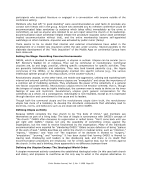
Cultic Studies Journal, Vol. 5, No. 1 1988 Page 97
Book Review
The Health and Wealth Gospel. A Fresh Look at Healing, Prosperity, and Positive
Confession. By Bruce Barron. Inter-Varsity Press. Downers Grove, EL. 1987. 206 pages. $6.95.
Now Choose Life ...The Faith Assembly: A Study in Understanding. By Jack P. Clark.
303 S. Huntington Street, Syracuse IN 46567. No date. 20 pages.
Reviewed by Rita Swan, Ph.D.
In March 1988, baby Julianna Keys of Columbia City, Indiana, died of untreated pneumonia, and
was listed by the press as the 100th preventable death in Faith Assembly. The first was also a
baby, who died in 1973. The church and its leader, the late Rev. Hobart Freeman, have become
notorious for their opposition to medical care and its tragic consequences.
Two devout Christians have recently written about Faith Assembly in ways that may possibly
communicate with the membership. Jack P. Clark, a medical doctor and lay leader of the
Methodist Church in Indiana, has written Now Choose Life ...The Faith Assembly, A Study in
Understanding. Bruce Barron, a publicist for the Presbyterian Church, has written The Health and
Wealth Gospel.
Clark‘s work is an impassioned plea addressed to Faith Assembly members, including his own
daughter and grandchildren. He commends them for their acceptance of salvation through Christ
and devotion to Him. He asks them to accept medical science as another blessing from God. He
cites many Bible verses commending the use of medicine and discusses the contributions of Luke,
the beloved physician, to Christianity.
Barron‘s work is a thoughtful study of the faith movement, from which Faith Assembly sprang. His
extensive bibliography exposes the reader to both sides of the issue.
The faith movement, also known as the Word movement, is a branch of Pentecostalism that has
rapidly grown in influence since the charismatic revival of the 1960s. Barron focuses on the three
most controversial doctrines of the movement: faith healing, prosperity, and positive confession.
Barron concludes that the prominent, respected faith teachers today, such as Kenneth Hagin and
Kenneth and Gloria Copeland, do not pressure their followers to withhold medicine. Yet they also,
he points out, establish divine healing as superior to medical healing and as available to anyone
with strong enough faith. He concedes that this elitism can lead to tragedies, but concludes that
they are ―little different from other Christians.‖ (p. 87)
The faith teachers proclaim that God wants all Christians to be rich. They specifically promise
their listeners six-figure bank accounts, Cadillacs, and mansions in return for financial
contributions to them and enough faith. Barron is offended by their appeals to greed, but
ultimately finds mitigating factors. He cites caveats from the more prominent leaders to the effect
that ―the main reason God wants his people to have money is so that they can reach millions with
the gospel.‖ (p. 95) And he finds Bible verses to support their promises of material prosperity.
A third distinctive feature of the faith movement is positive confession, which may be
paraphrased as name it and claim it. Believers are encouraged to tell God what they want and
then claim it as their own. They are told that saying anything that contradicts their claims (e.g.,
saying they are still sick after they have claimed a healing) is a negative confession with negative
consequences. Again, Barron finds some biblical basis for this practice and some qualifications by
prominent faith teachers. He also believes that many Christians should do less complaining and
plan to be ―victorious‖ over problems. But he remains highly dubious about positive confession,
Book Review
The Health and Wealth Gospel. A Fresh Look at Healing, Prosperity, and Positive
Confession. By Bruce Barron. Inter-Varsity Press. Downers Grove, EL. 1987. 206 pages. $6.95.
Now Choose Life ...The Faith Assembly: A Study in Understanding. By Jack P. Clark.
303 S. Huntington Street, Syracuse IN 46567. No date. 20 pages.
Reviewed by Rita Swan, Ph.D.
In March 1988, baby Julianna Keys of Columbia City, Indiana, died of untreated pneumonia, and
was listed by the press as the 100th preventable death in Faith Assembly. The first was also a
baby, who died in 1973. The church and its leader, the late Rev. Hobart Freeman, have become
notorious for their opposition to medical care and its tragic consequences.
Two devout Christians have recently written about Faith Assembly in ways that may possibly
communicate with the membership. Jack P. Clark, a medical doctor and lay leader of the
Methodist Church in Indiana, has written Now Choose Life ...The Faith Assembly, A Study in
Understanding. Bruce Barron, a publicist for the Presbyterian Church, has written The Health and
Wealth Gospel.
Clark‘s work is an impassioned plea addressed to Faith Assembly members, including his own
daughter and grandchildren. He commends them for their acceptance of salvation through Christ
and devotion to Him. He asks them to accept medical science as another blessing from God. He
cites many Bible verses commending the use of medicine and discusses the contributions of Luke,
the beloved physician, to Christianity.
Barron‘s work is a thoughtful study of the faith movement, from which Faith Assembly sprang. His
extensive bibliography exposes the reader to both sides of the issue.
The faith movement, also known as the Word movement, is a branch of Pentecostalism that has
rapidly grown in influence since the charismatic revival of the 1960s. Barron focuses on the three
most controversial doctrines of the movement: faith healing, prosperity, and positive confession.
Barron concludes that the prominent, respected faith teachers today, such as Kenneth Hagin and
Kenneth and Gloria Copeland, do not pressure their followers to withhold medicine. Yet they also,
he points out, establish divine healing as superior to medical healing and as available to anyone
with strong enough faith. He concedes that this elitism can lead to tragedies, but concludes that
they are ―little different from other Christians.‖ (p. 87)
The faith teachers proclaim that God wants all Christians to be rich. They specifically promise
their listeners six-figure bank accounts, Cadillacs, and mansions in return for financial
contributions to them and enough faith. Barron is offended by their appeals to greed, but
ultimately finds mitigating factors. He cites caveats from the more prominent leaders to the effect
that ―the main reason God wants his people to have money is so that they can reach millions with
the gospel.‖ (p. 95) And he finds Bible verses to support their promises of material prosperity.
A third distinctive feature of the faith movement is positive confession, which may be
paraphrased as name it and claim it. Believers are encouraged to tell God what they want and
then claim it as their own. They are told that saying anything that contradicts their claims (e.g.,
saying they are still sick after they have claimed a healing) is a negative confession with negative
consequences. Again, Barron finds some biblical basis for this practice and some qualifications by
prominent faith teachers. He also believes that many Christians should do less complaining and
plan to be ―victorious‖ over problems. But he remains highly dubious about positive confession,