Cultic Studies Journal, Vol. 5, No. 1 1988 Page 95
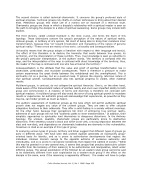
Because of this strongly held conviction, I have sometimes been criticized for aligning with
―advocacy groups‖ and the so-called ―anticult‖ movement It may come as a surprise to some that
there are very strong, emotional views within the academic community on the topic of cults.
Jesuit sociologist Joseph Fichter regularly denounces the bigotry of those who are ―detractors and
critics of cults‖ while apparently seeing no inconsistency in his role as ―objective‖ scholar when he
heaps praise on the Unification Church. In a letter to The Chronicle of Higher Education (July 14,
1982), sociologist of religion Jeffrey Hadden expressed concern that the word ―cult‖ had been
used 11 times in an earlier article and that seven times it had been preceded by the adjective
―destructive.‖
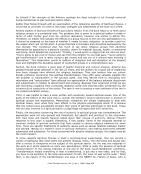
I find it perplexing that even professing, mainline Christians are reluctant to talk about ―false
prophets‖ and the potential for spiritual harm that many new religious movements represent.
Dean Kelley, an executive of the National Council of Churches, dismisses as ―hysteria‖ the
concerns of ―anticult alarmists‖ and denigrates efforts aimed at cult awareness education.
Methodist H. Newton Malony feels that it is inappropriate for a Christian behavioral scientist ―to
expose deviation and to warn the innocent.‖ He finds the very existence of an organization like
the evangelical Spiritual Counterfeits Project to be ―reprehensible‖ (personal correspondence).
Malony, a professor at Fuller Seminary, has been a consultant and expert witness for several
controversial new religious movements, including the Church of Scientology.
In their book Strange Gods: The Great American Cult Scare, sociologists David Bromley and
Anson Shupe question the ―allegations of danger‖ and the ―horror stories‖ often associated with
the cult experience. While it is true that exaggeration and sensationalism have characterized the
accounts of cult life provided by some ex-members, I can attest to the validity of much personal
tragedy and family disruption suffered as a result of membership in extremist groups. I have
spent hundreds of hours interviewing people who have been the victims of exploitation -sexual,
emotional, financial, and spiritual. I recall, for example, how painful it was for a mother who had
spent 11 years in a cult to tell me how her nine-year-old son (who had grown up in the group)
had never seen a dentist or a physician because the group which they had just left did not believe
in medical care of any kind under any circumstances. Her son had broken an ankle and was now
permanently lame.
I agree with Dr. Louis West, UCLA psychiatrist who argues that there are many apologists for the
cults -even in academic circles -who are ―armchair philosophers‖ and who have never seen
firsthand the destructive impact that some cults can have on the lives of individuals.
Finally, I am discouraged at the apathy and especially the naiveté that exists in much of the
Christian community with regard to cults and new religious movements. A Catholic priest in
California told one young woman's parents that they should not be concerned about her
deepening involvement in Scientology because he had heard that the organization would improve
both her IQ and her personality. In a recently published book entitled Understanding Cults and
New Religions (Eerdmans, 1986), Irving Hexharn and Karla Poewe, discussing the Book of
Mormon, make the incredible observation that, except for its teaching about the Fall, ―its
theology is simple and fundamentally orthodox.‖
But perhaps the most disturbing examples of naiveté are found in the public statements of two
well-known fundamentalist Christians -Jerry Falwell and Tim LaHaye -regarding Sun Myung
Moon. Both men, sincerely concerned about the erosion of religious freedom in America, have
been used by the Unification Church in an attempt to gain acceptance and sympathy from the
religious mainstream in the face of Reverend Moon's imprisonment on tax charges. Both men
made widely publicized appeals based on their perception that Moon had been unfairly persecuted
by the U.S. government. At a Washington, D.C. press conference, Jerry Falwell called on
President Reagan to pardon Reverend Moon. At a religious freedom rally in the same city, Tim
LaHaye asked ministers to join him in a declaration of support for Moon by agreeing to spend one
week in prison with him (Moon).
Because of this strongly held conviction, I have sometimes been criticized for aligning with
―advocacy groups‖ and the so-called ―anticult‖ movement It may come as a surprise to some that
there are very strong, emotional views within the academic community on the topic of cults.
Jesuit sociologist Joseph Fichter regularly denounces the bigotry of those who are ―detractors and
critics of cults‖ while apparently seeing no inconsistency in his role as ―objective‖ scholar when he
heaps praise on the Unification Church. In a letter to The Chronicle of Higher Education (July 14,
1982), sociologist of religion Jeffrey Hadden expressed concern that the word ―cult‖ had been
used 11 times in an earlier article and that seven times it had been preceded by the adjective
―destructive.‖
I find it perplexing that even professing, mainline Christians are reluctant to talk about ―false
prophets‖ and the potential for spiritual harm that many new religious movements represent.
Dean Kelley, an executive of the National Council of Churches, dismisses as ―hysteria‖ the
concerns of ―anticult alarmists‖ and denigrates efforts aimed at cult awareness education.
Methodist H. Newton Malony feels that it is inappropriate for a Christian behavioral scientist ―to
expose deviation and to warn the innocent.‖ He finds the very existence of an organization like
the evangelical Spiritual Counterfeits Project to be ―reprehensible‖ (personal correspondence).
Malony, a professor at Fuller Seminary, has been a consultant and expert witness for several
controversial new religious movements, including the Church of Scientology.
In their book Strange Gods: The Great American Cult Scare, sociologists David Bromley and
Anson Shupe question the ―allegations of danger‖ and the ―horror stories‖ often associated with
the cult experience. While it is true that exaggeration and sensationalism have characterized the
accounts of cult life provided by some ex-members, I can attest to the validity of much personal
tragedy and family disruption suffered as a result of membership in extremist groups. I have
spent hundreds of hours interviewing people who have been the victims of exploitation -sexual,
emotional, financial, and spiritual. I recall, for example, how painful it was for a mother who had
spent 11 years in a cult to tell me how her nine-year-old son (who had grown up in the group)
had never seen a dentist or a physician because the group which they had just left did not believe
in medical care of any kind under any circumstances. Her son had broken an ankle and was now
permanently lame.
I agree with Dr. Louis West, UCLA psychiatrist who argues that there are many apologists for the
cults -even in academic circles -who are ―armchair philosophers‖ and who have never seen
firsthand the destructive impact that some cults can have on the lives of individuals.
Finally, I am discouraged at the apathy and especially the naiveté that exists in much of the
Christian community with regard to cults and new religious movements. A Catholic priest in
California told one young woman's parents that they should not be concerned about her
deepening involvement in Scientology because he had heard that the organization would improve
both her IQ and her personality. In a recently published book entitled Understanding Cults and
New Religions (Eerdmans, 1986), Irving Hexharn and Karla Poewe, discussing the Book of
Mormon, make the incredible observation that, except for its teaching about the Fall, ―its
theology is simple and fundamentally orthodox.‖
But perhaps the most disturbing examples of naiveté are found in the public statements of two
well-known fundamentalist Christians -Jerry Falwell and Tim LaHaye -regarding Sun Myung
Moon. Both men, sincerely concerned about the erosion of religious freedom in America, have
been used by the Unification Church in an attempt to gain acceptance and sympathy from the
religious mainstream in the face of Reverend Moon's imprisonment on tax charges. Both men
made widely publicized appeals based on their perception that Moon had been unfairly persecuted
by the U.S. government. At a Washington, D.C. press conference, Jerry Falwell called on
President Reagan to pardon Reverend Moon. At a religious freedom rally in the same city, Tim
LaHaye asked ministers to join him in a declaration of support for Moon by agreeing to spend one
week in prison with him (Moon).