Cultic Studies Journal, Vol. 5, No. 1 1988 Page 78
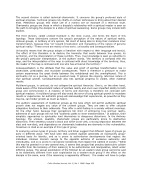
pastors of churches newly adopted by targets, confirm this tactic. The leadership within this sect
has been known to follow subjects from new church to new church and attempt to impose upon
the new church the labels and stereotypes created within the sect. In the sect's eyes, the subject
has been banished from God's chosen church, and is therefore to be kept outside of religious
relationships. Confirmed deviants are relegated to the ―sinful‖ secular world to which they
belonged all along.
[Tim] The elders who had refused to meet directly with me, showed amazing
energy in setting up an appointment with [my new church oversight] ...[the
elders') purpose was to cause Riverside to reject me, and I am happy to report that
they did not get to first base. Their efforts bogged down right at the start when
they refused to share any specific charge or evidence -[they] merely asserted that
I was factious, and demanded that Riverside accept that verdict [My new oversight]
refused, and much of the talk centered on whether the discipline should be
accepted on [their] say-so ...
***
[Jonathan] Without my knowledge [the elders] went to talk with my pastor about
me. Their concern was that I was giving a bad report to him and others at my
church. It was a charge which he later told me ...that he knew nothing about. As a
result of [the elders] visiting him, I then had to defend my moral character before a
man who had absolutely no idea of these issues before that time.
The maintenance of post-labeling behaviors, such as shunning and harassing, is so important to
the sect that individuals have even been excommunicated for laxness in their post-labeling
behaviors toward the targets. Members who were friends of the target must behave as though
the target doesn't exist anymore or they themselves may be rejected. The following letter is
indicative of this practice:
February 9, 1979
Dear [Ann]
We, your brothers and sisters, have been informed of your refusal to reject [Sue]
for being factious. This clearly violates Titus 3: 10-11 where we are instructed to
reject a factious man. We therefore urge you to repent of this sin. If you refuse to
listen to us in this matter we must relate to you as a Gentile and tax-gatherer (Matt
18:15-17).
Sincerely in Christ,
(Letter signed by 47 members)
The sect leadership was informed that Ann was not shunning her friend Sue. The leadership, in
turn, informed the entire church and a letter signed by the congregation was sent to Ann. A
comparison with 12th Century Jesuit school life reveals similar reactions: ―A system of informing
was developed ...which extended the doctrine of eternal vigilance. If the informers failed to
report offenses [in this case, failure to shun], they were punished as though they had committed
the acts‖ (Newman, 1978:64).
The Function of Shunning and Scapegoating
Post-labeling behaviors are essential to the maintenance of the bicameral normative system and
the segmented mentality. Shunning forces members to live a segmented ethic. The internalization
of norms into the corporate identity is maintained primarily through the effective channeling of
anxiety and guilt onto the confirmed deviant. It can be hypothesized that if this channel is allowed
to erode, and if members are given freedom to modify their shunning practices, the power of the
pastors of churches newly adopted by targets, confirm this tactic. The leadership within this sect
has been known to follow subjects from new church to new church and attempt to impose upon
the new church the labels and stereotypes created within the sect. In the sect's eyes, the subject
has been banished from God's chosen church, and is therefore to be kept outside of religious
relationships. Confirmed deviants are relegated to the ―sinful‖ secular world to which they
belonged all along.
[Tim] The elders who had refused to meet directly with me, showed amazing
energy in setting up an appointment with [my new church oversight] ...[the
elders') purpose was to cause Riverside to reject me, and I am happy to report that
they did not get to first base. Their efforts bogged down right at the start when
they refused to share any specific charge or evidence -[they] merely asserted that
I was factious, and demanded that Riverside accept that verdict [My new oversight]
refused, and much of the talk centered on whether the discipline should be
accepted on [their] say-so ...
***
[Jonathan] Without my knowledge [the elders] went to talk with my pastor about
me. Their concern was that I was giving a bad report to him and others at my
church. It was a charge which he later told me ...that he knew nothing about. As a
result of [the elders] visiting him, I then had to defend my moral character before a
man who had absolutely no idea of these issues before that time.
The maintenance of post-labeling behaviors, such as shunning and harassing, is so important to
the sect that individuals have even been excommunicated for laxness in their post-labeling
behaviors toward the targets. Members who were friends of the target must behave as though
the target doesn't exist anymore or they themselves may be rejected. The following letter is
indicative of this practice:
February 9, 1979
Dear [Ann]
We, your brothers and sisters, have been informed of your refusal to reject [Sue]
for being factious. This clearly violates Titus 3: 10-11 where we are instructed to
reject a factious man. We therefore urge you to repent of this sin. If you refuse to
listen to us in this matter we must relate to you as a Gentile and tax-gatherer (Matt
18:15-17).
Sincerely in Christ,
(Letter signed by 47 members)
The sect leadership was informed that Ann was not shunning her friend Sue. The leadership, in
turn, informed the entire church and a letter signed by the congregation was sent to Ann. A
comparison with 12th Century Jesuit school life reveals similar reactions: ―A system of informing
was developed ...which extended the doctrine of eternal vigilance. If the informers failed to
report offenses [in this case, failure to shun], they were punished as though they had committed
the acts‖ (Newman, 1978:64).
The Function of Shunning and Scapegoating
Post-labeling behaviors are essential to the maintenance of the bicameral normative system and
the segmented mentality. Shunning forces members to live a segmented ethic. The internalization
of norms into the corporate identity is maintained primarily through the effective channeling of
anxiety and guilt onto the confirmed deviant. It can be hypothesized that if this channel is allowed
to erode, and if members are given freedom to modify their shunning practices, the power of the