Cultic Studies Journal, Vol. 5, No. 1 1988 Page 73
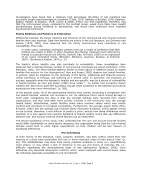
The group manipulates rewards, punishments, and experiences that result in the systematic
severing of members and their past support systems. These include their own powers of
independent and rational thinking, their ability to test, define, and evaluate, as well as their
ability to freely interact with others about their experiences. These internal support systems are
replaced with exterior support systems over which the leaders have considerable control. In
addition, emotional support systems are severely controlled and curtailed. Normal human
responses to crises and fears are subjected to confining processes which seem unnatural. Past
emotional and psychological defenses and adaptations members may have developed are
rechanneled and/or curtailed. Members are often asked to be happy and glad when they
excommunicate their friends. They are told to rejoice when parents and friends tell them that
they are in a ―cultic‖ group. They are told not to worry when the newspapers and legal officials
begin ―snooping around.‖ They are told to trust their elders even when they share no facts or
information about the external and internal battles that are going on other than .we were there
and we know what is right. Criticisms from the outside are repeated by the elders in a manner
geared to elicit even more commitment to the group. Present external criticisms are linked with
past historical persecutions in a kind of ―negative legitimization‖ scheme.
[Elders] This is why we've gotten you together tonight. We're concerned about any
communication that some might receive and just about guarding our own hearts
and our minds and not even pursuing information, because the Word says ―a
worthless man digs up evil.‖ I want to emphasize that we are concerned for you,
and when you first hear about [defections] it many times will cause fear. You may
think, ―Well what‘s going on?‖ and why would two that are so strong leave, and it‘s
really a difficult situation, and I want to go through some scriptures that will
comfort your hearts tonight.. In the midst of difficult circumstances what we do is
to start looking at our circumstances and questioning, and it causes confusion in
our minds of ―why is this going on,‖ ―why has this happened?‖
Preliminary public definitions in these excommunication meetings emerge out of apparent mass
confusion. Discrepancies between attitudes and behavior produce a state of psychological
distress, which Festinger (1957) called ―cognitive dissonance.‖ A number of seemingly unrelated
―facts‖ about the subject are allowed to enter the ―rumor mill‖ and, playing on the natural
tendency of members to attempt to align these facts with their knowledge of the subject, a
process of negotiation takes place.
What looks to members as a disaster is defined as a ―purifying experience sent by God‖ a ―filling
of the soil for a rich spiritual harvest‖:
[Elders, during an excommunication – 1985]. In times like this the devil is trying
to get us to think all kinds of things. But this is a time when we can take advantage
of the best opportunity to get to know God because we are in desperate need and it
is through these tribulations and trials that God works and gets us closer to each
other. We need to really take advantage and let God be your refuge. When you get
to the point of, ―Oh, God, I can't stand what you're doing in this situation, I can't
believe what's going on, I don't like it‖ and it‘s screwing up your whole life and
thoughts and everything the way you've planned it, then when you say that you are
at a point where God can begin to work in your hearts and show you what He is
really doing and that this is really for the best.
The Renunciation/Denunciation Process
Several important psychological mechanisms seem to be at work in these excommunication
meetings. An integral part of the meeting is the ―renunciation/denunciation‖ process. The
members, faced with the severity of the problem as defined by the leaders, and seeing how easily
vulnerable they are to ―faction,‖ renounce again their willingness to hear or see negative or
disparaging information. In essence, one could hypothesize that they are renouncing their own
The group manipulates rewards, punishments, and experiences that result in the systematic
severing of members and their past support systems. These include their own powers of
independent and rational thinking, their ability to test, define, and evaluate, as well as their
ability to freely interact with others about their experiences. These internal support systems are
replaced with exterior support systems over which the leaders have considerable control. In
addition, emotional support systems are severely controlled and curtailed. Normal human
responses to crises and fears are subjected to confining processes which seem unnatural. Past
emotional and psychological defenses and adaptations members may have developed are
rechanneled and/or curtailed. Members are often asked to be happy and glad when they
excommunicate their friends. They are told to rejoice when parents and friends tell them that
they are in a ―cultic‖ group. They are told not to worry when the newspapers and legal officials
begin ―snooping around.‖ They are told to trust their elders even when they share no facts or
information about the external and internal battles that are going on other than .we were there
and we know what is right. Criticisms from the outside are repeated by the elders in a manner
geared to elicit even more commitment to the group. Present external criticisms are linked with
past historical persecutions in a kind of ―negative legitimization‖ scheme.
[Elders] This is why we've gotten you together tonight. We're concerned about any
communication that some might receive and just about guarding our own hearts
and our minds and not even pursuing information, because the Word says ―a
worthless man digs up evil.‖ I want to emphasize that we are concerned for you,
and when you first hear about [defections] it many times will cause fear. You may
think, ―Well what‘s going on?‖ and why would two that are so strong leave, and it‘s
really a difficult situation, and I want to go through some scriptures that will
comfort your hearts tonight.. In the midst of difficult circumstances what we do is
to start looking at our circumstances and questioning, and it causes confusion in
our minds of ―why is this going on,‖ ―why has this happened?‖
Preliminary public definitions in these excommunication meetings emerge out of apparent mass
confusion. Discrepancies between attitudes and behavior produce a state of psychological
distress, which Festinger (1957) called ―cognitive dissonance.‖ A number of seemingly unrelated
―facts‖ about the subject are allowed to enter the ―rumor mill‖ and, playing on the natural
tendency of members to attempt to align these facts with their knowledge of the subject, a
process of negotiation takes place.
What looks to members as a disaster is defined as a ―purifying experience sent by God‖ a ―filling
of the soil for a rich spiritual harvest‖:
[Elders, during an excommunication – 1985]. In times like this the devil is trying
to get us to think all kinds of things. But this is a time when we can take advantage
of the best opportunity to get to know God because we are in desperate need and it
is through these tribulations and trials that God works and gets us closer to each
other. We need to really take advantage and let God be your refuge. When you get
to the point of, ―Oh, God, I can't stand what you're doing in this situation, I can't
believe what's going on, I don't like it‖ and it‘s screwing up your whole life and
thoughts and everything the way you've planned it, then when you say that you are
at a point where God can begin to work in your hearts and show you what He is
really doing and that this is really for the best.
The Renunciation/Denunciation Process
Several important psychological mechanisms seem to be at work in these excommunication
meetings. An integral part of the meeting is the ―renunciation/denunciation‖ process. The
members, faced with the severity of the problem as defined by the leaders, and seeing how easily
vulnerable they are to ―faction,‖ renounce again their willingness to hear or see negative or
disparaging information. In essence, one could hypothesize that they are renouncing their own