Cultic Studies Journal, Vol. 5, No. 1 1988 Page 71
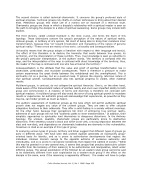
The Functions of “Victims” and “Enemies”
The criteria for segmentation is similar to Gusfield‘s (1967) ―repentant deviant‖ and ―enemy
deviant.‖ Within the sect, deviants are generally classed as either factious or victims. A factious
man could be defined as one who has internalized a different, threatening set of norms than the
group's, and is actively seeking to gather others around him. To the sect, the factious man has
not committed sin he is a sinner. The victim's deviance, however, is seen as a temporary lapse in
morality. Victims are seen as violating the rules of communication by receiving ―information,‖ and
are now caught with ―dainty morsels‖ that could eat away their commitment and loyalty to the
group. Members of the sect are told to seek out these victims in order to aid and restore them to
their former station.
Factious men, once officially labeled, are to be shunned. Thus, within this sect, participation and
involvement with certain members increase dramatically once labeled a victim, and participation
with other members is eliminated once they are labeled as ―factious.‖
There is a gradual shift from the definition of the specific acts as evil to a definition
of the individual as evil, so that all his acts come to be looked upon with suspicion.
In the process of identification his companions, hang-outs, play, speech, income, all
his conduct, the personality itself, become subject to scrutiny and question. From
the community's point of view, the individual who used to do bad and mischievous
things has now become a bad and unredeemable human being. (Tannenbaum,
1938 17)
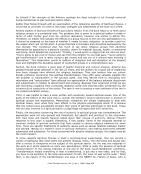
Repentant deviants who are sought after and are ―won back‖ are an integral part of the functional
aspects of deviance causation within the sect. The repentant deviants who ―come back to their
senses‖ help to reaffirm several key norms of the group. 1) Their restoration confirm the group's
right to confront and watch victims or suspects. 2) The repentant deviant's reaffirmation of loyalty
to the group represents a collective agreement to the basic morality and righteousness of the
group and the inherent evil of the ―information‖ that was initially heard. 3) The repentant
deviant's confession of ―sin‖ in violating the group's communication controls serves to confirm the
veracity and necessity of those strict boundaries.
Enemy deviants are also functional in this regard and serve as a necessary contrast between the
victories of ―God‖ and the victories of ―Satan.‖ The enemy deviant thus becomes the classic
―heretic,‖ and/or ―reprobate,‖ who refuses to recognize the legitimacy of the group's norms or
values, and thus rejects the appeals by the group for ―repentance.‖ Possibly because enemy
deviants call into question the norms and values of the group, judgment on them is swift and
punitive. Procedural safeguards are relaxed or eliminated altogether, and the message to the
members concerning those who ―spread information‖ is, ―two strikes and you're out.‖
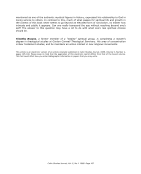
Members must repent whether they agree that they have been divisive or not. Members must
yield to the definition placed by the leadership or they could be labeled and expelled within hours.
If a member yields to the demand for confession, the process is not over, since the target is
already ―one strike down.‖ The same target may be pinpointed again as divisive three months or
three years later and again confronted. The target must again yield since he is reminded that he
has already been warned once before. There is, therefore, further pressure to confess, regardless
of whether the target believes he has been divisive. Needless to say, the pressure mounts if a
member has ―repented after being warned twice.‖ The sect has a powerful tool to demand
conformity in those sect members in this position. The result is that many ―divisive‖ people are
excommunicated for not yielding to definitions, and those members, ―no matter how repentant
they may be,‖ are not allowed back into the sect. It is clear that restoration is not the goal in
these cases.
The Functions of “Victims” and “Enemies”
The criteria for segmentation is similar to Gusfield‘s (1967) ―repentant deviant‖ and ―enemy
deviant.‖ Within the sect, deviants are generally classed as either factious or victims. A factious
man could be defined as one who has internalized a different, threatening set of norms than the
group's, and is actively seeking to gather others around him. To the sect, the factious man has
not committed sin he is a sinner. The victim's deviance, however, is seen as a temporary lapse in
morality. Victims are seen as violating the rules of communication by receiving ―information,‖ and
are now caught with ―dainty morsels‖ that could eat away their commitment and loyalty to the
group. Members of the sect are told to seek out these victims in order to aid and restore them to
their former station.
Factious men, once officially labeled, are to be shunned. Thus, within this sect, participation and
involvement with certain members increase dramatically once labeled a victim, and participation
with other members is eliminated once they are labeled as ―factious.‖
There is a gradual shift from the definition of the specific acts as evil to a definition
of the individual as evil, so that all his acts come to be looked upon with suspicion.
In the process of identification his companions, hang-outs, play, speech, income, all
his conduct, the personality itself, become subject to scrutiny and question. From
the community's point of view, the individual who used to do bad and mischievous
things has now become a bad and unredeemable human being. (Tannenbaum,
1938 17)
Repentant deviants who are sought after and are ―won back‖ are an integral part of the functional
aspects of deviance causation within the sect. The repentant deviants who ―come back to their
senses‖ help to reaffirm several key norms of the group. 1) Their restoration confirm the group's
right to confront and watch victims or suspects. 2) The repentant deviant's reaffirmation of loyalty
to the group represents a collective agreement to the basic morality and righteousness of the
group and the inherent evil of the ―information‖ that was initially heard. 3) The repentant
deviant's confession of ―sin‖ in violating the group's communication controls serves to confirm the
veracity and necessity of those strict boundaries.
Enemy deviants are also functional in this regard and serve as a necessary contrast between the
victories of ―God‖ and the victories of ―Satan.‖ The enemy deviant thus becomes the classic
―heretic,‖ and/or ―reprobate,‖ who refuses to recognize the legitimacy of the group's norms or
values, and thus rejects the appeals by the group for ―repentance.‖ Possibly because enemy
deviants call into question the norms and values of the group, judgment on them is swift and
punitive. Procedural safeguards are relaxed or eliminated altogether, and the message to the
members concerning those who ―spread information‖ is, ―two strikes and you're out.‖
Members must repent whether they agree that they have been divisive or not. Members must
yield to the definition placed by the leadership or they could be labeled and expelled within hours.
If a member yields to the demand for confession, the process is not over, since the target is
already ―one strike down.‖ The same target may be pinpointed again as divisive three months or
three years later and again confronted. The target must again yield since he is reminded that he
has already been warned once before. There is, therefore, further pressure to confess, regardless
of whether the target believes he has been divisive. Needless to say, the pressure mounts if a
member has ―repented after being warned twice.‖ The sect has a powerful tool to demand
conformity in those sect members in this position. The result is that many ―divisive‖ people are
excommunicated for not yielding to definitions, and those members, ―no matter how repentant
they may be,‖ are not allowed back into the sect. It is clear that restoration is not the goal in
these cases.