Cultic Studies Journal, Vol. 5, No. 1 1988 Page 62
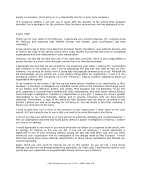
Basically what they [the elders] wanted to say about the tape recorder was that in
thinking about it they decided that requiring a tape recorder on my part shows a
real lack of trust and faith in the elders. And I told them and I'm not usually rude to
people, but I told them that I didn't trust them. They had already used their
authority to ostracize me from the only group of friends I had on campus and so,
―Ya, I didn't trust them.‖
They were a little taken aback but said, ―In any case, you're not going to have it.
They told me that the tape recorder doesn't show a willingness to achieve
resolution to rely on tape and witnesses. So I said, ―Well, forget the tape, just let
me bring witnesses --like a local pastor, or a neutral third party or one of the other
ex-members --excommunicated or non-excommunicated I even suggested one of
the church members whom I could trust. I said just bring them along but I want to
have some third party. But they said, ―No, your problem is between you and us,‖
them being the representatives of the church. They said, ―If I was really serious
about it --if I really wanted to achieve resolution, that I would meet with them
alone --all of them, because they work as a whole and they have to all be there
together.‖ They admitted that they have had a lot of experience in these things and
could work things out the best. They thought they all had to be together to really
do this right. The long and the short of it was that any approved meetings would
have to be with as many elders that were in town and me alone.
Of paramount importance is targets' belief that they do not know for sure what behavior
precipitated the crisis, and are unsure of just how to modify their life to conform to the demands.
This paranoia is then interpreted by the leadership as ―a lack of trust,‖ and ―an attitude problem
of not believing the best.‖ The target's suspicious nature is used as further evidence of how much
―sin has eaten away at the soul.‖ Excommunications generally result. In the following case, Steve,
like Harold, is excommunicated partly due to his paranoia:
Steve called saying that he thought he was about to be excommunicated. ―Why?‖ I
asked. He wasn't sure and was afraid something was going on behind his back. I
suggested he tape the charges when the elders came by --he got word of their
impending visit When they came, the tape became the sign he really wasn't
repentant … they gave him no specifics except for the big F [faction]. Steve thus
became the first of many to be excommunicated for ―faction.‖ They gave him no
room to hear their charges or repent --they simply told him he was
excommunicated.
The preemptive first strike is essential to the production of deviance within this sect. This
―shoot-first-and-ask-questions-later‖ tactic actually triggers the behavior that was defined
to the secret participants at the earlier time. Whether the initial behavior defined as
deviant was real or contrived, the behavior after the first strike is generally quite obvious.
Targets are perceived as factious and spreading lies and slander about the group. The
group then warns targets about banned activities. Since targets believe that the behaviors
in question haven't occurred, or were not ―deviant,‖ they try to acquit themselves, or, as
their response becomes more focused, actually end up accusing the leadership of
spreading lies and slander. However, since the core participants believe that the initial
definitions of the situation must be true because elders are infallible, and since, in most
cases, targets occupy a lower status, or have even left, the target's accusations against
the elders are rarely investigated and are used to show to all that the individual is indeed
slanderous and factious. Thus the ―sin-potential‖ status allows for the skillful use of
secrecy when explaining a crisis to lower- status members:
Basically what they [the elders] wanted to say about the tape recorder was that in
thinking about it they decided that requiring a tape recorder on my part shows a
real lack of trust and faith in the elders. And I told them and I'm not usually rude to
people, but I told them that I didn't trust them. They had already used their
authority to ostracize me from the only group of friends I had on campus and so,
―Ya, I didn't trust them.‖
They were a little taken aback but said, ―In any case, you're not going to have it.
They told me that the tape recorder doesn't show a willingness to achieve
resolution to rely on tape and witnesses. So I said, ―Well, forget the tape, just let
me bring witnesses --like a local pastor, or a neutral third party or one of the other
ex-members --excommunicated or non-excommunicated I even suggested one of
the church members whom I could trust. I said just bring them along but I want to
have some third party. But they said, ―No, your problem is between you and us,‖
them being the representatives of the church. They said, ―If I was really serious
about it --if I really wanted to achieve resolution, that I would meet with them
alone --all of them, because they work as a whole and they have to all be there
together.‖ They admitted that they have had a lot of experience in these things and
could work things out the best. They thought they all had to be together to really
do this right. The long and the short of it was that any approved meetings would
have to be with as many elders that were in town and me alone.
Of paramount importance is targets' belief that they do not know for sure what behavior
precipitated the crisis, and are unsure of just how to modify their life to conform to the demands.
This paranoia is then interpreted by the leadership as ―a lack of trust,‖ and ―an attitude problem
of not believing the best.‖ The target's suspicious nature is used as further evidence of how much
―sin has eaten away at the soul.‖ Excommunications generally result. In the following case, Steve,
like Harold, is excommunicated partly due to his paranoia:
Steve called saying that he thought he was about to be excommunicated. ―Why?‖ I
asked. He wasn't sure and was afraid something was going on behind his back. I
suggested he tape the charges when the elders came by --he got word of their
impending visit When they came, the tape became the sign he really wasn't
repentant … they gave him no specifics except for the big F [faction]. Steve thus
became the first of many to be excommunicated for ―faction.‖ They gave him no
room to hear their charges or repent --they simply told him he was
excommunicated.
The preemptive first strike is essential to the production of deviance within this sect. This
―shoot-first-and-ask-questions-later‖ tactic actually triggers the behavior that was defined
to the secret participants at the earlier time. Whether the initial behavior defined as
deviant was real or contrived, the behavior after the first strike is generally quite obvious.
Targets are perceived as factious and spreading lies and slander about the group. The
group then warns targets about banned activities. Since targets believe that the behaviors
in question haven't occurred, or were not ―deviant,‖ they try to acquit themselves, or, as
their response becomes more focused, actually end up accusing the leadership of
spreading lies and slander. However, since the core participants believe that the initial
definitions of the situation must be true because elders are infallible, and since, in most
cases, targets occupy a lower status, or have even left, the target's accusations against
the elders are rarely investigated and are used to show to all that the individual is indeed
slanderous and factious. Thus the ―sin-potential‖ status allows for the skillful use of
secrecy when explaining a crisis to lower- status members: