Cultic Studies Journal, Vol. 5, No. 1 1988 Page 61
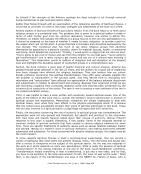
...I was very confused about why I had been put on the first list [for
excommunication], the divisive list [at that meeting], when [the elders] hadn't
even contacted me. [An elder] explained that it was like you were [on campus] and
there was a gunshot.. his first response would be to get everyone back and then go
check it out because it would be more dangerous not to because you didn't know
what that person with the gun was going to do. Well I was the person with the gun,
needless to say, and his first response was to get all of my friends and everyone
else in the church out of the way because they didn't know what I was going to do.
And this example has come up over and over with me.
The sect leadership seems to be using the strike-strike ploy as an opportunity to warn targets.
Then, if they are eventually excommunicated, the leadership can tell the congregation, ―We
warned them time and time again but they would not listen, so, when all else failed, we had no
recourse but to excommunicate them.‖
The following portions of ―warning‖ letters to targets graphically illustrate the power and force of
the initial secret meeting's definition of the target The targets receive a description of behavior
that will be interpreted as grounds for excommunication:
[Elders and Leaders] Because of your past we feel it necessary to warn both you
and [your wife]. Any attempts to undermine the leadership of [our church], discuss
your disagreement with people in this fellowship, or empathize with others who are
discontent by lending a hearing ear, will be interpreted as faction (Tit. 3:10 Prov.
6:19).
In another letter were these definitions:
[Elders] We are grieved by your absence and the ―rumors‖... We are surprised by
your spirit of independence... You are free to disagree and you are free to leave,
but you are not free to undermine another's confidence in this leadership (James
5:9). We know that you want to be understood by your friends at [the church].
'Mat is natural not spiritual. Sharing your reasons or getting together to discuss
your grievances with others about this leadership creates a faction (Tit. 3:10). In so
doing, you will only implicate your self [sic] in this sin and those with whom you
communicate... Sowing fear, mistrust, doubt, and a spirit of independence is a work
of the flesh ((Gal. 5:19-21). Please consider what we say... ―HE WHO DOES NOT
GATHER WITH ME... SCATTERS!!!!‖ Mt. 12:30 Emphasis theirs.]
The Inquisition
Whether or not the preemptive first strike is sinister, in nearly every case the first shot makes the
target shoot back. Targets don't understand what they have done, why the secret meetings were
called, why friends would sign letters of warning, or what members have been told. And yet,
targets are ordered not to talk to anyone about their concerns. At this stage, paranoia is a prime
force in the conflict process (Lemert 1962). Subsequent ―gang-ups‖ are taped by targets,
or minutes are written down. Targets become suspicious of not only the leadership and friends,
but of the whole church. They feel they are being watched. Calls asking targets to talk are
interpreted as a possible set-up. Every chance meeting could be a ―sting operation.‖ Harold's case
is illustrative:
[Harold] The elder called me and we set up a meeting -it was going to be all the
elders that could make it, and I was going to bring a tape recorder. I talked to
D____________ about it and he said, ―Sure, bring a tape recorder.‖ And we met at
a University building. So I walked in and shook their hands and said ―Hi,‖ and then
I turned the tape recorder on and set it down and took a seat. Then [D______
reached over casually and turned it off and then said, ―Well, let's talk about this.‖
...I was very confused about why I had been put on the first list [for
excommunication], the divisive list [at that meeting], when [the elders] hadn't
even contacted me. [An elder] explained that it was like you were [on campus] and
there was a gunshot.. his first response would be to get everyone back and then go
check it out because it would be more dangerous not to because you didn't know
what that person with the gun was going to do. Well I was the person with the gun,
needless to say, and his first response was to get all of my friends and everyone
else in the church out of the way because they didn't know what I was going to do.
And this example has come up over and over with me.
The sect leadership seems to be using the strike-strike ploy as an opportunity to warn targets.
Then, if they are eventually excommunicated, the leadership can tell the congregation, ―We
warned them time and time again but they would not listen, so, when all else failed, we had no
recourse but to excommunicate them.‖
The following portions of ―warning‖ letters to targets graphically illustrate the power and force of
the initial secret meeting's definition of the target The targets receive a description of behavior
that will be interpreted as grounds for excommunication:
[Elders and Leaders] Because of your past we feel it necessary to warn both you
and [your wife]. Any attempts to undermine the leadership of [our church], discuss
your disagreement with people in this fellowship, or empathize with others who are
discontent by lending a hearing ear, will be interpreted as faction (Tit. 3:10 Prov.
6:19).
In another letter were these definitions:
[Elders] We are grieved by your absence and the ―rumors‖... We are surprised by
your spirit of independence... You are free to disagree and you are free to leave,
but you are not free to undermine another's confidence in this leadership (James
5:9). We know that you want to be understood by your friends at [the church].
'Mat is natural not spiritual. Sharing your reasons or getting together to discuss
your grievances with others about this leadership creates a faction (Tit. 3:10). In so
doing, you will only implicate your self [sic] in this sin and those with whom you
communicate... Sowing fear, mistrust, doubt, and a spirit of independence is a work
of the flesh ((Gal. 5:19-21). Please consider what we say... ―HE WHO DOES NOT
GATHER WITH ME... SCATTERS!!!!‖ Mt. 12:30 Emphasis theirs.]
The Inquisition
Whether or not the preemptive first strike is sinister, in nearly every case the first shot makes the
target shoot back. Targets don't understand what they have done, why the secret meetings were
called, why friends would sign letters of warning, or what members have been told. And yet,
targets are ordered not to talk to anyone about their concerns. At this stage, paranoia is a prime
force in the conflict process (Lemert 1962). Subsequent ―gang-ups‖ are taped by targets,
or minutes are written down. Targets become suspicious of not only the leadership and friends,
but of the whole church. They feel they are being watched. Calls asking targets to talk are
interpreted as a possible set-up. Every chance meeting could be a ―sting operation.‖ Harold's case
is illustrative:
[Harold] The elder called me and we set up a meeting -it was going to be all the
elders that could make it, and I was going to bring a tape recorder. I talked to
D____________ about it and he said, ―Sure, bring a tape recorder.‖ And we met at
a University building. So I walked in and shook their hands and said ―Hi,‖ and then
I turned the tape recorder on and set it down and took a seat. Then [D______
reached over casually and turned it off and then said, ―Well, let's talk about this.‖