Cultic Studies Journal, Vol. 5, No. 1 1988 Page 50
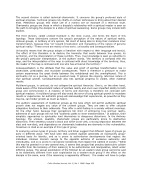
participants who accepted literature or engaged in a conversation with anyone outside of the
conference setting.
Members who had left ―in good standing‖ were excommunicated ex post facto to preclude any
contact with friends still in the group. Anyone who attended any ex-member conference would be
excommunicated latae sententiae (a sentence which takes effect immediately as the crime is
committed), as well as anyone who listened to an evil report about the church or its leadership.
Excommunication latae sententiae helped initiate the procedure inquisiiio (since latae sententiae
implied excommunication without trial), and the entire membership became self-appointed
watchdogs on other members. Inquisitio was activated by public rumor (fama).
There seems to be no doubt that internal and external circumstances have aided in the
development of a modem-day inquisition within the sect under scrutiny. Several parallels to the
elaborate development of the ―Holy Inquisition‖ of the Middle Ages on continental Europe have
been observed.
Setting the Stage: Describing Coercive Environments
OASIS, which is devoted to world conquest, is utopian in outlook. Utopias can be secular (as in
B.F. Skinner's Walden II) or religious. They can be communal or revolutionary. Communal
utopians are, by and large, practical, offering specific compensators for specific activities. They
are generally individualistic and sedentary. They may tend toward passivity (e.g., the hippie
communes of the 1960s), or be ideologically oriented into specific cultures (e.g., the various
intellectual splinter groups of the drug culture, or the counter-culture.)
Revolutionary utopias, on the other hand, are mobile and aggressive, utilizing and exploiting both
internal and external conflict Revolutionary utopias are ―evangelistic‖ and stress the importance of
a common set of mobilizing symbols. They emphasize the power of the collectivity in a general
neo-fascist corporate identity. Revolutionary utopias tend to be emotion-oriented that is, though
the bringers of utopia may be highly intellectual, the common man is made to thrive on his inner
feelings of awe and mysticism. Revolutionary utopias grant general compensators for the
collectivity as a whole. As a consequence, individuality is not rewarded, except as it is expressed
through devotion and commitment to the cause and its leaders.
Though both the communal utopia and the revolutionary utopia claim truth, the revolutionary
utopia has more of a tendency to develop the structural components that ultimately lead to
doctrines, norms, and behaviors such as are observed within OASIS.
Defining Utopia as Entity
Because OASIS considers the true church to be ―the body of Christ,‖ sect members see
themselves as part of a living body. The idea of Utopia is synonymous with OASIS's concept of
―the church.‖ OASIS often discusses its organization in reified terms. ―Don't come back until you
get right with OASIS,‖ implies not only the possibility of committing crimes against the
organization, but the need to receive forgiveness by the organization. Many of the individuals
excommunicated were expelled for ―slandering OASIS.‖ Elders accuse defectors of being ―jealous
of the work of God.‖ OASIS describes sin within the church in medical terms such as ―infection,‖
―leprosy,‖ ―disease,‖ and ―slow rot‖ The expulsion of its deviants is likened to ―surgery,‖
―amputation,‖ ―pruning,‖ and ―vomiting.‖ It has been stated that leaving OASIS is likened to
leaving God. Disobeying sect leaders is like disobeying God, and there is no doubt that
excommunication procedures are employed, not for crimes against God, but for crimes against
the church. In the sect's thinking, there apparently is no difference between them
Defining the Utopian Enemy: The Ideological World-Order
A utopian movement actively condemns the established ideological order (in this case both church
and state), and proposes to overthrow as the only way to usher in the utopian alternative. In
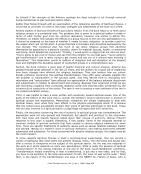
participants who accepted literature or engaged in a conversation with anyone outside of the
conference setting.
Members who had left ―in good standing‖ were excommunicated ex post facto to preclude any
contact with friends still in the group. Anyone who attended any ex-member conference would be
excommunicated latae sententiae (a sentence which takes effect immediately as the crime is
committed), as well as anyone who listened to an evil report about the church or its leadership.
Excommunication latae sententiae helped initiate the procedure inquisiiio (since latae sententiae
implied excommunication without trial), and the entire membership became self-appointed
watchdogs on other members. Inquisitio was activated by public rumor (fama).
There seems to be no doubt that internal and external circumstances have aided in the
development of a modem-day inquisition within the sect under scrutiny. Several parallels to the
elaborate development of the ―Holy Inquisition‖ of the Middle Ages on continental Europe have
been observed.
Setting the Stage: Describing Coercive Environments
OASIS, which is devoted to world conquest, is utopian in outlook. Utopias can be secular (as in
B.F. Skinner's Walden II) or religious. They can be communal or revolutionary. Communal
utopians are, by and large, practical, offering specific compensators for specific activities. They
are generally individualistic and sedentary. They may tend toward passivity (e.g., the hippie
communes of the 1960s), or be ideologically oriented into specific cultures (e.g., the various
intellectual splinter groups of the drug culture, or the counter-culture.)
Revolutionary utopias, on the other hand, are mobile and aggressive, utilizing and exploiting both
internal and external conflict Revolutionary utopias are ―evangelistic‖ and stress the importance of
a common set of mobilizing symbols. They emphasize the power of the collectivity in a general
neo-fascist corporate identity. Revolutionary utopias tend to be emotion-oriented that is, though
the bringers of utopia may be highly intellectual, the common man is made to thrive on his inner
feelings of awe and mysticism. Revolutionary utopias grant general compensators for the
collectivity as a whole. As a consequence, individuality is not rewarded, except as it is expressed
through devotion and commitment to the cause and its leaders.
Though both the communal utopia and the revolutionary utopia claim truth, the revolutionary
utopia has more of a tendency to develop the structural components that ultimately lead to
doctrines, norms, and behaviors such as are observed within OASIS.
Defining Utopia as Entity
Because OASIS considers the true church to be ―the body of Christ,‖ sect members see
themselves as part of a living body. The idea of Utopia is synonymous with OASIS's concept of
―the church.‖ OASIS often discusses its organization in reified terms. ―Don't come back until you
get right with OASIS,‖ implies not only the possibility of committing crimes against the
organization, but the need to receive forgiveness by the organization. Many of the individuals
excommunicated were expelled for ―slandering OASIS.‖ Elders accuse defectors of being ―jealous
of the work of God.‖ OASIS describes sin within the church in medical terms such as ―infection,‖
―leprosy,‖ ―disease,‖ and ―slow rot‖ The expulsion of its deviants is likened to ―surgery,‖
―amputation,‖ ―pruning,‖ and ―vomiting.‖ It has been stated that leaving OASIS is likened to
leaving God. Disobeying sect leaders is like disobeying God, and there is no doubt that
excommunication procedures are employed, not for crimes against God, but for crimes against
the church. In the sect's thinking, there apparently is no difference between them
Defining the Utopian Enemy: The Ideological World-Order
A utopian movement actively condemns the established ideological order (in this case both church
and state), and proposes to overthrow as the only way to usher in the utopian alternative. In