Cultic Studies Journal, Vol. 5, No. 1 1988 Page 5
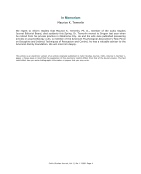
Introductory Note to Family Studies
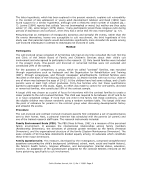
Are cult members' families different from those of persons who do not join cults? Since this much-
discussed question has received almost no systematic attention, the Cultic Studies Journal is
pleased to present in this issue two scientific studies that investigate this important question.
The Maron and the Sirkin and Grellong studies that follow were competently designed and
executed. But, as is often the case in psychological research, their findings contradict each other.
Sirkin and Grellong found that their sample of cultists' parents differed in some respects from a
comparison sample Maron found no differences.
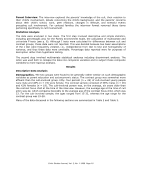
These contradictory results underline the fact that a handful of studies rarely suffices to answer
psychological questions authoritatively. Unlike research in the physical sciences, where scientists
have considerable control over the variables under study, ―real-world‖ (as opposed to laboratory)
psychological research is fraught with contaminating factors. Measuring instruments may not
accurately and/or reliably measure that which they were designed to measure. Data collected in a
study may be analyzed according to different statistical procedures, the appropriateness of which
may be debated even by statisticians. Subjects' knowledge of or inferences about a study may
influence their responses (which is why ―pro-cultists‖ and ―anti-cultists‖ question the reliability of
reports from ex- cult members and present cult members, respectively). And the samples used to
investigate questions about a large population (e.g., cult members' families) may not be
representative of that population.
For these reasons, the CSJ encourages others to follow the lines of inquiry opened by Maron and
Sirkin and Grellong. Ultimately, the accumulation of scientific evidence will enable us to answer
with confidence the key question stated earlier.
The Editor
This article is an electronic version of an article originally published in Cultic Studies Journal, 1981, Volume 5, Number 1,
page 1. Please keep in mind that the pagination of this electronic reprint differs from that of the bound volume. This fact
could affect how you enter bibliographic information in papers that you may write.
Introductory Note to Family Studies
Are cult members' families different from those of persons who do not join cults? Since this much-
discussed question has received almost no systematic attention, the Cultic Studies Journal is
pleased to present in this issue two scientific studies that investigate this important question.
The Maron and the Sirkin and Grellong studies that follow were competently designed and
executed. But, as is often the case in psychological research, their findings contradict each other.
Sirkin and Grellong found that their sample of cultists' parents differed in some respects from a
comparison sample Maron found no differences.
These contradictory results underline the fact that a handful of studies rarely suffices to answer
psychological questions authoritatively. Unlike research in the physical sciences, where scientists
have considerable control over the variables under study, ―real-world‖ (as opposed to laboratory)
psychological research is fraught with contaminating factors. Measuring instruments may not
accurately and/or reliably measure that which they were designed to measure. Data collected in a
study may be analyzed according to different statistical procedures, the appropriateness of which
may be debated even by statisticians. Subjects' knowledge of or inferences about a study may
influence their responses (which is why ―pro-cultists‖ and ―anti-cultists‖ question the reliability of
reports from ex- cult members and present cult members, respectively). And the samples used to
investigate questions about a large population (e.g., cult members' families) may not be
representative of that population.
For these reasons, the CSJ encourages others to follow the lines of inquiry opened by Maron and
Sirkin and Grellong. Ultimately, the accumulation of scientific evidence will enable us to answer
with confidence the key question stated earlier.
The Editor
This article is an electronic version of an article originally published in Cultic Studies Journal, 1981, Volume 5, Number 1,
page 1. Please keep in mind that the pagination of this electronic reprint differs from that of the bound volume. This fact
could affect how you enter bibliographic information in papers that you may write.