Cultic Studies Journal, Vol. 5, No. 1 1988 Page 33
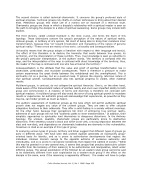
Despite all of the criticism of the self-report measures and retrospective method, it was used in
this study, as it is still used in other research, since it appears to be the only feasible means of
collecting data on the family life of the cult member prior to cult involvement. Neither time nor
investigative resources were available for another approach and the ―nature of the beast‖
conspires against theoretically more desirable approaches.
Finally, there may be methodological difficulties in using the Moos Family Environment Scale.
Though the scale purports to measure the overall social environment of the family, it may not be
sensitive enough to pick up the reciprocal role relationships, boundary difficulties, or power
struggles which family systems theory would hypothesize to be the essential background of cult
involvement. Also, it may be insensitive in revealing the influence of the father as a male
authority figure, as noted by Schwartz and Kaslow (1979). Moreover, it must be kept in mind that
the FES deals with parents' perceptions and not those of cult members themselves. And, again,
there is the question of whether Moos' constructs may obliterate distinctions or elicit spurious
distinctions when applied to different populations.
It should be remembered, however, that despite the retrospective nature of reporting, the means
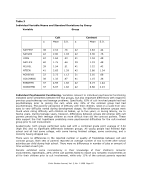
and standard deviations computed for the data of the present study are similar to those for Moos'
scale for Parents of Adolescent Children who were tested in the present. In addition the lack of
differentiation between die groups using a cluster analysis lends some support to the view that
family background is not a major factor in cult involvement.
Implications for Future Research
The following recommendations are suggested for future research,
1. The present investigation analyzed data from a sample recruited solely from the Citizens
Freedom Foundation. Future research should examine the perceptions of family environments
of a sample not involved with any support group whose association may contaminate their
responses.
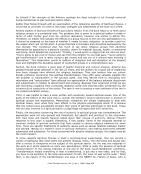
2. The present investigation was based on parental perceptions of the family environment.
Future research should try to incorporate the cult members' and/or other family members'
perceptions of the family environments. Each family member's perception can be compared
with the parents' perceptions and scored for a Family Incongruence Score, a potentially
revealing ―measure of the extent of disagreement among family members with regard to their
perceptions of family climate.‖
3. The present investigation analyzed data employing the Moos Family Environment Scale, which
may not have been sensitive enough to pick up data regarding such important issues as
boundary difficulties or power structures within the family. Future research should examine
boundary and power issues via the use of observational techniques, administered
questionnaires, including questionnaires formulated on the basis of family systems theory and
not sociological theory, or interviews that are specifically adapted to this task.
4. The present study did identify certain personal variables on which the two groups differed this
may be a useful area of additional investigation. Future research should concentrate on
specific personal variables of cult members or employ an interdisciplinary approach which
would examine a gestalt of familiar factors, personal factors, and their interrelationships.
Despite all of the criticism of the self-report measures and retrospective method, it was used in
this study, as it is still used in other research, since it appears to be the only feasible means of
collecting data on the family life of the cult member prior to cult involvement. Neither time nor
investigative resources were available for another approach and the ―nature of the beast‖
conspires against theoretically more desirable approaches.
Finally, there may be methodological difficulties in using the Moos Family Environment Scale.
Though the scale purports to measure the overall social environment of the family, it may not be
sensitive enough to pick up the reciprocal role relationships, boundary difficulties, or power
struggles which family systems theory would hypothesize to be the essential background of cult
involvement. Also, it may be insensitive in revealing the influence of the father as a male
authority figure, as noted by Schwartz and Kaslow (1979). Moreover, it must be kept in mind that
the FES deals with parents' perceptions and not those of cult members themselves. And, again,
there is the question of whether Moos' constructs may obliterate distinctions or elicit spurious
distinctions when applied to different populations.
It should be remembered, however, that despite the retrospective nature of reporting, the means
and standard deviations computed for the data of the present study are similar to those for Moos'
scale for Parents of Adolescent Children who were tested in the present. In addition the lack of
differentiation between die groups using a cluster analysis lends some support to the view that
family background is not a major factor in cult involvement.
Implications for Future Research
The following recommendations are suggested for future research,
1. The present investigation analyzed data from a sample recruited solely from the Citizens
Freedom Foundation. Future research should examine the perceptions of family environments
of a sample not involved with any support group whose association may contaminate their
responses.
2. The present investigation was based on parental perceptions of the family environment.
Future research should try to incorporate the cult members' and/or other family members'
perceptions of the family environments. Each family member's perception can be compared
with the parents' perceptions and scored for a Family Incongruence Score, a potentially
revealing ―measure of the extent of disagreement among family members with regard to their
perceptions of family climate.‖
3. The present investigation analyzed data employing the Moos Family Environment Scale, which
may not have been sensitive enough to pick up data regarding such important issues as
boundary difficulties or power structures within the family. Future research should examine
boundary and power issues via the use of observational techniques, administered
questionnaires, including questionnaires formulated on the basis of family systems theory and
not sociological theory, or interviews that are specifically adapted to this task.
4. The present study did identify certain personal variables on which the two groups differed this
may be a useful area of additional investigation. Future research should concentrate on
specific personal variables of cult members or employ an interdisciplinary approach which
would examine a gestalt of familiar factors, personal factors, and their interrelationships.