Cultic Studies Journal, Vol. 5, No. 1 1988 Page 31
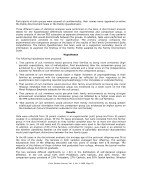
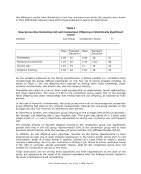
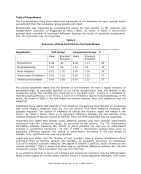
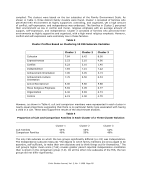
One must view with caution the meaning and significance of the Independence Scale, the only
FES subscale which discriminated between the two groups. The finding was in the opposite
direction from what was hypothesized: that the cult family would have a lower independence
score than the comparison group. One possible interpretation is that this finding is pure chance.
However, an interpretation based on Fromm (1941) and Becker (1973) may apply: the youngster
was unable to deal with freedom, so he sought an environment that would restrict his freedom. In
a sense, the experiential meaning of ―independence‖ is at issue. It is not at all impossible that
this may be a critical matter in distinguishing the two types of families. In the cult-offspring
family, for example, ―independence‖ may be construed as the lack of overt external interference,
whereas in the comparison family it may be more a matter of internalized freedom and ability to
make and carry out decisions. The independence construct must be refined and the distinction
must be replicated before its significance can be reasonably assessed.
Methodological Considerations
The methodological difficulties of research on the cult phenomenon have been widely noted. For
example, Clark el al. (1981) comment extensively on these difficulties:
Scientific investigators of the cult phenomenon encounter a number of serious
methodological difficulties that detract from the authoritativeness of their findings.
First of all, it is very difficult to obtain objective, unbiased measures of the variables
under study. It is not easy, for example, to reduce the conversion process to a list
of codifiable behaviors that can be tallied by observers and fed into a computer for
analysis. And even if such meticulous scientific observation were feasible, it is
doubtful that cults would allow it.
For this reason, all researchers have to depend upon personal reports for their
data. This, of course, raises serious problems, for in such a controversial area as
cults, personal reports are likely to be biased, especially, as is usually the case,
when reporting is retrospective.
The subject bias factor is compounded by the difficulty in obtaining random
samples of the population under study. Clinical investigators, for example, see
primarily those individuals who seek help, while other researchers are frequently
dependent upon cult volunteers, whose representativeness is open to question.
Such a lack of representative samples obscures the comparisons that can be made
among various studies.
...the methodological problems suggest that all inferences be made cautiously ...
Perhaps the most important goal of future research should be to obtain samples
that are representative of the cult population. This can be achieved either by
drawing random samples from many cults or by studies, each using random
samples, of different cults. Only through the investigation of numerous subjects
drawn randomly from many cults will re- searchers be able to make reliable
conclusions about and comparisons among various groups (pp. 40-41).
Unfortunately, Clark et al. do not suggest procedures for obtaining cooperative random samples
of cult members and their families neither do they suggest how to study the pertinent variables.
Meanwhile, failing the ideal, research deals with the feasible, with various flawed investigations
exercising mutually corrective influences.
This study attempted to deal with this issue by drawing from a large population with
representation of different cults from all over the United States. However, the experimental
population had a limitation in that it consisted of parents many of whom were highly emotionally
involved because of their child's conversion. Furthermore, their responses may have been
influenced by their involvement in the Citizens Freedom Foundation. Also, the comparison group
One must view with caution the meaning and significance of the Independence Scale, the only
FES subscale which discriminated between the two groups. The finding was in the opposite
direction from what was hypothesized: that the cult family would have a lower independence
score than the comparison group. One possible interpretation is that this finding is pure chance.
However, an interpretation based on Fromm (1941) and Becker (1973) may apply: the youngster
was unable to deal with freedom, so he sought an environment that would restrict his freedom. In
a sense, the experiential meaning of ―independence‖ is at issue. It is not at all impossible that
this may be a critical matter in distinguishing the two types of families. In the cult-offspring
family, for example, ―independence‖ may be construed as the lack of overt external interference,
whereas in the comparison family it may be more a matter of internalized freedom and ability to
make and carry out decisions. The independence construct must be refined and the distinction
must be replicated before its significance can be reasonably assessed.
Methodological Considerations
The methodological difficulties of research on the cult phenomenon have been widely noted. For
example, Clark el al. (1981) comment extensively on these difficulties:
Scientific investigators of the cult phenomenon encounter a number of serious
methodological difficulties that detract from the authoritativeness of their findings.
First of all, it is very difficult to obtain objective, unbiased measures of the variables
under study. It is not easy, for example, to reduce the conversion process to a list
of codifiable behaviors that can be tallied by observers and fed into a computer for
analysis. And even if such meticulous scientific observation were feasible, it is
doubtful that cults would allow it.
For this reason, all researchers have to depend upon personal reports for their
data. This, of course, raises serious problems, for in such a controversial area as
cults, personal reports are likely to be biased, especially, as is usually the case,
when reporting is retrospective.
The subject bias factor is compounded by the difficulty in obtaining random
samples of the population under study. Clinical investigators, for example, see
primarily those individuals who seek help, while other researchers are frequently
dependent upon cult volunteers, whose representativeness is open to question.
Such a lack of representative samples obscures the comparisons that can be made
among various studies.
...the methodological problems suggest that all inferences be made cautiously ...
Perhaps the most important goal of future research should be to obtain samples
that are representative of the cult population. This can be achieved either by
drawing random samples from many cults or by studies, each using random
samples, of different cults. Only through the investigation of numerous subjects
drawn randomly from many cults will re- searchers be able to make reliable
conclusions about and comparisons among various groups (pp. 40-41).
Unfortunately, Clark et al. do not suggest procedures for obtaining cooperative random samples
of cult members and their families neither do they suggest how to study the pertinent variables.
Meanwhile, failing the ideal, research deals with the feasible, with various flawed investigations
exercising mutually corrective influences.
This study attempted to deal with this issue by drawing from a large population with
representation of different cults from all over the United States. However, the experimental
population had a limitation in that it consisted of parents many of whom were highly emotionally
involved because of their child's conversion. Furthermore, their responses may have been
influenced by their involvement in the Citizens Freedom Foundation. Also, the comparison group