Cultic Studies Journal, Vol. 5, No. 1 1988 Page 30
know, or recall, or report only ―major‖ experiences, whereas first-hand respondents also recall
and report less significant incidents. Moreover, it is possible that stress is a ―threshold‖
phenomenon: once you cross the sill, the number of pushes isn't important.
The lack of significant differences between the two classes of families in reported incidence of
member psychopathology supports the previously mentioned notion that families of cult members
are generally similar to families whose offspring do not enter cults. It should be noted, however,
that although the presence of members' psychopathology is often considered an index of the
possibility of family dysfunctionality, the absence of individual psychopathology is not a guarantee
of a functional family.
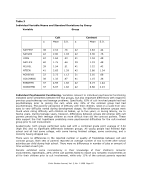
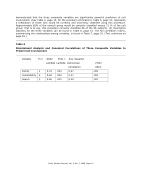
The lack of significant differences between the groups on the FES Moral- Religious Emphasis
Scale, whether without or with control variables, is noteworthy. Although part of the comparison
group was recruited from churchgoers and the entire comparison group had a greater average
amount of religious training, there was no difference between the two groups on moral- religious
emphasis. What this says about churchgoing and religious training may not be so clear, however
the membership of the experimental sample, parents in the Citizens Freedom Foundation, may
constitute a ―churchgoing equivalent‖ and at the least may indicate an underlying ―moral-type‖
orientation not common among most non-churchgoers with a similar level of religious training.
The equivalence of both groups on the FES Achievement Orientation Scale does not support
Schwartz and Kaslow's (1979) and Scharff's (1982) view that children who get involved in cults
grew up in achievement-oriented homes and are prone to perfectionistic striving. The lack of such
a distinction in the two samples again supports the contention that the familial factor is not
significant in cult involvement.
On the other hand, the finding that the two samples were not significantly different in their
intellectual-cultural orientation does not support Carr's (1981) view, based on her finding that
parents of her sample of cult members had a high level of education (18% with Doctoral
Degrees), that cult-member parents probably are relatively highly accepting of various
philosophies and values. Carr, it should be noted, does not provide evidence supporting her
assumption that educational level reacts significantly to such ―accepting‖ attitudes, even if it can
be taken as an index of intellectual-cultural orientation. Similarly, the results of this study do not
support Kelly's (1979) finding that ―often the subjects [ex-cult members themselves] had an
inordinate admiration for the intellect in a very unrealistic way.‖ On the whole, then, it seems that
the non- distinguishing finding regarding parents' level of education and intellectual orientation
supports the non-family-factor perspective of cult vulnerability.
The portrait of cult members prior to cult involvement, as painted by their parents, is similar to
that presented in the literature by Kelly (1979), Galanter et al (1979), Carr (1981), Eden (1981),
and Markowitz (1982). The cult member was seen as coming typically from a generally middle-
income family, being in the 18-30 age range at the time of recruitment, and attending college
with a B average.
In addition, in the present study, a significant difference on the Family Questionnaire is the
parents' description of the cult member as having been less socially active, in the sense of having
fewer close friendships and fewer romantic involvements, than the comparison group offspring.
This distinction, if accurate, clearly suggests the importance of the recruitment process. The
young adult with limited talents in interpersonal relationships may be readily attracted to the cults
by friendly recruiters. There may, of course, be some underlying difference in the two parent
groups' knowledge of their children's friendships, or in their tendencies to characterize them as
―close‖ or ―casual.‖ If so, this would be an extremely significant aspect differentiating family
backgrounds but no such distinction is suggested in the literature, and the present study was not
designed to investigate such a possibility.
know, or recall, or report only ―major‖ experiences, whereas first-hand respondents also recall
and report less significant incidents. Moreover, it is possible that stress is a ―threshold‖
phenomenon: once you cross the sill, the number of pushes isn't important.
The lack of significant differences between the two classes of families in reported incidence of
member psychopathology supports the previously mentioned notion that families of cult members
are generally similar to families whose offspring do not enter cults. It should be noted, however,
that although the presence of members' psychopathology is often considered an index of the
possibility of family dysfunctionality, the absence of individual psychopathology is not a guarantee
of a functional family.
The lack of significant differences between the groups on the FES Moral- Religious Emphasis
Scale, whether without or with control variables, is noteworthy. Although part of the comparison
group was recruited from churchgoers and the entire comparison group had a greater average
amount of religious training, there was no difference between the two groups on moral- religious
emphasis. What this says about churchgoing and religious training may not be so clear, however
the membership of the experimental sample, parents in the Citizens Freedom Foundation, may
constitute a ―churchgoing equivalent‖ and at the least may indicate an underlying ―moral-type‖
orientation not common among most non-churchgoers with a similar level of religious training.
The equivalence of both groups on the FES Achievement Orientation Scale does not support
Schwartz and Kaslow's (1979) and Scharff's (1982) view that children who get involved in cults
grew up in achievement-oriented homes and are prone to perfectionistic striving. The lack of such
a distinction in the two samples again supports the contention that the familial factor is not
significant in cult involvement.
On the other hand, the finding that the two samples were not significantly different in their
intellectual-cultural orientation does not support Carr's (1981) view, based on her finding that
parents of her sample of cult members had a high level of education (18% with Doctoral
Degrees), that cult-member parents probably are relatively highly accepting of various
philosophies and values. Carr, it should be noted, does not provide evidence supporting her
assumption that educational level reacts significantly to such ―accepting‖ attitudes, even if it can
be taken as an index of intellectual-cultural orientation. Similarly, the results of this study do not
support Kelly's (1979) finding that ―often the subjects [ex-cult members themselves] had an
inordinate admiration for the intellect in a very unrealistic way.‖ On the whole, then, it seems that
the non- distinguishing finding regarding parents' level of education and intellectual orientation
supports the non-family-factor perspective of cult vulnerability.
The portrait of cult members prior to cult involvement, as painted by their parents, is similar to
that presented in the literature by Kelly (1979), Galanter et al (1979), Carr (1981), Eden (1981),
and Markowitz (1982). The cult member was seen as coming typically from a generally middle-
income family, being in the 18-30 age range at the time of recruitment, and attending college
with a B average.
In addition, in the present study, a significant difference on the Family Questionnaire is the
parents' description of the cult member as having been less socially active, in the sense of having
fewer close friendships and fewer romantic involvements, than the comparison group offspring.
This distinction, if accurate, clearly suggests the importance of the recruitment process. The
young adult with limited talents in interpersonal relationships may be readily attracted to the cults
by friendly recruiters. There may, of course, be some underlying difference in the two parent
groups' knowledge of their children's friendships, or in their tendencies to characterize them as
―close‖ or ―casual.‖ If so, this would be an extremely significant aspect differentiating family
backgrounds but no such distinction is suggested in the literature, and the present study was not
designed to investigate such a possibility.