Cultic Studies Journal, Vol. 5, No. 1 1988 Page 26
this difference results from distinctions in the two universes from which the samples were drawn
or from differential response rates within those populations cannot be determined.
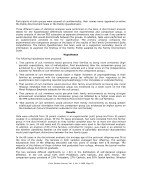
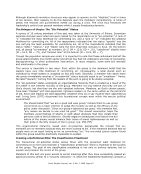
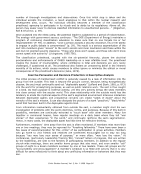
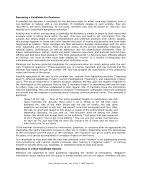
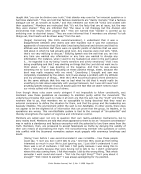
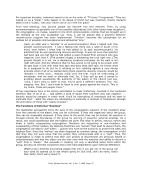
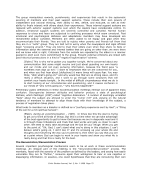
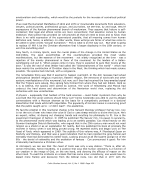
Table I
Raw Scores Discriminating Cult and Comparison Offspring at Statistically Significant
Levels
Variable Cult Group Comparison Group P
Mean Standard
Deviation
Mean Standard
Deviation
Friendships 2.58 .62 2.96 .38 .01
Romantic Involvement 1.22 .92 1.76 1.04 .04
Alcohol Use 1.67 .79 2.1 .75 .03
Religious Training 2.09 .64 2.54 .98 .03
On the variables measured by the Family Questionnaire, a Wilkes Lambda (i.e, correlation test)
revealed that the groups differed significantly on only four out of twenty possible variables. As
shown in Table 1, the cult offspring were reported as having fewer close friendships, fewer
romantic involvements, less alcohol use, and less religious training.
Friendship was rated on a one to three scale representing no relationships, casual relationships,
and close relationships. The score of 2.96 for the comparison group means that on the average
these offspring had closer relationships with friends than the cult offspring, as reported by their
parents.
In the case of Romantic Involvements, the study scores show that on the average the comparison
group offspring had close to two romantic involvements, whereas the cult group member on the
average had only one romance, as reported by their parents.
As reported by parents, the comparison group offspring on the average used alcohol occasionally
the average cult offspring was a less frequent user. This score was based on a 3-point scale
where scores of 1, 2, and 3 respectively represented no alcohol use, occasional use, and frequent
use.
The average amount of reported religious training in the comparison group was significantly
greater than that in the cult group. Approximately 50% of the comparison group had at least
parochial school training, while the average cult group member only attended Sunday School.
In addition, all cult offspring were parentally reported on the Family Questionnaire to have
experienced at least one of eight stressful experiences in the twelve-month period prior to cult
involvement: death of a close friend or relative sickness of a close friend or relative broken
romantic relationship loss of a job frustration in finding a job failure at school extensive travel
in the USA or overseas abrupt personality change. Data for the comparison group were not
suitable for comparative scoring on this factor.
These distinctions are not among those specifically set forth hypothetically at the start of the
study, but appeared as the result of an analysis undertaken after the findings directly related to
the study hypotheses proved unrewarding.
this difference results from distinctions in the two universes from which the samples were drawn
or from differential response rates within those populations cannot be determined.
Table I
Raw Scores Discriminating Cult and Comparison Offspring at Statistically Significant
Levels
Variable Cult Group Comparison Group P
Mean Standard
Deviation
Mean Standard
Deviation
Friendships 2.58 .62 2.96 .38 .01
Romantic Involvement 1.22 .92 1.76 1.04 .04
Alcohol Use 1.67 .79 2.1 .75 .03
Religious Training 2.09 .64 2.54 .98 .03
On the variables measured by the Family Questionnaire, a Wilkes Lambda (i.e, correlation test)
revealed that the groups differed significantly on only four out of twenty possible variables. As
shown in Table 1, the cult offspring were reported as having fewer close friendships, fewer
romantic involvements, less alcohol use, and less religious training.
Friendship was rated on a one to three scale representing no relationships, casual relationships,
and close relationships. The score of 2.96 for the comparison group means that on the average
these offspring had closer relationships with friends than the cult offspring, as reported by their
parents.
In the case of Romantic Involvements, the study scores show that on the average the comparison
group offspring had close to two romantic involvements, whereas the cult group member on the
average had only one romance, as reported by their parents.
As reported by parents, the comparison group offspring on the average used alcohol occasionally
the average cult offspring was a less frequent user. This score was based on a 3-point scale
where scores of 1, 2, and 3 respectively represented no alcohol use, occasional use, and frequent
use.
The average amount of reported religious training in the comparison group was significantly
greater than that in the cult group. Approximately 50% of the comparison group had at least
parochial school training, while the average cult group member only attended Sunday School.
In addition, all cult offspring were parentally reported on the Family Questionnaire to have
experienced at least one of eight stressful experiences in the twelve-month period prior to cult
involvement: death of a close friend or relative sickness of a close friend or relative broken
romantic relationship loss of a job frustration in finding a job failure at school extensive travel
in the USA or overseas abrupt personality change. Data for the comparison group were not
suitable for comparative scoring on this factor.
These distinctions are not among those specifically set forth hypothetically at the start of the
study, but appeared as the result of an analysis undertaken after the findings directly related to
the study hypotheses proved unrewarding.