Cultic Studies Journal, Vol. 5, No. 1 1988 Page 25
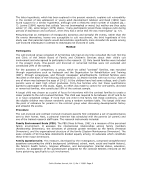
Participants of both groups were assured of confidentiality their names never appeared on either
the Family Environment Scale or the Family Questionnaire.
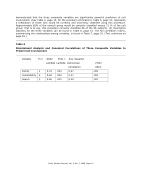
Three different types of statistical analyses were performed on the data. A discriminant analysis
tested for the hypothesized differences between the experimental and comparison group. A
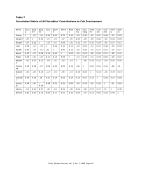
cluster analysis of the ten FES subscales as separate dimensions was done to see if any patterns
would develop that would discriminate between the groups. In addition, tests were performed on
al questionnaire variables to test for significance. The primary analysis compares the
experimental and comparison groups on the basis of the results of the Family Environment Scale
computations. The Family Questionnaire has been used as a supportive secondary source of
information to augment the findings of the Family Profile supplied by the Family Environment
Scale.
Hypotheses
The following hypotheses were proposed:
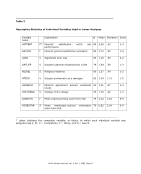
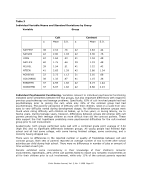
1. That parents of cult members would perceive their families as being more enmeshed (high
parental expectations, lack of individuation, fluid boundaries) than the comparison group (as
evidenced by a higher score on the Cohesion subscale and a lower score on the Independence
subscale for families of cult members as compared to the comparison group.).
2. That parents of cult members would report a higher incidence of psychopathology in their
families as compared with the comparison group (as reflected by their responses to the
questionnaire item regarding reported psychopathology in the immediate or extended family).
3. That parents of cult members would perceive their family environments as having less moral
religious emphasis than the comparison group (as evidenced by a lower score on the FES
Moral-Religious Emphasis subscale for the cult group).
4. That parents of cult members would perceive their family environments as having stronger
achievement orientation than the comparison group (as reflected by a higher scale score on
the FES Achievement subscale on the Family Environment Scale for the cult families).
5. That parents of cult members would perceive their family environments as having greater
intellectual-cultural orientation than the comparison group (as evidenced by higher scores on
the Intellectual-Cultural Orientation subscale for the cult families).
Results
Data were collected from 35 parent couples in an experimental (cult) group and from 35 parent
couples in a comparison group. Of the 70 cases processed, two were excluded from the former
group in the discrimination analysis as they lacked complete data for at least one discriminant
variable. In sum, 33 cult cases and 35 comparison cases were used in the discriminant analysis.
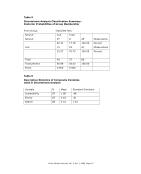
In addition, an analysis of 60 of the families, controlled for religion, was made in an attempt to
see whether classifying families on the basis of clusters of parentally perceived characteristics
would yield significant distinctions between the two family types.
In the 68 cases in the discriminant analysis, the average age of the pertinent offspring was 26 at
the time of the study. The families in both samples averaged four offspring. The average
educational level of the offspring discussed was two years of college with a B average. The
majority of the fathers of these children had graduated from college, whereas the typical mother
attended college but did not graduate.
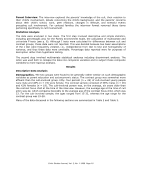
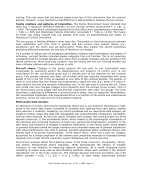
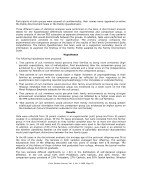
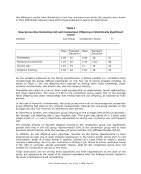
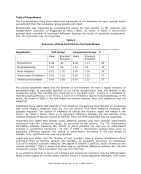
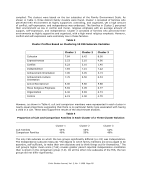
The two samples differed significantly (p .02) in the distribution of self-declared religious
affiliation. In the cult group 51% were Protestant, 21% Catholic, and 22% Jewish. The
comparison group consisted of 23% Protestant, 27% Catholic, and 50% Jewish families. Whether
Participants of both groups were assured of confidentiality their names never appeared on either
the Family Environment Scale or the Family Questionnaire.
Three different types of statistical analyses were performed on the data. A discriminant analysis
tested for the hypothesized differences between the experimental and comparison group. A
cluster analysis of the ten FES subscales as separate dimensions was done to see if any patterns
would develop that would discriminate between the groups. In addition, tests were performed on
al questionnaire variables to test for significance. The primary analysis compares the
experimental and comparison groups on the basis of the results of the Family Environment Scale
computations. The Family Questionnaire has been used as a supportive secondary source of
information to augment the findings of the Family Profile supplied by the Family Environment
Scale.
Hypotheses
The following hypotheses were proposed:
1. That parents of cult members would perceive their families as being more enmeshed (high
parental expectations, lack of individuation, fluid boundaries) than the comparison group (as
evidenced by a higher score on the Cohesion subscale and a lower score on the Independence
subscale for families of cult members as compared to the comparison group.).
2. That parents of cult members would report a higher incidence of psychopathology in their
families as compared with the comparison group (as reflected by their responses to the
questionnaire item regarding reported psychopathology in the immediate or extended family).
3. That parents of cult members would perceive their family environments as having less moral
religious emphasis than the comparison group (as evidenced by a lower score on the FES
Moral-Religious Emphasis subscale for the cult group).
4. That parents of cult members would perceive their family environments as having stronger
achievement orientation than the comparison group (as reflected by a higher scale score on
the FES Achievement subscale on the Family Environment Scale for the cult families).
5. That parents of cult members would perceive their family environments as having greater
intellectual-cultural orientation than the comparison group (as evidenced by higher scores on
the Intellectual-Cultural Orientation subscale for the cult families).
Results
Data were collected from 35 parent couples in an experimental (cult) group and from 35 parent
couples in a comparison group. Of the 70 cases processed, two were excluded from the former
group in the discrimination analysis as they lacked complete data for at least one discriminant
variable. In sum, 33 cult cases and 35 comparison cases were used in the discriminant analysis.
In addition, an analysis of 60 of the families, controlled for religion, was made in an attempt to
see whether classifying families on the basis of clusters of parentally perceived characteristics
would yield significant distinctions between the two family types.
In the 68 cases in the discriminant analysis, the average age of the pertinent offspring was 26 at
the time of the study. The families in both samples averaged four offspring. The average
educational level of the offspring discussed was two years of college with a B average. The
majority of the fathers of these children had graduated from college, whereas the typical mother
attended college but did not graduate.
The two samples differed significantly (p .02) in the distribution of self-declared religious
affiliation. In the cult group 51% were Protestant, 21% Catholic, and 22% Jewish. The
comparison group consisted of 23% Protestant, 27% Catholic, and 50% Jewish families. Whether