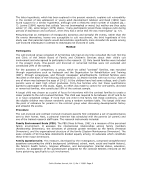
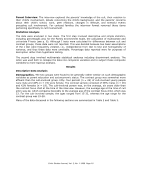
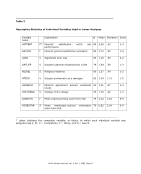
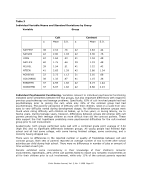
Cultic Studies Journal, Vol. 5, No. 1 1988 Page 24
Family Questionnaire (Comparison Families)
This is a 26-item questionnaire, similar to the Cult Family Questionnaire except that six questions
regarding issues of cult involvement were not included.
Parents were requested to focus in on either their eldest, one of their middle, or youngest child.
They were also asked to discuss each question and to formulate one answer jointly. One of the
questions asked the parents if their children had experienced any or all of eight stressful events in
any 12-month period between 18 and 30. This question represented an attempt to elicit
information parallel to that gathered in the Cult Family Questionnaire. However, it became
apparent that this instruction did not necessarily specify a period similar to the year prior to cult
involvement in the cult group.
Procedures
As described above, one hundred and forty-five cult-family research packets were handed out at
the welcoming desk at the Citizens Freedom Foundation convention in Washington, D.C., in
October 1982. The packets included the Family Environment Scale Form R, an appropriate Family
Questionnaire, and a self-addressed stamped envelope which the participants were requested to
mail back to the researcher at their earliest possible convenience if they were unable to complete
the packet at the convention itself. The critical directives were to hand the packets in by the last
day of the convention. However, only three families handed the completed materials back by the
end of the convention. This was due to the fact that both parents were not present at the
convention or to the lack of time due to programming at the convention. One-half of the packets
contained a letter of instructions asking them first to complete the Fan-dly Environment Scale
Form R individually and then the Family Questionnaire together. The other half were asked to
jointly complete the Family Questionnaire first and then separately to complete the Family
Environment Scale Form R. This procedure controls for the effect of the order of presentation of
the instruments.
The instruction letter told the parents to fill out FES Form R retrospectively, referring them to
when their offspring was between 16 and 18. This age range was chosen since it typically
precedes the time when the child may have gone off to college and is often the last time many
families are intact.
Of the 145 cult-family research packets that were handed out, 51 (359'o of the total) were
returned. Of those, 35 (25% of the 145) came from two-parent families and contained both
parents' Family Environment Scales and the Family Questionnaire 8 (5.5%) were returned with
only one Family Environment Scale completed due to death, divorce, or reluctance of the other
parent to participate 4 (2.8%) were returned with only the Family Questionnaire and 4 (2.8%)
were returned missing the Family Questionnaire.
To constitute a comparison group, 145 Caucasian families with offspring between 18 and 30 were
randomly selected from the membership lists of New York area Jewish Community Centers and
Catholic and Protestant Churches, a., mentioned earlier. Research packets containing the Family
Environment Scale Form R, an appropriate Family Questionnaire, and a self-addressed stamped
envelope were mailed to all these families. A letter of introduction and instructions requested the
parents to fill out the Family Questionnaire jointly an( the FES Form R separately, and gave
instructions for the order of filling then out. The parents were instructed to fill out the Family
Environment Scale, retrospectively, as of the time their youngster was between 16 and 18.
Of the 145 packets mailed, 43 (30%) were returned 35 (25% of the 145 contained the Family
Questionnaire and a completed FES Form R from each parent. Five were returned by single
parents and 3 (2%) were returned with only the Family Questionnaire. Of all the returned
packets, 19 of those who were instructed to complete the Family Environment Scale first were
included in the analysis and 16 who were instructed to complete the Family Questionnaire first.
Family Questionnaire (Comparison Families)
This is a 26-item questionnaire, similar to the Cult Family Questionnaire except that six questions
regarding issues of cult involvement were not included.
Parents were requested to focus in on either their eldest, one of their middle, or youngest child.
They were also asked to discuss each question and to formulate one answer jointly. One of the
questions asked the parents if their children had experienced any or all of eight stressful events in
any 12-month period between 18 and 30. This question represented an attempt to elicit
information parallel to that gathered in the Cult Family Questionnaire. However, it became
apparent that this instruction did not necessarily specify a period similar to the year prior to cult
involvement in the cult group.
Procedures
As described above, one hundred and forty-five cult-family research packets were handed out at
the welcoming desk at the Citizens Freedom Foundation convention in Washington, D.C., in
October 1982. The packets included the Family Environment Scale Form R, an appropriate Family
Questionnaire, and a self-addressed stamped envelope which the participants were requested to
mail back to the researcher at their earliest possible convenience if they were unable to complete
the packet at the convention itself. The critical directives were to hand the packets in by the last
day of the convention. However, only three families handed the completed materials back by the
end of the convention. This was due to the fact that both parents were not present at the
convention or to the lack of time due to programming at the convention. One-half of the packets
contained a letter of instructions asking them first to complete the Fan-dly Environment Scale
Form R individually and then the Family Questionnaire together. The other half were asked to
jointly complete the Family Questionnaire first and then separately to complete the Family
Environment Scale Form R. This procedure controls for the effect of the order of presentation of
the instruments.
The instruction letter told the parents to fill out FES Form R retrospectively, referring them to
when their offspring was between 16 and 18. This age range was chosen since it typically
precedes the time when the child may have gone off to college and is often the last time many
families are intact.
Of the 145 cult-family research packets that were handed out, 51 (359'o of the total) were
returned. Of those, 35 (25% of the 145) came from two-parent families and contained both
parents' Family Environment Scales and the Family Questionnaire 8 (5.5%) were returned with
only one Family Environment Scale completed due to death, divorce, or reluctance of the other
parent to participate 4 (2.8%) were returned with only the Family Questionnaire and 4 (2.8%)
were returned missing the Family Questionnaire.
To constitute a comparison group, 145 Caucasian families with offspring between 18 and 30 were
randomly selected from the membership lists of New York area Jewish Community Centers and
Catholic and Protestant Churches, a., mentioned earlier. Research packets containing the Family
Environment Scale Form R, an appropriate Family Questionnaire, and a self-addressed stamped
envelope were mailed to all these families. A letter of introduction and instructions requested the
parents to fill out the Family Questionnaire jointly an( the FES Form R separately, and gave
instructions for the order of filling then out. The parents were instructed to fill out the Family
Environment Scale, retrospectively, as of the time their youngster was between 16 and 18.
Of the 145 packets mailed, 43 (30%) were returned 35 (25% of the 145 contained the Family
Questionnaire and a completed FES Form R from each parent. Five were returned by single
parents and 3 (2%) were returned with only the Family Questionnaire. Of all the returned
packets, 19 of those who were instructed to complete the Family Environment Scale first were
included in the analysis and 16 who were instructed to complete the Family Questionnaire first.