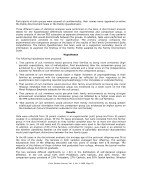
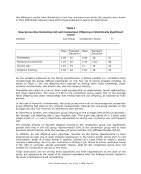
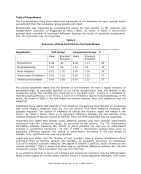
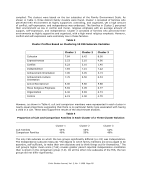
Cultic Studies Journal, Vol. 5, No. 1 1988 Page 13
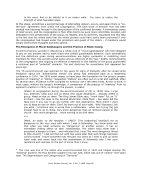
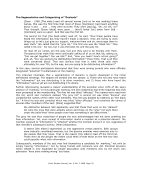
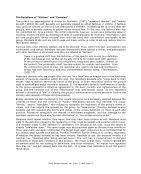
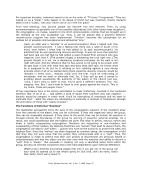
nothing. This may mean that cult parents simply knew less of this information than the contrast
parents. However, it may represent a real difference in dating behavior between the two groups-
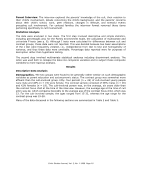
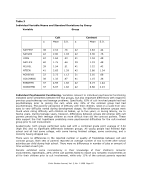
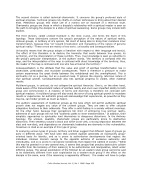
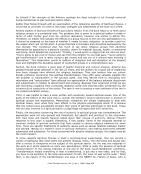
Family relations and patterns of interaction. The Family Environment Scale indicated that
there was a significant difference between cult and contrast families (multivariate F =2.81, p.
.006). The scales which contributed significantly to this effect were Expressiveness (univariate F
=7.66, p .007) and Intellectual-Cultural Orientation (univariate F =7.66, p .0.45). The means
for these two scales indicate that cult families were lower on Expressiveness but higher on
Intellectual-Cultural Orientation.
The two groups of families differed in other ways also. The parents in the contrast group indicated
more satisfaction with their child in general and also around more specific issues, e.g.,
satisfaction with the child's past job performance. These data support the second hypothesis
predicting differences between the two sets of families in our sample.
On a number of indices such as synagogue attendance, religious school attendance, and degree of
orthodoxy, contrast families indicated greater religiosity than cult families. This is not surprising
considering that the contrast families were drawn from a sample of people actively working in the
Jewish community. More surprising, however, was the finding that the cult-involved families had
more orthodox relatives and more relatives in cults.
Pre-cult stress. Changes in the young person's life just prior to cult involvement were
investigated by examining explicit life dissatisfactions and stressors 12 months prior to cult
involvement for the cult-involved group and 12 months prior to the interview for the contrast
group. Cult parents reported that their cult-involved child was explicitly dissatisfied with some
aspect of his or her life (74%) as opposed to only 38% of the contrast parents. The parents of
those in cults noted that the children had experienced a significant loss (e.g., death of a friend or
close relative, the end of a romantic relationship, etc.) in the year prior to joining the cult. Those
who joined cults also changed colleges more frequently than the contrast group. Finally, 23% of
the cult-involved young people had had previous experiences with other cult groups. The third
hypothesis, predicting no differences in proximal precult stress, was not supported. Nevertheless,
the interactional hypothesis, that experienced stress is a function of life events and interpersonal
dynamics, cannot be ruled out from the available evidence.
Multivariate Data Analysis
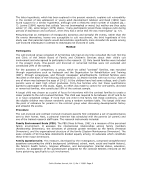
An alternative to simply reporting the hypotheses tested was to use statistical techniques to make
sense of the entire data matrix. Hundreds of variables were obtained from each family, making
data reduction a necessity. Guided by our initial hypotheses and our descriptive data analysis, we
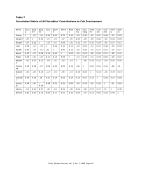
sought to further reduce the data into manageable and comprehensible components. Correlation
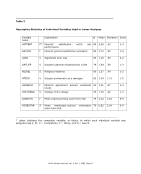
matrices were analyzed. As the most robust variables were isolated, they were grouped into three
discrete constructs: 1) the Vulnerability factor, which related to the psychological vulnerability of
the individual and comprised measures of recent loss, general life dissatisfaction, problems in the
teen years, and frequency of changes in academic institutions 2) the Family factor, which related
to parental attitudes toward the target individual and comprised measures of parental satisfaction
with school performance, the child in general, parental agreement about vocational choices, and
familial style of emotional expressiveness 3) the Search factor, which was a post hoc category
accounting for a unique proportion of the variance and comprising measures of extended familial
religiosity and nuclear familial orientation toward intellectual and cultural activities.
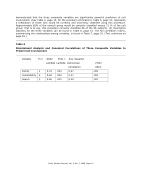
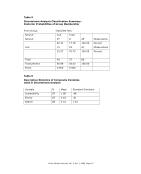
Discriminant analysis tested the predictive power of the three constructs: Vulnerability, Family,
and Search. Measurement theory (Nunnally, 1978) demonstrates the efficacy of multiple
indicators on the reliability of measuring research constructs. As a resul4 composite scores
consisting of means were used as discriminating variables, where each variable in the analysis
represented one of the three constructs. The Average Squared Canonical Correlation was 0.40
(Wilks' Lambda =0.60, F (3, 82) =17.9, p .001). In other words, discriminant analysis
nothing. This may mean that cult parents simply knew less of this information than the contrast
parents. However, it may represent a real difference in dating behavior between the two groups-
Family relations and patterns of interaction. The Family Environment Scale indicated that
there was a significant difference between cult and contrast families (multivariate F =2.81, p.
.006). The scales which contributed significantly to this effect were Expressiveness (univariate F
=7.66, p .007) and Intellectual-Cultural Orientation (univariate F =7.66, p .0.45). The means
for these two scales indicate that cult families were lower on Expressiveness but higher on
Intellectual-Cultural Orientation.
The two groups of families differed in other ways also. The parents in the contrast group indicated
more satisfaction with their child in general and also around more specific issues, e.g.,
satisfaction with the child's past job performance. These data support the second hypothesis
predicting differences between the two sets of families in our sample.
On a number of indices such as synagogue attendance, religious school attendance, and degree of
orthodoxy, contrast families indicated greater religiosity than cult families. This is not surprising
considering that the contrast families were drawn from a sample of people actively working in the
Jewish community. More surprising, however, was the finding that the cult-involved families had
more orthodox relatives and more relatives in cults.
Pre-cult stress. Changes in the young person's life just prior to cult involvement were
investigated by examining explicit life dissatisfactions and stressors 12 months prior to cult
involvement for the cult-involved group and 12 months prior to the interview for the contrast
group. Cult parents reported that their cult-involved child was explicitly dissatisfied with some
aspect of his or her life (74%) as opposed to only 38% of the contrast parents. The parents of
those in cults noted that the children had experienced a significant loss (e.g., death of a friend or
close relative, the end of a romantic relationship, etc.) in the year prior to joining the cult. Those
who joined cults also changed colleges more frequently than the contrast group. Finally, 23% of
the cult-involved young people had had previous experiences with other cult groups. The third
hypothesis, predicting no differences in proximal precult stress, was not supported. Nevertheless,
the interactional hypothesis, that experienced stress is a function of life events and interpersonal
dynamics, cannot be ruled out from the available evidence.
Multivariate Data Analysis
An alternative to simply reporting the hypotheses tested was to use statistical techniques to make
sense of the entire data matrix. Hundreds of variables were obtained from each family, making
data reduction a necessity. Guided by our initial hypotheses and our descriptive data analysis, we
sought to further reduce the data into manageable and comprehensible components. Correlation
matrices were analyzed. As the most robust variables were isolated, they were grouped into three
discrete constructs: 1) the Vulnerability factor, which related to the psychological vulnerability of
the individual and comprised measures of recent loss, general life dissatisfaction, problems in the
teen years, and frequency of changes in academic institutions 2) the Family factor, which related
to parental attitudes toward the target individual and comprised measures of parental satisfaction
with school performance, the child in general, parental agreement about vocational choices, and
familial style of emotional expressiveness 3) the Search factor, which was a post hoc category
accounting for a unique proportion of the variance and comprising measures of extended familial
religiosity and nuclear familial orientation toward intellectual and cultural activities.
Discriminant analysis tested the predictive power of the three constructs: Vulnerability, Family,
and Search. Measurement theory (Nunnally, 1978) demonstrates the efficacy of multiple
indicators on the reliability of measuring research constructs. As a resul4 composite scores
consisting of means were used as discriminating variables, where each variable in the analysis
represented one of the three constructs. The Average Squared Canonical Correlation was 0.40
(Wilks' Lambda =0.60, F (3, 82) =17.9, p .001). In other words, discriminant analysis