Cultic Studies Journal, Vol. 5, No. 1 1988 Page 105
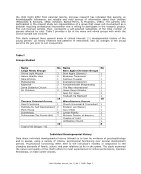
The second division is called technical-charismatic. It concerns the group‘s preferred style of
spiritual progress. Technical groups rely chiefly on certain techniques to bring about their desired
ends. Meditation groups that make use of a mantra are an example of a technical style.
Charismatic groups are those in which a disciple‘s relationship with a spiritual master is seen as
the path to bringing the disciple to a state of spiritual awakening. Some groups may include both
aspects.
The third division, called unilevel-multievel is the most crucial, and forms the heart of this
typology. These distinctions concern the group‘s perception of the nature of spiritual reality.
Unilevel groups, in Anthony et al‘s opinion, fall short of being able to bring their members inner
transformation, because they ―err toward trivialization and misreading of the nature of genuine
spiritual reality.‖ These errors are mainly of two sorts: univocality and consequentialism.
Univocality means that the group adopts a literalism with respect to their language and text(s).
The effect of this literalism is to destroy the hierarchy that exists between true gnosis, its
symbol(s), and the interpretation of these symbols. Thus, true knowledge is seen as reducible to
the group‘s particular interpretation. In the authors‘ words, ―the territory is confused with the
map, and the interpretation of the map is confused with direct knowledge of the territory thus,
the reader of the map is confused with one who has arrived at the territory.‖
Consequentialism is the attitude that the value and proof of spiritual transformation lies in
observable, predictable, and mundane consequences. There is therefore a pressure to make
certain experiences the great divide between the enlightened and the unenlightened. This is
spirituality not as a journey, but as a quantum leap. It ignores the ongoing, laborious nature of
true spiritual growth. Consequentialism also ties spiritual progress to visible, often material
results.
Multilevel groups, in contrast, do not collapse the spiritual hierarchy. One is, on the other hand,
made aware of the transcendent nature of spiritual reality and one‘s own imperfect ability to both
grasp and communicate it. A mastery of terms and doctrines is therefore not confused with
spiritual mastery. A multilevel group will also avoid the error of tying spiritual growth to mundane
results or experiences. An authentic group will acknowledge that experiences, as powerful as they
may be, can hinder growth as much as help it.
The authors‘ assessment of multilevel groups as the type which will permit authentic spiritual
growth does not negate any value of the unilevel groups. They are seen to offer valuable
integrative functions to their adherents. They offer a solid footing in a society without moorings.
On the other hand, because their perceptions fall short of embracing true spiritual reality,
adherents of such groups will not find ―authentic paths to inner transformation.‖ In addition, their
simplistic approaches to spirituality lend themselves to dangerous distortions. In the Anthony
typology, the unilevel, dualistic, charismatic groups are particularly prone to destructive
distortions. Their tendency toward a black and white world view, a strong separation between the
elect and non-elect, and dependence on charismatic leadership are elements in this vulnerability.
Jonestown is cited as an example of this type of group.
In analyzing various types of groups, Anthony and Ecker suggest that different types of groups go
awry in different ways: ―We have seen that unilevel dualism generates an excessively group-
oriented basis for identity, and so is prone to authoritarian developments that neglect the
individual. Unilevel monism swings to the opposite extreme of excessive autonomy and
individuality, and so is prone to narcissistic tendencies that neglect the welfare of society.‖ While
this may be granted in a very general way, it seems that groups that practice destructive cultism
all suffer from the tendency of their leader(s) to be authoritarian and manipulative, albeit under
differing guises. The sexual exploitation of the follower by an eastern-style group cannot be said
to be essentially different from such exploitation by a western-style group if the effect on the
disciple is the same, even if the reasoning is apparently different. The reader will have to judge
The second division is called technical-charismatic. It concerns the group‘s preferred style of
spiritual progress. Technical groups rely chiefly on certain techniques to bring about their desired
ends. Meditation groups that make use of a mantra are an example of a technical style.
Charismatic groups are those in which a disciple‘s relationship with a spiritual master is seen as
the path to bringing the disciple to a state of spiritual awakening. Some groups may include both
aspects.
The third division, called unilevel-multievel is the most crucial, and forms the heart of this
typology. These distinctions concern the group‘s perception of the nature of spiritual reality.
Unilevel groups, in Anthony et al‘s opinion, fall short of being able to bring their members inner
transformation, because they ―err toward trivialization and misreading of the nature of genuine
spiritual reality.‖ These errors are mainly of two sorts: univocality and consequentialism.
Univocality means that the group adopts a literalism with respect to their language and text(s).
The effect of this literalism is to destroy the hierarchy that exists between true gnosis, its
symbol(s), and the interpretation of these symbols. Thus, true knowledge is seen as reducible to
the group‘s particular interpretation. In the authors‘ words, ―the territory is confused with the
map, and the interpretation of the map is confused with direct knowledge of the territory thus,
the reader of the map is confused with one who has arrived at the territory.‖
Consequentialism is the attitude that the value and proof of spiritual transformation lies in
observable, predictable, and mundane consequences. There is therefore a pressure to make
certain experiences the great divide between the enlightened and the unenlightened. This is
spirituality not as a journey, but as a quantum leap. It ignores the ongoing, laborious nature of
true spiritual growth. Consequentialism also ties spiritual progress to visible, often material
results.
Multilevel groups, in contrast, do not collapse the spiritual hierarchy. One is, on the other hand,
made aware of the transcendent nature of spiritual reality and one‘s own imperfect ability to both
grasp and communicate it. A mastery of terms and doctrines is therefore not confused with
spiritual mastery. A multilevel group will also avoid the error of tying spiritual growth to mundane
results or experiences. An authentic group will acknowledge that experiences, as powerful as they
may be, can hinder growth as much as help it.
The authors‘ assessment of multilevel groups as the type which will permit authentic spiritual
growth does not negate any value of the unilevel groups. They are seen to offer valuable
integrative functions to their adherents. They offer a solid footing in a society without moorings.
On the other hand, because their perceptions fall short of embracing true spiritual reality,
adherents of such groups will not find ―authentic paths to inner transformation.‖ In addition, their
simplistic approaches to spirituality lend themselves to dangerous distortions. In the Anthony
typology, the unilevel, dualistic, charismatic groups are particularly prone to destructive
distortions. Their tendency toward a black and white world view, a strong separation between the
elect and non-elect, and dependence on charismatic leadership are elements in this vulnerability.
Jonestown is cited as an example of this type of group.
In analyzing various types of groups, Anthony and Ecker suggest that different types of groups go
awry in different ways: ―We have seen that unilevel dualism generates an excessively group-
oriented basis for identity, and so is prone to authoritarian developments that neglect the
individual. Unilevel monism swings to the opposite extreme of excessive autonomy and
individuality, and so is prone to narcissistic tendencies that neglect the welfare of society.‖ While
this may be granted in a very general way, it seems that groups that practice destructive cultism
all suffer from the tendency of their leader(s) to be authoritarian and manipulative, albeit under
differing guises. The sexual exploitation of the follower by an eastern-style group cannot be said
to be essentially different from such exploitation by a western-style group if the effect on the
disciple is the same, even if the reasoning is apparently different. The reader will have to judge