Cultic Studies Journal, Vol. 5, No. 1 1988 Page 104
Book Review
Spiritual Choices: The Problem of Recognizing Authentic and Inauthentic Paths to Inner
Transformation. Edited by Dick Anthony, Bruce Ecker, and Ken Wilber. Paragon House. New
York. 1987. 448 pages. $24.95 hardcover-, $12.95 paper.
Reviewed by Timothy Brauns
Gordon Conwell Theological Seminary
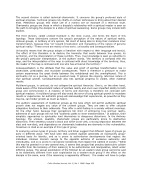
―To shop in today‘s psychospiritual ―supermarket‖ is to encounter a confounding diversity of
offerings ...the task of choosing among these offerings is intricate and subtle, and not without an
element of risk.‖ This statement from the introduction of the book Spiritual Choices reflects the
challenge of the spiritual search for many in contemporary American culture. Truly, some of the
products on the shelf are ―nutritious ‖ some are devoid of substantive value some are downright
dangerous. How can one tell the real from the pretender? The editors of this book set for
themselves the task of developing criteria for discernment as to what constitutes an authentic
path to spiritual transformation.
Spiritual Choices grew out of a seminar conducted at the Center for the Study of New Religious
Movements at the Graduate Theological Union in Berkeley. The focus of the seminar was ―the
problem of discerning between helpful and harmful involvement in the new religions.‖ The editors
of this book, all of whom identify themselves as participant-observers of the new religious
movements (NRMs), saw the need to steer a path between the two extremes of what they termed
―blanket reductionism of the opposition‖ and ―the wide open ecumenism eclecticism and optimism
of the supporters.‖ Thus, while they embrace the transformative capabilities of mysticism
especially in its eastern expressions, they resist embracing everything that comes along in that
guise as being ―spiritual.‖
The direction of the work is therefore to develop both criteria and sensibilities for assessing the
potential of specific spiritual groups and allowing the participant to experience authentic spiritual
transformations without the acute negative psychological effects that are possible in new religious
groups. This is done first through the promulgation of a typology of religious groups called "The
Anthony Typology,‖ which is then further explained through a series of interviews with and essays
by participants in various NRMS. The interviews include Werner Erhard of est (now The Forum),
Ram Dass (Richard Alpert), Dick Anthony (a follower of Meher Baba), Claudio Naranjo, and an
essay on the Zen Buddhist movement in America by Steven Tipton. This is followed by a series of
essays which explore some of the more problematic aspects of involvement in NRMS. The book
concludes with an interview with Jacob Needleman about the nature of transformative religion,
and an essay concerning the nature of knowing with respect to the spiritual search.
The Anthony typology is a classification that attempts to identify which kinds of groups lend
themselves to authentic spiritual growth. In the process of doing this, it also isolates the kinds of
groups that will tend toward being destructive. Three divisions compose the classification.
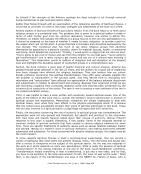
The first division is called monistic-dualistic, and concerns the particular group‘s perception of the
nature of reality. Monistic groups perceive that there is one ultimate, absolute essence which lies
behind all of reality. The goal of these groups is to achieve a conscious, mystical oneness with
that essence. Anthony et al. write, ―this orientation tends to view time, the material world, and
discursive reasoning as illusory. Morality has a pragmatic but not an ultimate metaphysical basis.‖
The book is focused mainly on these types of groups. Dualistic groups, on the other hand, would
reverse these distinctions and see all people on one of two paths to separate destinies.
Book Review
Spiritual Choices: The Problem of Recognizing Authentic and Inauthentic Paths to Inner
Transformation. Edited by Dick Anthony, Bruce Ecker, and Ken Wilber. Paragon House. New
York. 1987. 448 pages. $24.95 hardcover-, $12.95 paper.
Reviewed by Timothy Brauns
Gordon Conwell Theological Seminary
―To shop in today‘s psychospiritual ―supermarket‖ is to encounter a confounding diversity of
offerings ...the task of choosing among these offerings is intricate and subtle, and not without an
element of risk.‖ This statement from the introduction of the book Spiritual Choices reflects the
challenge of the spiritual search for many in contemporary American culture. Truly, some of the
products on the shelf are ―nutritious ‖ some are devoid of substantive value some are downright
dangerous. How can one tell the real from the pretender? The editors of this book set for
themselves the task of developing criteria for discernment as to what constitutes an authentic
path to spiritual transformation.
Spiritual Choices grew out of a seminar conducted at the Center for the Study of New Religious
Movements at the Graduate Theological Union in Berkeley. The focus of the seminar was ―the
problem of discerning between helpful and harmful involvement in the new religions.‖ The editors
of this book, all of whom identify themselves as participant-observers of the new religious
movements (NRMs), saw the need to steer a path between the two extremes of what they termed
―blanket reductionism of the opposition‖ and ―the wide open ecumenism eclecticism and optimism
of the supporters.‖ Thus, while they embrace the transformative capabilities of mysticism
especially in its eastern expressions, they resist embracing everything that comes along in that
guise as being ―spiritual.‖
The direction of the work is therefore to develop both criteria and sensibilities for assessing the
potential of specific spiritual groups and allowing the participant to experience authentic spiritual
transformations without the acute negative psychological effects that are possible in new religious
groups. This is done first through the promulgation of a typology of religious groups called "The
Anthony Typology,‖ which is then further explained through a series of interviews with and essays
by participants in various NRMS. The interviews include Werner Erhard of est (now The Forum),
Ram Dass (Richard Alpert), Dick Anthony (a follower of Meher Baba), Claudio Naranjo, and an
essay on the Zen Buddhist movement in America by Steven Tipton. This is followed by a series of
essays which explore some of the more problematic aspects of involvement in NRMS. The book
concludes with an interview with Jacob Needleman about the nature of transformative religion,
and an essay concerning the nature of knowing with respect to the spiritual search.
The Anthony typology is a classification that attempts to identify which kinds of groups lend
themselves to authentic spiritual growth. In the process of doing this, it also isolates the kinds of
groups that will tend toward being destructive. Three divisions compose the classification.
The first division is called monistic-dualistic, and concerns the particular group‘s perception of the
nature of reality. Monistic groups perceive that there is one ultimate, absolute essence which lies
behind all of reality. The goal of these groups is to achieve a conscious, mystical oneness with
that essence. Anthony et al. write, ―this orientation tends to view time, the material world, and
discursive reasoning as illusory. Morality has a pragmatic but not an ultimate metaphysical basis.‖
The book is focused mainly on these types of groups. Dualistic groups, on the other hand, would
reverse these distinctions and see all people on one of two paths to separate destinies.