Cultic Studies Journal, Vol. 5, No. 1 1988 Page 10
Parent Interview. The interview explored the parents' knowledge of the cult, their reaction to
their child's involvement, details concerning the child's background, and the parents' concerns
about their child's school, work, peer relations, changes in lifestyle, and stressful events
preceding cult involvement. For contrast families the interview format removed those items
pertaining specifically to cult involvement.
Statistical Analysis
The data were analyzed in two steps. The first step involved descriptive and simple statistics,
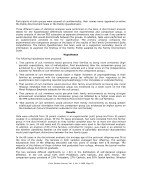
including percentages and, for the Family Environment Scale, the calculation of multivariate and
univariate F-tests (see p. 8). Although I tests were calculated for differences between cult and
contrast groups, these data were not reported. This was decided because two basic assumptions
of the t test were frequently violated, i.e., independence from test to test and homogeneity of
variance, and thus these data were unreliable. Percentage data reported were for purposes of
description rather than hypothesis testing.
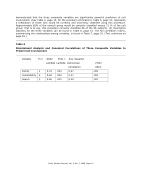
The second step involved multivariate statistical analyses including discriminant analysis. The
latter was used both to collapse the data into composite variables and to subject these composite
variables to more rigorous analysis.
Results
Descriptive Data Analysis
Demographics. The two groups were found to be generally rather similar on such demographic
variables as parent education and socioeconomic status. The contrast group was somewhat more
affluent than the cult-involved group. Fifty- four percent (n =22) of cult-involved young people
were male and 46% (n =19) were female. The contrast sample consisted of 58% males (n =26)
and 42% females (n =19). The cult-involved person was, on the average, six years older than
the contrast focus child at the time of the interview. However, the average age at the time of cult
entry was 22, which compares favorably to the average age of the contrast focus child, which was
23. For the cult-involved sample, the ages ranged from 15-32, whereas the age range for the
contrast group was 19-28.
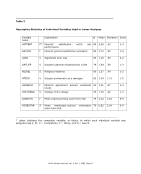
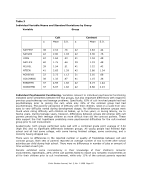
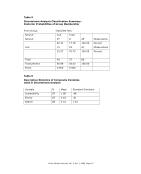
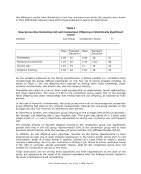
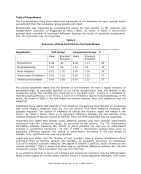
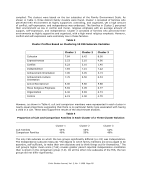
Many of the data discussed in the following sections are summarized in Table 2 and Table 3.
Parent Interview. The interview explored the parents' knowledge of the cult, their reaction to
their child's involvement, details concerning the child's background, and the parents' concerns
about their child's school, work, peer relations, changes in lifestyle, and stressful events
preceding cult involvement. For contrast families the interview format removed those items
pertaining specifically to cult involvement.
Statistical Analysis
The data were analyzed in two steps. The first step involved descriptive and simple statistics,
including percentages and, for the Family Environment Scale, the calculation of multivariate and
univariate F-tests (see p. 8). Although I tests were calculated for differences between cult and
contrast groups, these data were not reported. This was decided because two basic assumptions
of the t test were frequently violated, i.e., independence from test to test and homogeneity of
variance, and thus these data were unreliable. Percentage data reported were for purposes of
description rather than hypothesis testing.
The second step involved multivariate statistical analyses including discriminant analysis. The
latter was used both to collapse the data into composite variables and to subject these composite
variables to more rigorous analysis.
Results
Descriptive Data Analysis
Demographics. The two groups were found to be generally rather similar on such demographic
variables as parent education and socioeconomic status. The contrast group was somewhat more
affluent than the cult-involved group. Fifty- four percent (n =22) of cult-involved young people
were male and 46% (n =19) were female. The contrast sample consisted of 58% males (n =26)
and 42% females (n =19). The cult-involved person was, on the average, six years older than
the contrast focus child at the time of the interview. However, the average age at the time of cult
entry was 22, which compares favorably to the average age of the contrast focus child, which was
23. For the cult-involved sample, the ages ranged from 15-32, whereas the age range for the
contrast group was 19-28.
Many of the data discussed in the following sections are summarized in Table 2 and Table 3.